
Anastasia Braitsik stands at the forefront of the digital revolution, bringing years of expertise in SEO, content marketing, and deep-dive data analytics to the table. As a global leader who has navigated the complexities of consumer behavior across various industries, she specializes in turning cold data into warm, human connections. Her work focuses on the intersection of technology and psychology, helping brands move away from the “noise” of traditional advertising toward a more nuanced, customer-centric approach. In this discussion, we explore the remarkable transformation of a retail giant that successfully pivoted from stagnant, manual processes to a high-octane, AI-driven marketing engine that prioritizes relevance above all else.
The conversation delves into the operational hurdles of scaling marketing efforts for a massive customer base of 25 million individuals. We explore how removing technical bottlenecks allowed a creative team to flourish, the specific financial and retail metrics that prove the value of personalization, and the logistical shift from half-year analysis cycles to near-real-time adjustments. Braitsik provides a masterclass on how unifying disparate data points—from credit limits to browsing history—can create a seamless journey that follows a customer from their mobile app into the physical aisles of a department store.
Transitioning from sixty manual campaigns to three thousand automated ones annually requires a massive operational shift; how does a marketing team fundamentally change its culture to handle that kind of volume?
The shift from sixty to three thousand campaigns isn’t just a change in numbers; it is a total structural evolution. In the old days, the marketing team was essentially tethered to the IT department, waiting for manual queries and file transfers just to send a basic email or SMS. When you are only producing sixty campaigns a year, you are in a “broadcast” mindset where you blast a generic message and hope something sticks. To reach the level of three thousand targeted campaigns, the culture has to move toward empowerment and automation through platforms like SAS Customer Intelligence 360. Marketers stop being “requestors” of data and start being “architects” of experiences, using real-time insights to launch campaigns that actually resonate with the 25 million people they serve. It requires letting go of the labor-intensive “pulling of lists” and embracing a system where data flows freely across departments.
When a retailer moves away from broad, generic messaging, what is the immediate impact on the emotional connection between the brand and its twenty-five million customers?
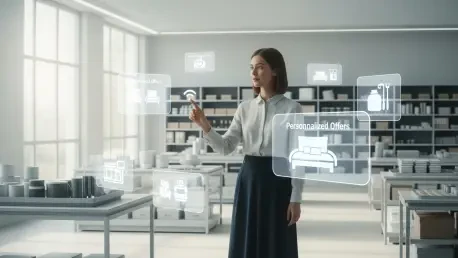
The immediate impact is a transition from being a source of “digital noise” to becoming a helpful partner in the customer’s daily life. When a customer who is looking for a new mattress receives advice on sleep hygiene and tailored mattress offers instead of a random promotion for a motorcycle or a laptop, they feel seen and understood. This relevance is the bedrock of loyalty; it tells the customer that the brand values their time and specific needs. Generic messaging often leads to “customer saturation,” where people simply tune out because the content doesn’t apply to them. By using behavioral data from apps and websites to send the right message through the right channel, the retailer creates “meaningful moments” that foster a sense of reliability and trust that a mass-blast could never achieve.
Coppel utilizes a unique mix of retail transactions and financial services data; how does combining credit origination with purchase history change the way you segment an audience?
Combining retail history with financial data, such as credit limits and loan transactions, allows for a sophisticated “hyper-personalization” that most retailers can only dream of. By looking at a customer’s credit origination data alongside their social demographics and likelihood to purchase, the team can build models that are incredibly predictive. For instance, knowing a customer’s credit limit allows the marketing engine to suggest products that are actually within their reach, making the offer both practical and tempting. You aren’t just guessing what they want; you are analyzing a multi-dimensional view of their life—from what they bought in the footwear department to how they manage their personal loans. This unified data approach ensures that every audience segment is built on a foundation of actual behavior rather than vague assumptions.
We saw a two percent increase in retail sales and a sixteen percent jump in personal loan transactions; what do these specific figures tell us about the success of a personalized strategy?
Those numbers are a powerful testament to the effectiveness of moving toward a customer-centric strategy. While a two percent increase in retail sales might seem modest at first glance, when you apply that to a customer base of 25 million, the revenue impact is staggering. More importantly, the sixteen percent surge in personal loan transactions highlights a deep level of trust and engagement in the financial services sector. It shows that when the right offer—like a loan or a credit card—is presented at the exact moment the customer needs it, the conversion rate skyrockets. These results prove that personalization isn’t just a “nice-to-have” marketing tactic; it is a direct driver of the bottom line that optimizes every touchpoint of the customer journey.
The timeline for analyzing campaign results dropped from six months to just fifteen days; how does that speed of insight change the way a marketing department functions on a daily basis?
Reducing the analysis window from six months to fifteen days is like switching from a telescope to a high-definition, live-feed camera. In the past, by the time the team realized a campaign wasn’t performing, the market had already moved on, and the data was essentially a post-mortem. Now, with the ability to see what is working in almost real-time, the team can be incredibly agile, adapting their strategies and making improvements on the fly. This creates a feedback loop of continuous optimization where mistakes are caught early and successes are scaled immediately. It removes the guesswork and the “fear of the unknown,” allowing marketers to be more experimental and bold because they know they will have the performance data in their hands within a fortnight.
How does the integration of digital behavioral data into the physical store environment change the experience for a customer walking down the aisle?
This is where the “bridge” between the digital and physical worlds becomes a reality, and it’s one of the most exciting frontiers for a major chain. By arming sales associates in brick-and-mortar stores with the same behavioral data collected from the app and website, the in-person experience becomes just as tailored as the online one. Imagine walking into a store and having an associate provide a recommendation based on your recent searches or your current credit limit—it creates a seamless weave of service. This approach eliminates the frustration of having to “start over” when you move from a screen to a physical location. It ensures that the brand’s voice and its understanding of the customer remain consistent, regardless of where the transaction takes place.
With a strategic focus on increasing app adoption, what are the specific benefits of moving more of the customer journey into a controlled mobile environment?
Moving customers toward the app is a strategic masterstroke because it allows for much tighter integration of the entire ecosystem, from browsing to credit applications. In the app, you can guide a user step-by-step through a credit process, offering customized onboarding benefits that keep them engaged and prevent drop-offs. It also provides a richer stream of real-time data, allowing the brand to send push notifications that are perfectly timed based on geographic or behavioral triggers. By encouraging in-app purchases, the retailer can streamline the interaction, making it more convenient for the user while simultaneously strengthening the relationship through consistent, high-value touchpoints. It essentially turns the customer’s smartphone into a personalized, 24/7 gateway to the brand’s entire inventory and financial suite.
What is your forecast for the future of hyper-personalization in the retail and financial sectors?
In the coming years, we will see the total disappearance of the “generic offer” as AI and real-time analytics become the standard operational baseline rather than a competitive advantage. I predict that the boundary between retail and banking will continue to blur, with financial products being offered as “embedded experiences” at the exact moment of a retail need, driven by predictive models that know what you want before you even search for it. We will move beyond just recommending products to predicting life milestones, where a retailer provides a holistic “onboarding to life” service—whether that’s buying a first home or furnishing a nursery. The winners will be the brands that can handle massive data sets with the nuance of a local shopkeeper, making every one of their millions of customers feel like they are the only person in the room.