
Most advertising predictions for the future will tell you that artificial intelligence changes everything and personalization is king.
They’re not wrong, yet they’re still missing the point. The shift isn’t technological but philosophical. Brands that win next year won’t be those with the biggest budgets or the most sophisticated martech stacks. They’re the ones that finally accept an uncomfortable truth: consumers have become expert at ignoring advertising, and the only way through is to stop advertising at them entirely.
The numbers tell a stark story. Average attention spans for digital ads have dropped below two seconds. Ad blocker usage continues climbing. And most consumers tend to skip pre-roll video ads. Your potential clients are getting tired of advertisements. The old playbook of interruption-based marketing is failing, and throwing more money at it won’t fix the problem.
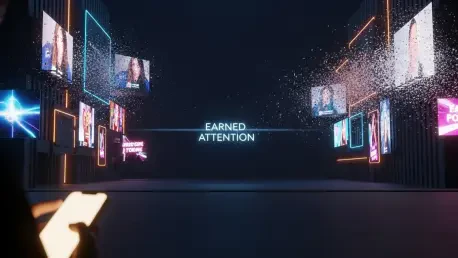
What works instead? Content that earns attention rather than demanding it. Experiences that respect intelligence rather than insulting it. Relationships built on genuine value rather than transactional manipulation.
AI Becomes Infrastructure, Not Innovation
Today, artificial intelligence in advertising is no longer newsworthy. The technology is already becoming part of the infrastructure. Every major platform already uses machine learning for targeting, bidding, and creative optimization. Therefore, the competitive advantage from adopting AI tools is rapidly diminishing because everyone has access to the same capabilities.
The brands pulling ahead aren’t using AI aggressively; they’re approaching it thoughtfully instead. Consider the difference between two approaches: Brand A uses generative AI to produce 500 ad variations, tests them all, and optimizes toward the one that performs best. Brand B uses AI to analyze customer service transcripts, identify the three questions prospects ask most frequently, and then create campaigns that directly address those concerns.
Brand A might achieve a 15% improvement in click-through rates. Brand B might achieve a 40% improvement in conversion rates by solving real problems rather than optimizing surface-level metrics. While the technology is identical, the strategic application is worlds apart.
Consumers have also developed surprisingly accurate instincts for detecting AI-generated content. Generic imagery, predictable sentence structures, and that unmistakable “corporate smooth” tone trigger immediate skepticism. To be successful, AI-assisted campaigns must keep the technology invisible and use it to enhance human creativity rather than replace it.
Privacy Constraints Force Better Marketing
The death of third-party cookies has been predicted, delayed, and partially reversed so many times that marketers might be tempted to ignore it entirely. But even today, that would be a mistake. Regardless of what happens with cookies specifically, tracking users across the internet is becoming harder, more expensive, and more legally risky.
Smart advertisers have stopped mourning this change and started recognizing its benefits. Forced reliance on first-party data has pushed brands to actually build relationships with customers rather than simply stalking them across the web. Companies with strong newsletter programs, loyalty schemes, and direct customer relationships now possess competitive advantages that can’t be purchased or replicated.
The shift also favors quality over quantity in targeting. Rather than reaching 10 million people with marginal interest, brands can focus on reaching 500,000 people with genuine purchase intent. Using this framework, campaign efficiency improves while customer acquisition costs decrease. And nobody has to explain to regulators why their app was tracking teenager location data.
But first-party data strategies require patience that many organizations lack. Building an engaged email list of 100,000 subscribers might take two years. Purchasing access to the same audience size takes an afternoon. But owned audiences compound in value while rented audiences require continuous payment.
Video Evolves Beyond the Fifteen-Second Spot
In the present, video advertising looks nothing like the television commercials of previous decades. Format diversity has exploded. Just one campaign might include six-second bumpers for awareness, two-minute product demonstrations, fifteen-second testimonials for social proof, and long-form documentary content for brand building.
Short-form vertical video is still essential for reach, particularly among audiences under 35. But the most sophisticated advertisers have recognized that different video lengths serve different purposes in the customer journey. Using only short content sacrifices depth, and relying on only long content sacrifices reach. The winning approach is learning how to combine them both strategically.
Live video represents an underexploited opportunity for most B2B advertisers. Shopping livestreams generate billions in revenue across Asian markets and are growing rapidly in Western regions. The format works because it combines entertainment, education, and urgency in ways that pre-recorded content cannot match. Questions get answered in real time, and objections get addressed immediately, with purchase decisions happening in the moment.
Production values matter less than authenticity. A polished but generic product video performs worse than a rough but genuine demonstration from someone who clearly understands what they’re selling. Audiences have developed sophisticated filters for distinguishing real expertise from scripted presentations.
Influencer Marketing Matures and Fragments
The influencer marketing industry has grown past its awkward adolescence into something resembling professional maturity. Rates have standardized, measurement has improved, and legal requirements around disclosure have clarified. One thing remains unclear, however: whether the model actually works for most advertisers.
Celebrity influencers with millions of followers often deliver disappointing results relative to their cost, as engagement rates tend to decline with audience size. Authenticity becomes harder to maintain when every post is sponsored, and audiences are growing cynical about recommendations that clearly stem from commercial arrangements rather than genuine enthusiasm and don’t resonate with their needs.
As a result, the marketing world is shifting to micro-influencers and niche creators. Someone with 15,000 highly engaged followers in a specific professional community often delivers better results than someone with 1.5 million followers across a general audience.
Additionally, long-term relationships outperform one-off sponsorships. When an influencer mentions a product once, audiences recognize the commercial nature of the recommendation. When the same influencer mentions a product repeatedly over months because they genuinely use it, credibility increases dramatically.
Search Advertising Confronts Its AI Moment
Google’s integration of AI-generated answers into search results represents one of the biggest changes to search advertising in a decade. Users increasingly receive direct responses to their queries without having to click through to websites. The implications for advertisers are profound and still evolving.
Traditional search advertising relied on capturing users during information-seeking moments and directing them toward commercial destinations. When AI provides the information directly within the search interface, that interception opportunity disappears. Click-through rates for organic and paid results in categories where AI answers appear have declined measurably.
Adaptation requires rethinking content strategy entirely. Rather than creating content designed to rank for specific keywords, brands must develop genuinely authoritative information that AI systems recognize as trustworthy sources. This favors depth over breadth, expertise over volume, and accuracy over optimization tricks.
Voice search amplifies these trends. Conversational queries don’t match the keyword patterns that traditional search advertising targets. Users asking smart speakers for recommendations receive a single answer rather than a list of options. Becoming that single recommended answer requires demonstrable authority that simple SEO tactics cannot provide.
Connected TV Bridges Traditional and Digital
Television advertising is experiencing a second life through streaming platforms. Connected TV offers the emotional impact of premium video content with the targeting precision of digital advertising. For brands seeking both reach and relevance, the channel has become increasingly attractive.
Audience fragmentation across streaming services presents both challenges and opportunities. Reaching broad audiences now requires coordinating campaigns across multiple platforms rather than buying time on a handful of broadcast networks. But the ability to target specific households with specific messages creates efficiency improvements that traditional television could never match.
Measurement remains imperfect but is improving as view-through attribution, cross-device tracking, and marketing mix modeling help advertisers understand connected TV’s contribution to business outcomes. That’s why the days of treating television advertising as unmeasurable brand spending are coming to an end.
Creative requirements differ from traditional television. Viewers watching on streaming platforms have different expectations than broadcast audiences. They’re often more engaged, more critical, and more likely to remember both positive and negative advertising experiences. Quality thresholds are higher.
In Closing
Technology will continue advancing. New platforms will emerge. AI capabilities will expand. Yet the fundamental challenge facing advertisers in 2026 and beyond is the same one they’ve always faced: earning attention from people who have better things to do than watch advertisements.
The brands that succeed won’t necessarily be those with the most sophisticated tools or the largest budgets. They’ll be the ones that accept a difficult reality: advertisers must create content that genuinely helps, experiences that genuinely entertain, and relationships that genuinely matter. Advertising works best when it doesn’t feel like advertising at all.
That’s not a new insight. It’s been true for decades. What’s changed is that consumers now have unprecedented power to ignore, block, and skip advertising that fails to meet their expectations. Advertisers must raise their standards. The margin for mediocrity has disappeared. Excellence isn’t optional anymore. It’s the minimum requirement for relevance.