
Modern creative departments are rapidly abandoning traditional stock photography in favor of algorithmically driven engines that can manifest hyper-realistic visual assets from nothing more than a string of descriptive text. This shift represents a broader movement toward automated aesthetic production where speed and versatility dictate market relevance. The Pollo AI image generator entered this competitive space not as a single model, but as a sophisticated aggregator designed to simplify the increasingly fragmented world of generative art. By providing a unified interface for disparate neural networks, the platform aimed to solve the logistical headache of switching between specialized tools for varied artistic tasks.
The objective of this review is to dissect how this ecosystem functions and whether its promise of creative democratization holds up under professional scrutiny. Understanding this technology requires looking beyond the surface-level novelty of synthetic imagery to examine the underlying architecture that enables such rapid iteration. As businesses increasingly demand personalized content at scale, tools like this must prove they can move beyond mere experimentation and into the realm of standardized commercial utility.
Evolution of Unified AI Image Synthesis
The landscape of generative imagery has matured from simple pixel manipulation toward deep semantic understanding where machines interpret intent rather than just keywords. This evolution has led to a transition from siloed applications to unified synthesis platforms that bridge the gap between different specialized AI models. This platform functions as an intelligent gateway, allowing users to leverage the specific strengths of various engines without the friction of multiple subscriptions or complex technical setups. It represents a pivot toward a more holistic creative experience where the software handles the complexity of model selection.
In the current technological landscape, this synthesis is critical because no single AI model is perfect for every task; some excel at human anatomy while others specialize in architectural precision. By integrating these capabilities into a single dashboard, the system effectively democratizes high-end digital artistry for users who lack deep technical expertise in prompting or model hosting. This context is vital for understanding how the tool has carved out a niche among marketing professionals who require a Swiss Army knife approach to visual content creation.
Core Technical Features and Performance Metrics
Multi-Model Integration and Hybrid Architecture
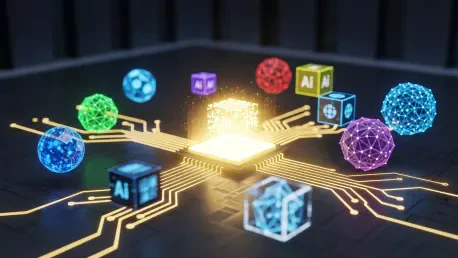
The structural backbone of the system relies on a routing mechanism that connects users to industry-leading engines including Flux AI, Stable Diffusion, and specialized versions of GPT-4o. This hybrid architecture ensures that the platform remains current, as it can swap backend models as new breakthroughs occur in the field without requiring a complete redesign of the user interface. This flexibility allows the generator to maintain high performance across diverse artistic styles, from photorealistic portraits to abstract vector graphics, by matching the specific prompt to the most capable underlying model.
Performance metrics indicate that this multi-engine approach significantly reduces the time spent on “prompt engineering” because the system often compensates for vague inputs by selecting the most forgiving model. However, this also introduces a layer of abstraction that might frustrate power users who want granular control over specific model parameters like seed numbers or sampler types. The trade-off is a streamlined experience that favors throughput and accessibility over the raw, unbridled complexity of local model management.
LoRA Model Library and Creative Customization
One of the standout technical features is the implementation of Low-Rank Adaptation, or LoRA, which allows for fine-tuned creative control without the massive overhead of full model training. These LoRA models act as specialized “style filters” that can be layered on top of the base image generation to ensure specific brand aesthetics or character consistencies are maintained. This matters immensely for businesses that need their AI-generated content to look like it belongs to a single, cohesive brand family rather than a random collection of high-quality images.
The library offers a massive repository of these stylistic modifiers, enabling a degree of customization that few general-purpose generators can match. Users can quickly toggle between specific lighting setups, film stocks, or artistic movements, which effectively short-circuits the trial-and-error process typically associated with AI art. This implementation unique because it democratizes the use of advanced fine-tuning, making it as easy as selecting a preset from a dropdown menu.
Streamlined Text-to-Image Workflow for Rapid Ideation
The workflow is engineered to minimize the distance between a concept and a viable visual asset, utilizing a simplified prompt interface that prioritizes natural language. This system interprets descriptive sentences and automatically translates them into the technical jargon required by the backend engines, ensuring that even novice users can produce commercially viable results. This rapid ideation capability is essential in a fast-paced market where the ability to visualize a concept in seconds can be the difference between winning or losing a client pitch.
Furthermore, the integration of image-to-image and text-to-image functions within the same workspace allows for an iterative refinement process that feels more like a conversation with a designer than a technical configuration. While the output can sometimes vary in quality depending on the complexity of the request, the sheer speed of generation allows for a volume of variations that eventually yields the desired result. This focus on “rapid-fire” creativity positions the tool as a powerful engine for brainstorming and early-stage visualization.
Current Trends in Generative Content Marketing
The marketing sector is currently navigating a surge in “synthetic media saturation,” where the quantity of visual content being produced has skyrocketed, putting a premium on unique and high-fidelity visuals. From 2026 to the near future, the trend is shifting toward hyper-personalization, where ads are not just targeted but are visually constructed in real-time to match the specific preferences of a single viewer. This platform aligns with these shifts by providing the speed necessary to fuel such high-velocity content cycles.
Moreover, there is a growing demand for “brand-safe” AI, where the outputs are predictable and legally compliant, leading to more cautious but deliberate usage of generative tools. Consumers are becoming more adept at spotting generic AI aesthetics, which is forcing developers to include more sophisticated customization features to maintain a sense of authenticity. This environment favors platforms that can offer high-level stylistic control over those that simply produce “pretty” but generic pictures.
Real-World Applications and Sector Impact
Digital Marketing and Social Media Campaign Production
In the high-pressure environment of social media management, the ability to generate a dozen variations of a campaign visual for A/B testing is a significant competitive advantage. Marketing teams utilize this tool to create localized versions of advertisements, changing backgrounds or cultural cues within seconds to better resonate with diverse global audiences. This application of the technology has shifted the role of the social media manager from a content curator to a creative director who oversees an automated production line.
The impact here is primarily one of cost reduction and increased agility, as teams no longer need to wait for a photography studio to deliver updated assets. However, the reliance on these tools also requires a new kind of literacy in identifying and correcting the subtle visual artifacts that AI occasionally produces. Despite these hurdles, the deployment of the generator in social campaigns has proven to be a transformative force for small to mid-sized agencies that previously lacked the budget for high-end original photography.
E-Commerce Product Visualization and Brand Mockups
E-commerce operators are finding immense value in using the generator to create contextually rich product mockups without the logistical nightmare of physical photoshoots. By feeding basic product images into the system, they can manifest the same item in dozens of lifestyle settings, such as a skincare bottle on a marble countertop or a backpack in a rugged mountain range. This capability allows for a much more immersive shopping experience, as customers can see products in environments that reflect their own lifestyles.
This specific use case highlights the generator’s ability to maintain product fidelity while generating entirely new surroundings. The sector-wide impact is a move toward more dynamic product pages that can be updated seasonally or based on trending aesthetics without any additional overhead. This implementation is unique because it combines the precision of product photography with the creative limitless of generative AI.
Technical Constraints and Market Obstacles
Despite its impressive capabilities, the technology faces significant hurdles regarding the consistency of human anatomy and complex text rendering within images. There are also looming regulatory issues surrounding the copyright status of AI-generated assets, which can make some large corporations hesitant to integrate these tools into their primary brand identities. These technical limitations mean that while the tool is excellent for ideation, it often requires a human designer to perform “cleanup” or final polishing before the work is truly professional-grade.
The market also presents obstacles in the form of “AI fatigue” and the rising cost of computational power, which could lead to more expensive subscription models in the future. Furthermore, as more competitors enter the space, the challenge for this platform will be to maintain its edge in model routing and user experience without becoming overly complex. Ongoing development is focusing on better spatial reasoning and more accurate control over fine details to mitigate these existing drawbacks.
Future Outlook and Technological Trajectory
Looking forward, the trajectory of this technology points toward a total convergence of image, video, and 3D object generation within a single prompt-based environment. We are moving toward a reality where a single descriptive sentence will generate an entire brand identity, including logos, social posts, and video commercials, all maintaining a perfectly synchronized aesthetic. The development of more energy-efficient models will also likely make these tools more accessible and faster, potentially allowing for real-time visual generation during live presentations.
The long-term impact on the industry will likely be a redefinition of the “creative professional” as someone who manages AI systems rather than performs manual digital labor. Breakthroughs in neural architecture will likely solve the current issues with text and limbs, making the output indistinguishable from high-end human photography. As the technology matures, the focus will shift from the novelty of “making an image” to the strategic value of “making the right image” for a specific psychological response.
Final Assessment and Review Summary
The Pollo AI image generator proved to be a versatile and powerful asset in the modern creative’s toolkit, successfully bridging the gap between complex AI research and practical business application. The analysis showed that its multi-model architecture provided a level of flexibility that single-model platforms struggled to match, especially in diverse marketing contexts. While it faced challenges with fine-motor details and occasional stylistic inconsistencies, the platform’s ability to rapidly iterate through concepts made it an essential resource for teams prioritizing speed and volume.
The review revealed that the integration of LoRA models and a streamlined workflow significantly lowered the barrier to entry for high-quality digital content production. Marketing departments and e-commerce businesses found that the tool moved the needle from passive observation of AI trends to active, profitable implementation. In the end, the technology functioned as a high-speed bridge between human imagination and digital realization, signaling a permanent shift in how visual narratives were constructed and delivered.