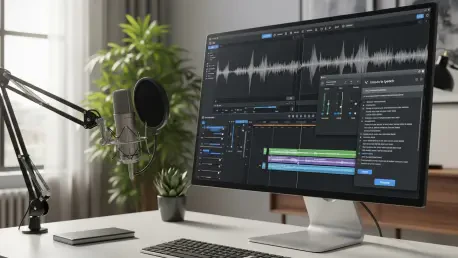

The introduction of high-fidelity synthetic speech into the digital advertising ecosystem has fundamentally altered how brands communicate with their audiences across the sprawling landscapes of YouTube and the Google Display Network. By launching the Voiceover Video Enhancement feature, Google Ads provided a mechanism that converts written headlines and descriptions into polished spoken narratives, effectively bridging the chasm between static text and dynamic video assets. This capability is specifically tuned for Performance Max and Demand Gen campaigns, where the speed of content consumption often outpaces the traditional production cycles of professional studios. Instead of navigating the logistical hurdles of hiring voice talent or coordinating studio time, advertisers now rely on artificial intelligence to generate professional-grade audio in seconds. This transformation simplifies the creative workflow while ensuring that even the most basic video clips possess the auditory depth required to capture a user’s attention in a crowded digital environment.
Integration Dynamics: Navigating Performance Max and Demand Gen
Success within the modern Google Ads framework relies on understanding how various automation tools interact within specific campaign architectures. For those utilizing Performance Max campaigns, the AI voiceover functionality is embedded within the global Asset Optimization section, promoting a largely autonomous workflow. This structural choice reflects the overarching philosophy of Performance Max, which is to leverage Google’s machine learning models to maximize reach across all available inventory, including Search, YouTube, and Gmail. When this feature is active, the system automatically selects the most appropriate text assets and transforms them into audio, ensuring that the narration complements the visual elements of the ad without requiring manual intervention for every single iteration. This “hands-off” approach is designed for high-volume environments where the goal is to identify and scale successful combinations of creative assets at a pace that manual testing simply could not sustain.
In contrast to the broad automation seen in Performance Max, Demand Gen campaigns offer a more surgical level of control over the auditory experience. Because these campaigns are heavily focused on visually immersive platforms like YouTube Shorts and Discovery feeds, the voiceover toggle is situated at the individual ad level rather than as a global campaign setting. This distinction allows media buyers to exercise discretion over which specific creative executions require synthetic narration and which should remain silent or utilize pre-recorded audio. Such granularity is essential for brands that want to maintain a specific atmospheric tone or for those testing the incremental impact of voiceover versus text-only overlays. By placing this control in the hands of the advertiser, the platform acknowledges that while automation is powerful, the nuance of a high-impact visual campaign often demands a more tailored approach. This flexibility enables a diverse testing ground where different narration styles can be compared directly.
Auditory Copywriting: Shifting from Screen Reading to Natural Speech
The transition toward automated narration necessitates a fundamental shift in how digital copywriters approach their craft, moving away from visual shorthand and toward phonetic clarity. Historically, ad headlines were optimized for the eye, often utilizing symbols, abbreviations, or aggressive punctuation to stand out in a scrolling feed. However, because the AI voiceover engine reads text verbatim, copy that looks catchy on a screen may sound awkward, disjointed, or even robotic when spoken aloud. Marketers must now embrace “listenability,” prioritizing conversational flow and rhythmic sentence structures that feel natural to the human ear. This means avoiding overly dense jargon or complex strings of numbers that might cause the AI to stumble or sound monotonous. The objective is to create a script that feels less like a sales pitch and more like a fluid conversation, ensuring that the message resonates emotionally with the listener while the technical execution remains flawless.
To maintain high standards of quality and brand safety, the integration of a “Preview First” workflow serves as a critical checkpoint before any campaign goes live. This feature allows advertisers to listen to the generated audio in real-time, providing an opportunity to identify pronunciation errors, strange pauses, or tone inconsistencies that might distract from the brand message. While the underlying technology is highly sophisticated, it remains a tool that requires human oversight to ensure that the AI’s interpretation aligns with the intended brand persona. This human-in-the-loop strategy acts as a safeguard against the potential pitfalls of fully automated content creation, allowing marketers to tweak the input text if the output sounds unsatisfactory. By iterating on the copy based on these auditory previews, brands can ensure their ads sound authoritative and professional. This proactive approach to quality control helps build trust in synthetic media and ensures that the audio remains an asset rather than a liability.
Scalability and Strategy: The Future of Intelligent Creative Production
One of the most significant impacts of this technology is the democratization of high-quality video production for small and medium-sized businesses that lack massive creative budgets. Traditionally, adding professional narration to a video ad was a costly and time-consuming bottleneck, involving external agencies, voice talent contracts, and expensive studio rentals. By removing these financial and logistical barriers, Google has leveled the playing field, allowing smaller advertisers to produce video content that rivals the production value of global corporations. Although the tool currently focuses on English-language accounts, its initial success suggests a rapid expansion into other global languages as the underlying models become more localized and phonetically diverse. This expansion will allow brands to scale their international reach without the prohibitive costs of multi-language voice recording. As the technology matures, the ability to rapidly iterate on audio in various dialects will become a standard component of marketing strategy.
The move toward AI-driven voiceovers represents a broader shift in the advertising industry, where professionals are evolving from manual creators into high-level creative strategists. Rather than spending hours on the technical minutiae of audio editing or talent scouting, advertisers are now tasked with providing the high-quality raw materials—images, videos, and text—that the AI assembles into a finished product. This shift does not diminish the value of human creativity; instead, it places a higher premium on the strategic vision and emotional intent that give an advertisement its soul. The AI serves as the engine of execution, but the human marketer remains the pilot who determines the direction and purpose of the message. This partnership between human and machine allows for a more agile creative process, where data-driven insights can be translated into updated ad content almost instantaneously. As brands adapt to this new paradigm, the focus will increasingly be on how to use these automated tools to tell more compelling stories.
Strategic Implementation: Adopting Automated Narration Workflows
Organizations that wished to capitalize on these advancements needed to audit their existing asset libraries to ensure they were compatible with voiceover technology. This process involved identifying evergreen content that could be revitalized with fresh audio, as well as developing new copy guidelines that emphasized natural language patterns. Marketers also discovered that continuous testing of different voice styles and text variations was essential to understanding what resonated most with their specific target demographics. By monitoring performance metrics such as view-through rates and conversion uplift, advertisers were able to refine their approach to synthetic narration over time. It became clear that the most successful campaigns were those that used AI not as a total replacement for creative effort, but as a sophisticated tool to enhance the speed and reach of their strategic messaging. Developing a robust feedback loop between performance data and creative inputs was the primary method for ensuring audio quality.
The widespread adoption of AI voiceovers eventually forced a rethink of how brand identity was expressed through sound and spoken word. Companies that moved quickly to integrate these tools gained a significant competitive advantage by producing more relevant content in a fraction of the traditional time. They realized that the key to success lay in the balance between efficiency and authenticity, ensuring that the synthetic voices remained indistinguishable from human talent. Strategic investments were made in training creative teams to write specifically for an auditory medium, resulting in ads that felt more personal and engaging. Ultimately, the industry moved toward a future where intelligent creative was the standard, and the barriers to entry for high-end video production were permanently lowered. Advertisers who prioritized this transition successfully navigated the complexities of the modern digital landscape, turning a technical update into a foundational pillar of their marketing strategy. This period demonstrated that technology and human strategy converged to expand the potential for storytelling.