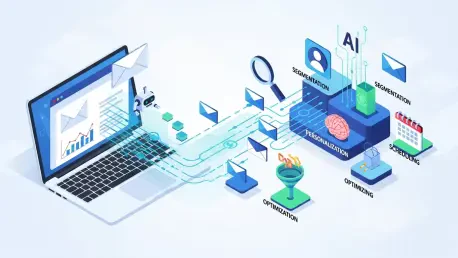

The modern email landscape has transitioned from a simple communication channel into a highly sophisticated ecosystem where machine learning algorithms dictate which messages earn the privilege of being read. As marketing teams face an increasingly saturated inbox environment, the shift toward automated, data-driven decision-making has become a necessity rather than a luxury for maintaining brand relevance. This evolution is characterized by a fundamental departure from the traditional “batch and blast” approach, replacing manual campaign construction with intelligent systems capable of processing vast datasets in real-time. By leveraging advanced neural networks and predictive modeling, organizations are now able to interpret subtle consumer signals that were previously lost in the noise. This technological leap allows for a level of precision that matches the speed of modern digital interactions, ensuring that every touchpoint serves a strategic purpose. The transition signifies more than just a change in tools; it represents a complete reimagining of how relationships are cultivated through digital correspondence, moving away from guesswork and toward a scientific understanding of human behavior and intent.
Redefining Audience Segmentation
Shifting from Static to Behavioral DatThe End of Fixed Lists
Traditional methodologies for organizing subscriber lists have long depended on static parameters, such as job titles, geographic locations, or the date a user originally opted into a newsletter. While these metrics provided a basic framework for organization in the past, they are increasingly viewed as insufficient because they provide a frozen, one-dimensional view of a consumer that fails to account for their evolving needs. In a fast-paced digital economy, a customer’s interests can shift within hours based on a single search query or a social media interaction, making data collected six months ago virtually obsolete for high-conversion targeting. Relying on such rigid categories often leads to marketing fatigue, as users receive content that no longer aligns with their current professional challenges or personal interests. The industry is moving toward a more fluid model where the definition of an audience is constantly being rewritten by the system based on the most recent interactions, ensuring that no segment remains stagnant or irrelevant as market conditions change.
Artificial intelligence facilitates a transition toward dynamic behavioral segmentation by continuously monitoring how individuals interact with every digital asset a brand possesses. Instead of grouping people by who they are, these systems group them by what they are doing, such as the frequency of their clicks, the specific products they linger over, and the time they spend reading specific sections of a newsletter. This approach allows the marketing platform to identify subtle shifts in engagement, such as a high-value customer who suddenly stops opening emails, and automatically reassign them to a specialized re-engagement track. By focusing on intent-based signals rather than historical demographics, the system can react to the “now,” providing a level of agility that manual list management could never achieve. This ensures that the messaging remains in sync with the user’s current journey, effectively eliminating the friction caused by outdated or misaligned content that often leads to unsubscribes or spam reports in less sophisticated campaigns.
Leveraging Predictive Modeling: Anticipating Consumer Needs
Modern marketing platforms have integrated sophisticated predictive models that allow businesses to move beyond reactive reporting and start anticipating the specific needs of their subscribers. These tools utilize historical performance data to assign a probability score to various outcomes, such as the likelihood of a customer making a purchase within the next seven days or the risk of them churning. By analyzing patterns across millions of data points, machine learning algorithms can identify the “tipping point” for a specific user, allowing the system to deploy a perfectly timed incentive just as the customer is preparing to make a decision. This level of foresight transforms email from a broadcast medium into a proactive service that provides solutions before the consumer has even fully articulated their needs. Furthermore, these models can estimate the long-term lifetime value of different segments, helping marketing departments allocate their resources more effectively by focusing on the relationships that offer the highest potential for sustainable growth.
The implementation of natural language processing within these predictive frameworks has also simplified the way marketers interact with their own data. Instead of requiring a deep background in data science to build complex queries, professionals can now define their target audience using simple, conversational language, which the AI then translates into technical parameters. For instance, a marketer can instruct the system to “find users who are likely to upgrade their subscription based on recent support interactions,” and the software will automatically assemble that segment in real-time. This democratization of data science ensures that strategic decisions stay in the hands of creative teams while the heavy technical lifting is handled by the underlying infrastructure. As subscriber habits continue to evolve, these predictive segments automatically update themselves, maintaining their accuracy without requiring constant manual intervention or tedious audit processes that previously consumed significant portions of the workweek.
Mastering Personalization and Timing
Creating Relevance Beyond the Subject Line: The New Standard
The concept of personalization has evolved significantly from the early days of simply inserting a recipient’s first name into a subject line or a greeting. In the current environment, true personalization is defined by deep behavioral relevance where the entire structure and content of the email are dynamically generated to match the individual’s unique preferences. This involves the use of recommendation engines that analyze past browsing history, previous purchase cycles, and even the types of imagery that have historically triggered clicks for a specific user. For example, a retail brand might send the same general campaign to its entire list, but one recipient sees high-performance athletic gear while another sees casual lounge wear, all based on their individual interaction history. This level of granular customization creates a sense of exclusivity and individual attention that fosters a stronger emotional connection between the consumer and the brand, which is critical for long-term loyalty.
Research into consumer psychology indicates that individuals are significantly more likely to engage with and spend money on brands that provide a truly tailored experience that respects their time. Artificial intelligence handles the immense complexity of generating these variations at scale, ensuring that the brand’s voice remains consistent across thousands of unique message iterations. This prevents the marketing team from becoming overwhelmed by the logistical demands of manual content creation while still reaping the benefits of high-relevance communication. Furthermore, the system can experiment with different content blocks in real-time, learning which layouts or tone of voice resonate best with specific sub-groups. By treating every email as a unique interaction rather than a mass-produced document, companies can bypass the “banner blindness” that often affects standard marketing materials, leading to higher click-through rates and a more efficient path to conversion for diverse audience members.
Optimizing Delivery for Individual Routines: Mastering the Clock
One of the most immediate benefits of integrating artificial intelligence into an email strategy is the ability to master the timing of delivery on a per-user basis. Every individual has a different digital routine; some professionals check their primary inbox the moment they wake up, while others prefer to process non-essential messages during their evening commute or on weekend mornings. Sending a massive campaign to an entire list at a single, arbitrary time—such as 10:00 AM on a Tuesday—inevitably results in the message being buried under dozens of newer emails for a large portion of the audience. Send Time Optimization (STO) algorithms solve this problem by analyzing the historical engagement patterns of every single contact on a list to determine their peak window of activity. This ensures that the message lands at the very top of the inbox at the exact moment the user is most likely to be receptive, maximizing the visibility of the content without increasing the frequency of the sends.
While achieving perfect timing requires a baseline of historical data to be effective, the long-term gains in open rates and engagement are substantial enough to justify the initial learning phase of the algorithm. This technology recognizes that digital habits are not static; a user who previously checked their email in the afternoon might change their routine due to a new job or a shift in lifestyle. The AI continuously monitors these changes and adjusts the delivery schedule accordingly, maintaining a high level of relevance over the entire lifecycle of the subscriber. By respecting the recipient’s personal routine, the brand demonstrates a level of digital etiquette that distinguishes it from more aggressive or less organized competitors. This subtle shift in strategy significantly boosts the effectiveness of every campaign, as the content is no longer fighting for attention against a mountain of competing messages, but is instead arriving during a moment of focused engagement.
Predictive Analytics and Automated Systems
Forecasting Campaign Success: Moving Toward Proactive Strategy
A major paradigm shift is currently occurring as the industry moves away from retrospective analysis toward forward-looking campaign forecasting. In traditional marketing, the success or failure of a strategy could only be measured after the emails had already been sent, leaving marketers to analyze “post-mortem” data to figure out what went wrong. Now, predictive analytics tools allow teams to simulate the performance of a campaign before it ever leaves the draft stage. By comparing the proposed content, subject lines, and sender reputation against massive datasets of previous successful and unsuccessful campaigns, the AI can provide a “success score” and identify potential red flags. This allows for real-time adjustments, such as tweaking the tone of a call-to-action or narrowing the target segment, ensuring that the marketing budget is only spent on messages that have a high statistical probability of achieving their intended goals.
Beyond predicting simple engagement metrics like open and click rates, these systems can also forecast the potential negative impact of a campaign on the overall health of the email list. For instance, an AI model might flag a particular message as being too aggressive, predicting a spike in unsubscribe rates or spam complaints among a specific demographic. This early warning system allows marketers to mitigate risks that could damage their long-term sender reputation and deliverability. By treating every send as a calculated investment with a predictable outcome, organizations can reduce the volatility of their marketing results and provide more accurate revenue projections to stakeholders. This move toward a predictive framework encourages a culture of continuous optimization, where every lesson learned by the algorithm is immediately applied to the next project, creating a virtuous cycle of improving performance and reducing waste across the entire department.
Evolving Complex Workflows: The New Logic of Automation
The process of building automated email sequences, such as welcome series, abandoned cart reminders, or educational drip campaigns, has historically required a human to manually map out every logical branch and “if-then” scenario. This manual architecture was often prone to errors and quickly became unmanageable as the complexity of the customer journey increased. AI has simplified this process by providing “smart logic” suggestions that automatically determine the best path for a user based on their specific goals and previous actions. Instead of a rigid, linear sequence, these modern workflows function like a living map that can redirect a user in real-time if they demonstrate a change in intent. For example, if a user in a “nurture” sequence suddenly makes a purchase, the system will immediately pull them from that track and place them into a “post-purchase” flow without any manual intervention required.
These automated workflows are at their most effective when they are seamlessly integrated with a company’s central CRM and other customer touchpoints, such as support tickets or website interactions. By creating a unified data environment, the email system can trigger highly specific messages based on real-world events, such as a customer reaching a specific usage milestone in a software product or a service ticket being successfully resolved. The AI can even assist in generating the actual content for each step of these sequences, ensuring that the language remains fresh and aligned with the brand’s current promotional themes. This level of automation allows a small marketing team to maintain a sophisticated, multi-channel presence that feels like it is being managed by a massive department. By aligning marketing efforts perfectly with the sales and support cycles, the brand creates a seamless, cohesive experience that guides the customer from their initial awareness all the way through to long-term advocacy.
Technical Reliability and Intent Mapping
Navigating the Deliverability Crisis: Security and Reputation
The effectiveness of even the most brilliantly designed email campaign is rendered moot if the message never reaches the recipient’s primary inbox due to strict spam filters. As major email providers like Gmail and Outlook implement increasingly rigorous security protocols and machine-learning-based filtering, maintaining a high deliverability rate has become a complex technical challenge. AI serves as a critical safety net in this regard by performing pre-send scans of every message to identify “trigger words,” suspicious link structures, or formatting issues that might alert a spam filter. It also checks the technical authentication of the email, such as SPF, DKIM, and DMARC records, ensuring that the sender’s identity is fully verified. This proactive approach allows marketers to resolve technical hurdles before they impact the campaign’s performance, protecting the brand’s digital reputation in an environment where mistakes are heavily penalized.
In addition to content scanning, artificial intelligence monitors the health of the sending domain and IP addresses in real-time, tracking fluctuations in bounce rates and engagement levels that could signal a problem with the service provider. By analyzing these trends, the system can automatically adjust the volume and frequency of sends—a process known as “throttling”—to stay within the shifting limits set by receiving servers. This is particularly important for large-scale senders who must maintain a pristine reputation to avoid being blacklisted or relegated to the “Promotions” tab. While these tools do not replace the fundamental need for a solid technical infrastructure, they provide a layer of intelligent oversight that helps navigate the complexities of modern deliverability. This ensures that the brand’s messages remain visible to its audience, preserving the ROI of the email channel and preventing the loss of revenue that occurs when critical communications are lost to the junk folder.
Decoding Implicit Customer Desires: The Power of Intent Mapping
Every digital interaction a user has with a brand leaves a trail of implicit data that, when properly analyzed, can reveal deep-seated needs and desires that the customer has not yet explicitly stated. Artificial intelligence excels at decoding these signals by identifying patterns of behavior that correlate with specific stages of the buying cycle. For example, a subscriber who visits a pricing page multiple times, views a specific case study, and opens three consecutive newsletters about a particular product is signaling a very high level of purchase intent. Intent mapping allows the email system to recognize these patterns and automatically deploy a high-priority offer or a personalized consultation invite to help the customer cross the finish line. This is far more effective than waiting for the user to fill out a contact form, as it allows the brand to strike while the iron is hot.
This capability also extends to “category affinity,” where the system tracks which topics or product types a user consistently engages with over time. If a subscriber regularly clicks on articles about sustainable living within a general lifestyle newsletter, the AI will begin to prioritize that content in future sends, effectively tailoring the publication to their specific interests without the user ever having to update their preferences manually. This creates a “mind-reading” effect where the brand consistently provides value by being relevant to the user’s current headspace. By reducing the reliance on explicit surveys and preference centers—which many users find tedious to fill out—the brand can build a profile of the customer through their actions rather than their words. This results in a much more accurate and actionable understanding of the audience, leading to deeper brand loyalty and a significant reduction in the likelihood of the subscriber becoming disengaged.
Adoption and Strategic Evolution
Selecting and Integrating AI Platforms: The Path to Modernization
Transitioning to an AI-enhanced email marketing strategy does not necessarily require a complete overhaul of a company’s existing technology stack or a massive capital investment. Many of the most popular marketing automation platforms have already integrated these intelligent features directly into their core services, making it easier than each year for businesses of all sizes to adopt these tools. The challenge for most organizations lies in selecting a platform that not only provides the necessary AI capabilities but also ensures full compliance with evolving data privacy regulations. Marketers must evaluate how easily a new tool can ingest their existing subscriber data and whether it provides clear, actionable insights rather than “black box” results that are difficult to explain to stakeholders. Finding a solution that balances technical power with user-friendliness is essential for ensuring that the team can actually utilize the advanced features to their full potential.
For smaller organizations or those with limited technical resources, the most effective approach often involves using “bridge” tools or native integrations that connect their current email provider with specialized AI modules. This modular approach allows a brand to start with a single high-impact area, such as send-time optimization or subject line generation, and gradually expand their capabilities as they see a return on investment. It is also vital to consider the scalability of the platform, as the volume of data processed by the AI will only increase as the business grows. A successful integration strategy focuses on creating a “single source of truth” for customer data, ensuring that the AI has access to the most accurate and up-to-date information across all departments. By prioritizing data quality and ease of use, companies can bypass the common pitfalls of technological adoption and begin seeing measurable improvements in their engagement metrics and conversion rates almost immediately.
Shifting Toward Scalable Conversations: The Future of Brand Growth
The ultimate objective of integrating artificial intelligence into the marketing mix is to facilitate a shift away from generic, one-way broadcasts and toward a model of one-to-one conversation at scale. By automating the labor-intensive tasks of segmenting audiences, choosing the right content, and determining the optimal delivery time, marketers are finally free to focus on the more creative and strategic aspects of brand storytelling. This transition allows the human elements of the marketing team—empathy, creativity, and strategic vision—to take center stage, while the machine handles the logistical complexities of execution. In this new environment, the measure of success is no longer how many emails were sent, but how many meaningful connections were made and how much value was delivered to the individual recipient. This focus on quality over quantity is the key to maintaining a competitive edge in an increasingly crowded digital marketplace.
To achieve the highest possible return on investment, brands should focus their initial AI efforts on the specific areas where their current performance is the weakest, whether that is a low open rate, poor conversion on key landing pages, or recurring deliverability issues. By applying targeted solutions to these friction points, organizations can quickly prove the value of the technology and build momentum for a more comprehensive digital transformation. The smart application of these tools transforms email from a simple notification system into a powerful engine for sustainable growth that feels personal, timely, and genuinely valuable to every single subscriber. As these systems continue to learn and adapt to the unique needs of the brand’s audience, the marketing efforts become more efficient and more effective with each passing month. This strategic evolution ensures that the brand remains a welcome presence in the subscriber’s inbox, fostering a relationship built on relevance, trust, and mutual value.
The adoption of artificial intelligence in email marketing reached a critical turning point as the industry moved away from manual list management and toward a dynamic, behavior-based philosophy. Organizations that prioritized the integration of predictive modeling and send-time optimization realized significant gains in engagement, as they were able to align their messaging with the unique digital routines of their customers. This shift was characterized by a transition from broad, demographic-based targeting to a more nuanced understanding of individual intent and category affinity. Marketers who successfully navigated this transition focused on resolving technical deliverability challenges and leveraging implicit data to create a sense of personal relevance that exceeded traditional expectations. By automating the analytical heavy lifting, these teams were finally able to dedicate their resources to high-level strategy and creative storytelling, which reinforced brand loyalty. The successful implementation of these intelligent systems ultimately transformed the email channel into a sophisticated engine for growth that balanced technical precision with a human-centric approach to communication. Moving forward, the most effective strategies involved a continuous cycle of testing and refinement, ensuring that the AI models stayed in sync with the rapidly changing habits of the global consumer base.