
The Dawn of a New Marketing Era: Beyond the Experimental Phase
The global digital marketing sector has undergone a massive structural shift where artificial intelligence is no longer an optional upgrade but the central operating system for all consumer engagement. As we navigate the current landscape of 2026, the industry has successfully moved past the erratic “panic adoption” that characterized previous years, entering a period of stabilized and deep integration. No longer viewed as a niche shortcut, artificial intelligence is now the foundational infrastructure upon which the entire global marketing ecosystem is built. This analysis explores how the industry has shifted its focus from fragmented tools toward streamlined, centralized workflows that prioritize creative output. By examining these current shifts, it becomes clear that the transition from technical manual labor to strategic orchestration has set a new standard where creative velocity is the primary currency of success.
The significance of this evolution lies in the maturation of consumer expectations and the stabilization of technological capabilities. Modern brands are no longer experimenting with whether these systems work; instead, they are optimizing how these systems interact within a larger corporate strategy. This stabilized environment allows for a more confident approach to campaign planning, as the unpredictability of early models has been replaced by reliable, high-tier performance. Consequently, the focus for professionals has moved toward refining the synergy between human intuition and machine efficiency.
Historical Context: From Tool Fragmentation to the Era of the Super-Aggregator
To understand the current state of digital marketing, it is necessary to reflect on the chaotic “fractured stack” that defined the beginning of the decade. For years, marketing teams were bogged down by a logistical nightmare, managing dozens of disparate subscriptions for copywriting, image generation, and video editing. This fragmented approach created significant productivity bottlenecks, as professionals spent more time on software compatibility and file transfers than on actual ideation. These historical hurdles created a market demand for a more cohesive experience, setting the stage for the massive industry consolidation currently observed.
The inefficiency of the past acted as a catalyst for the development of more robust, unified platforms. Marketing departments realized that the cost of managing separate tools—both in terms of subscription fees and lost time—was unsustainable. This realization triggered a push for a “super-aggregator” model, mirroring the way the early internet evolved from a collection of scattered websites into the streamlined platforms used today. In 2026, the era of the individual plugin has largely ended, replaced by a centralized approach that integrates multiple capabilities into a single, high-performance environment.
The Technological Architecture of 2026: Systems of Scale
The Rise of All-in-One Command Centers: Centralized Intelligence
A critical aspect of the current landscape is the dominance of centralized hubs that consolidate high-tier AI models into a single interface. These super-aggregators act as model-agnostic command centers, allowing marketers to tap into specialized engines like Sora2 or NanoBanana without the friction of switching accounts. Platforms such as Pollo AI have set the benchmark for this trend, effectively solving the problem of tool fatigue by providing a unified workflow for diverse creative needs. This transition allows teams to focus entirely on the quality of their output rather than the mechanics of the software. While the benefit is an unprecedented increase in speed, the primary challenge involves selecting the right aggregator that offers the flexibility to adapt as even more advanced models emerge.
Zero-Touch Video Production: The End of Traditional Post-Production
Building on the move toward centralization is the revolution in video production, which has shifted from manual labor toward zero-touch editing. Historically, high-quality video was gatekept by the need for technical mastery over keyframes, color grading, and complex timeline management. Currently, AI-driven video editors handle the entire final cut process by analyzing raw prompts to automatically determine pacing and scene selection. This allows brands to satisfy the relentless content demands of social algorithms in minutes rather than days. While this shift offers a massive opportunity for smaller brands to compete with enterprise-level production, it also requires a careful eye to prevent a homogenization of content style.
Decentralized Studios: The Mobile Content Revolution
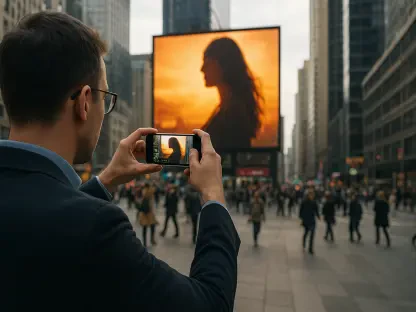
The final layer of this technological shift is the complete decentralization of the traditional production studio. The historical reliance on heavy-duty desktop workstations has faded in favor of high-performance mobile applications that fit entirely within a smartphone. This mobility eliminates the lag between an idea and a published campaign, enabling real-time reactions to cultural trends as they happen. Professional-grade marketing studios are no longer confined to an office, allowing creators to ideate and edit while on the move. However, this shift requires a new methodology of on-the-fly branding that prioritizes immediacy over the slow approval cycles of the past.
Emerging Trends: Scalable Content and Predictive Insights
As we look toward the remainder of 2026 and into 2028, the most significant emerging trend is hyper-personalization at scale. Because AI aggregators have lowered the cost of asset production to near zero, brands are moving away from generic, one-size-fits-all campaigns. Instead, they use these systems to iterate on a single concept, generating dozens of variations tailored to micro-demographics in a single afternoon. Furthermore, a regulatory shift is occurring as the industry moves toward standardized AI-labels to maintain consumer trust. Experts predict that the market will eventually transition toward predictive creation, where content is generated based on real-time data trends before a human even identifies the specific opportunity.
Strategic Evolution: Shifting Professional Value from Execution to Oversight
The major takeaway for modern professionals is that the role of the marketer has evolved from an operator to a director. To stay competitive in the current year, individuals must shift their focus from learning specific software menus toward mastering the art of the creative prompt and strategic narrative. Businesses should prioritize investing in integrated stacks rather than chasing individual tools to ensure long-term scalability. The best practice for 2026 is to treat artificial intelligence as a ubiquitous utility while doubling down on human taste and emotional intelligence. Applying this information requires a total audit of current workflows to identify where manual technical tasks can be offloaded to automated systems.
Final Reflection: How the Closing of the Creative Gap Redefined Marketing
The transition of the digital marketing industry in 2026 successfully closed the gap between thought and execution, allowing the quality of an idea to become the primary differentiator. This period demonstrated that when technical drudgery was removed, the strategic value of the human creator actually increased rather than diminished. The most successful brands were those that embraced integrated platforms to move at the speed of social discourse while maintaining a distinct cultural voice. Ultimately, the industry shifted its focus toward storytelling and emotional resonance, proving that the most advanced tools served only to amplify the human vision behind the campaign. Leaders who prioritized these integrated systems established a new benchmark for efficiency that redefined professional success for the rest of the decade.