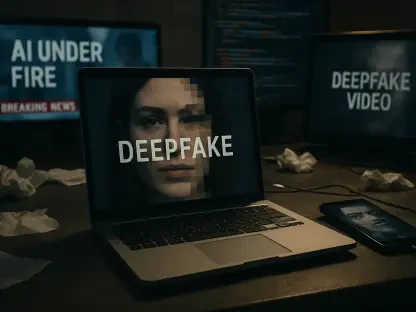

The distinction between a digital artifact generated by a machine and a masterpiece directed by a human has never been more critical than it is in today’s saturated media environment. As generative tools transition from experimental novelties into the backbone of professional production workflows, the industry faces a fundamental shift in how value is defined. This evolution marks a departure from the “magic button” era, where any automated output was seen as an achievement, toward a more disciplined era of “raw material” generation. In this new landscape, the primary challenge is no longer technical accessibility but the preservation of human intentionality amidst a sea of algorithmically driven mediocrity.
The Evolution of Generative AI in the Creative Landscape
The journey of generative artificial intelligence has moved rapidly from the fringes of computer science laboratories to the center of global creative departments. Initially, these tools were used primarily for low-stakes experimentation or as a novelty to pique audience interest through bizarre, surrealist imagery. However, as the underlying models grew more sophisticated, the focus shifted from sheer automation to the creation of high-fidelity “raw material.” Professionals now recognize that AI-generated assets are rarely a finished product but rather a highly flexible foundation upon which a human creator must build.
This transition highlights the importance of “taste” as the final arbiter of quality. In a world where anyone can generate a thousand words or a hundred images in seconds, the ability to distinguish between professional-grade work and generic digital “slop” becomes the most valuable skill a creator possesses. The technology has effectively lowered the floor for content creation, allowing for unprecedented speed, but it has simultaneously raised the ceiling for what constitutes a meaningful contribution. Human intentionality acts as the filter, ensuring that the output serves a specific purpose rather than merely filling space on a digital platform.
Core Components of High-Quality AI Workflows
The 80/20 Labor-Direction Framework
A successful implementation of generative AI relies on a specific division of labor known as the 80/20 framework. Under this model, the human creator provides 80% of the creative vision and strategic direction, while the AI handles 80% of the mechanical execution. This synergy allows for a massive reduction in the time spent on repetitive tasks such as research, initial drafting, and reference gathering. Instead of spending hours on a blank page or a rough storyboard, the professional uses AI as an “engine” to produce multiple structural iterations that can then be refined and molded.
Moreover, the performance characteristics of AI are best utilized when the technology is treated as a highly capable assistant rather than a primary author. By offloading the “heavy lifting” of data synthesis and technical rendering, the creator is free to focus on the high-level decisions that define a brand or a narrative. This approach mitigates the risk of creating generic content because the core architecture of the work remains fundamentally human. When used this way, the technology amplifies existing expertise, allowing a single individual to manage production scales that would have previously required a large team.
Structured Prompting and Iterative Refinement
The days of vague, one-sentence commands are fading as professional creators adopt more sophisticated “structured prompting” methods. High-quality output is now the result of explicit parameter setting, where lighting, mood, tone, and specific stylistic constraints are defined with surgical precision. This movement toward technical direction requires a deeper understanding of both the creative craft and the specific logic of the AI model. A professional does not simply ask for a “blog post”; they provide proprietary data, specific audience personas, and detailed structural outlines to ensure the output aligns with a clear point of view.
Iterative refinement is the second pillar of this process, typically involving a three-phase cycle. The first phase is exploration, where the creator uses the tool to test various concepts and see what is possible within the given constraints. The second phase is refinement, where the focus narrows and the AI is pushed to correct errors or adjust tone. Finally, the sharpening phase involves a manual edit to remove “AI-isms”—those repetitive linguistic patterns or sterile visual textures that reveal the machine’s involvement. This rigorous cycle ensures that the final product feels authentic and deliberate rather than automated.
Emerging Trends: Moving Beyond the “Slop” Phenomenon
The digital marketplace is currently experiencing a saturation of low-quality, mass-produced content, often referred to as “slop.” This phenomenon occurs when creators use AI as a shortcut rather than a system, leading to a race to the bottom where volume is prioritized over engagement. However, a counter-trend is emerging among high-end creators who prioritize “directed” content. These professionals realize that audiences are becoming increasingly sophisticated and can instinctively sense when a piece of media lacks a human soul. As a result, the bar for true audience engagement is actually rising even as the cost of production falls.
In contrast to the sterile perfection often found in raw AI output, modern industry behaviors are shifting toward the incorporation of intentional imperfections. This might involve introducing subtle grain to a video, using more complex and less “optimized” sentence structures in writing, or choosing visual angles that feel more “handheld” and raw. These choices help maintain authenticity in a landscape where every image is perfectly lit and every sentence is grammatically flawless. By rejecting the “averaged” output of standard datasets, creators can maintain a unique stylistic integrity that stands out in a crowded field.
Real-World Applications in Professional Media
In high-end video production, generative tools are being used to facilitate complex visual storytelling by manipulating specific lighting and mood parameters that were previously too expensive or time-consuming to adjust in post-production. Creators are now able to communicate unique proprietary data through stylized visualizations that remain under strict architectural control. This application allows for a more fluid creative process where ideas can be visualized and iterated upon in real-time, significantly shortening the gap between a concept and its realization.
In the realm of expertise-driven text generation, the most successful deployments involve AI as a tool for amplification rather than replacement. Professional writers and subject matter experts use the technology to organize their existing knowledge more efficiently, generating frameworks that they then populate with unique insights and original research. This ensures that the final output is not just a regurgitation of its training data but a piece of thought leadership that offers genuine value. Case studies show that this method results in higher retention and better conversion rates compared to fully automated text generation.
Critical Challenges and the “Shortcut Trap”
One of the primary technical hurdles facing creators is the “averaged output” problem, where the AI model tends toward the most statistically likely result. This often results in a lack of cultural or contextual nuance, as the machine lacks the lived experience to understand subtle social cues or niche historical references. When creators fall into the “shortcut trap” and present raw AI output as original thought, they risk damaging brand trust. If the audience discovers that the “expertise” they are consuming is actually a hollow synthesis of existing web content, the perceived value of the creator’s brand can evaporate overnight.
Furthermore, regulatory and ethical obstacles continue to create friction in the professional landscape. Questions regarding copyright, style integrity, and the ethical use of proprietary data are still being debated in courts and boardrooms alike. There is a legitimate concern that the ease of production will lead to a devaluation of creative labor, forcing professionals into a difficult position where they must compete with the sheer volume of automated content. Maintaining a unique voice while using tools designed to mimic others requires a high degree of ethical clarity and a commitment to transparency with one’s audience.
Future Outlook: AI as a New Creative Baseline
As we move deeper into the current decade, the ability to produce content quickly will become a commodity rather than a competitive advantage. When everyone has access to high-speed generative tools, the “speed of production” metric loses its meaning. The projected long-term impact is a landscape where “human-in-the-loop” systems are the standard for all high-impact creative work. The creators who thrive will be those who can manage complex narrative arcs and maintain strict control over the architectural vision of their projects, even as the tools handle more of the granular execution.
Potential breakthroughs in the ability of AI to handle longer and more complex narrative arcs are on the horizon, but these will still require a human to provide the thematic depth and emotional resonance that machines cannot simulate. The future of content creation lies not in the replacement of the artist but in the evolution of the artist into a master of these new creative instruments. The focus will shift from the mechanics of “how” something is made to the strategic and artistic decisions of “why” it is made in the first place.
Final Assessment and Summary
The shift from viewing generative AI as a simple shortcut to treating it as a sophisticated creative instrument was the defining development of the recent creative landscape. The industry successfully moved past the initial hype of automation and began the hard work of integrating these tools into nuanced, professional workflows. It became clear that while the technology could handle the heavy lifting of production, it remained fundamentally incapable of possessing an independent “vision” or “taste.” Those who succeeded were the creators who maintained a firm grip on the directional reins, using the speed of the machine to allow for deeper refinement rather than just higher volume.
Strategic decisions and artistic integrity emerged as the only sustainable defenses against the rising tide of generic digital material. The technology reached a state of powerful assistance that empowered small teams to execute grand visions, yet the “shortcut trap” remained a constant threat to those who prioritized efficiency over quality. Ultimately, the survival of the professional creator in this evolving digital landscape required a focus on what the machine could not do: understand the weight of a story or the cultural significance of a specific aesthetic choice. The baseline of creation changed, but the necessity for human soul and intentionality remained the ultimate metric of success.