
The digital landscape is currently witnessing a paradox: while AI allows us to produce content at an unprecedented volume, consumer trust is reaching an all-time low. Anastasia Braitsik, a global leader in SEO and data analytics, argues that the “trust gap” is widening because many marketers use AI as a shortcut rather than an architectural foundation. In this interview, she explains how to move beyond generic “slop” by integrating visceral storytelling, multimodal optimization, and rigorous human-in-the-loop governance. We explore how shift metrics from vanity to intent and why the future of marketing depends on merging machine scale with human judgment.
How should a structured AI brief differ from a simple prompt when defining audience pain points and brand voice? What specific guardrails prevent generic output, and how does this architectural approach change the role of the human strategist during the initial planning phase?
A simple prompt is often a reactive shortcut, whereas a structured brief acts as a piece of strategic infrastructure. To prevent the “slop” that results from vague instructions, a brief must include specific audience segments, the exact emotional response you intend to trigger, and concrete “on-brand” examples. I advocate for explicit negative guardrails—listing phrases to avoid or cultural nuances that the machine might miss—which ensures the AI doesn’t default to its predictable, generic middle ground. This architectural approach fundamentally shifts the human strategist’s role from a mere editor to a high-level designer who sets the parameters before any generation occurs. In practice, this means the workflow is no longer linear; it becomes a loop where a human sets the strategy, evaluates the raw AI material against 100% of the strategic goals, and only then moves to the refinement stage.
Audiences often ignore predictable content before they even consciously process it. How can creators bypass the analytical filter to trigger a visceral emotional response, and what specific sensory details or narrative structures help ensure a message is encoded into long-term memory?
The human brain is a prediction machine that filters out the expected, which is why “safe” corporate content is essentially invisible. To bypass this, we must target the limbic system first through visceral storytelling that uses sensory details like sight, sound, and texture to evoke a physical reaction. I often point to the “before-and-after” structure or the first-person perspective as reliable ways to build an immediate human-to-human connection that logic alone cannot achieve. For instance, instead of stating a coffee shop is “open 24 hours,” we describe the “late-night grinders” and “fuel that traveled 4,000 miles,” transforming a dry fact into a lived reality. This emotional “hook” ensures the content passes through the initial gate of interest so that logic can justify the attention and the memory can finally encode the message.
Syndicating the same asset across different social platforms often leads to audience fatigue and lower engagement. What does it look like to adapt a core story into various platform “dialects,” and how do you determine which formats best serve specific stages of the conversion funnel?
Effective distribution is about translation, not just syndication, because a polished corporate video that works on LinkedIn will feel alienating in the raw, high-velocity environment of TikTok. You must adapt the story’s core to the native dialect of each platform: Instagram for visual aspiration, TikTok for raw entertainment, and YouTube for long-form narrative depth. In the conversion funnel, I recommend using short-form video and interactive content at the top to grab attention quickly, while reserved audio and deep-dive long-form text sit in the middle to build intimacy. A great example is the “Hyperbolist” campaign, which used the same narrative theme of luxury travel but expressed it through fast-paced discovery on Reels and detailed itinerary guides on YouTube. This allows a user to encounter the destination multiple times without experiencing the “repetition fatigue” that comes from seeing a recycled asset.
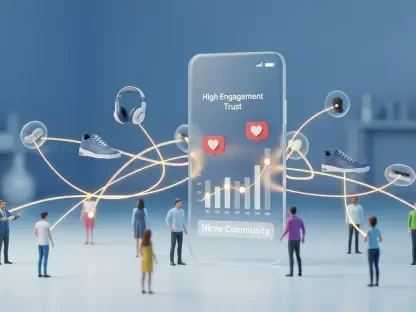
Many organizations find that vanity metrics like likes and follower counts fail to reflect actual audience intent. Which behavioral signals, such as scroll depth or completion rates, provide more accurate insights into brand affinity, and how should these signals be translated into business outcomes?
Vanity metrics are dangerous because they represent visibility rather than genuine intent; a user who taps a heart but scrolls on in two seconds is far less valuable than one who watches 90% of a video. Behavioral signals like watch time, scroll depth, and completion rates are the true indicators of whether your narrative resonated or if the audience bailed after five seconds. We need to shift our vocabulary when speaking to leadership, translating “5,000 likes” into “validated brand alignment with a core demographic” or “high watch time” into “retained attention on a complex message.” In the modern landscape, SEO has shifted toward these retention signals, meaning that engagement velocity and “saves” are what actually trigger algorithmic amplification. By defining these outcomes before hitting publish, content is repositioned as a measurable business driver rather than a simple marketing output.
Efficiency often comes at the cost of cultural sensitivity and factual accuracy. Where exactly should human checkpoints be placed within an automated production cycle, and how does transparently disclosing the use of AI tools actually serve as a competitive advantage?
Human checkpoints are mandatory at the evaluation and cultural review stages to catch “hallucinations” and ensure the brand voice doesn’t drift into a soulless, generic void. I believe every AI workflow needs a “Human-in-the-Loop” requirement where a person takes full ownership of the message, particularly regarding factual accuracy and sensitivity. Transparently labeling content as “AI-Assisted” or “Synthetically Generated” is not a sign of weakness; it is a sign of respect for the audience’s intelligence and a mark of strategic competence. In an era of infinite, invisible content, this honesty becomes a competitive differentiator that strengthens credibility rather than weakening it. Organizations that hide their AI use risk a slow erosion of brand trust that is far more expensive to fix than the time saved through automation.
High-tech execution often lacks a meaningful core when the human element is sidelined. Looking at successful AI-assisted creative projects, how do you balance machine-driven scale with human judgment to ensure the final product resonates emotionally? Please describe the division of labor required to avoid the “uncanny valley.”
To avoid the “uncanny valley,” we must maintain a strict division of labor where the human provides the emotional core and the machine provides the execution capacity. A perfect example is the award-winning short film “Lily,” which was 70% AI-generated but succeeded because it focused on elemental human themes like guilt and isolation. While Google’s Veo and Flow tools handled the signature aesthetic and scene fine-tuning, they didn’t “invent” the story or understand why a doll at a crime scene is haunting. The machine-driven scale allowed for high-tech execution, but the human judgment ensured that characters emoted with genuine nuance. This balance ensures that the final product feels authentic and resonant rather than technically competent but emotionally hollow.
What is your forecast for the future of AI-driven content marketing?
I forecast that the future will belong to organizations that stop treating AI as a source of “more” and start treating it as a tool for “better” through a hybrid of machine scale and human meaning. As audiences become even more sophisticated, the “trust gap” will only be closed by those who prioritize provenance, ethical transparency, and high-quality storytelling over pure volume. We will see a shift where content is no longer judged by the tools used to create it, but by the human judgment that steered those tools to create something worth reading. Ultimately, the winners in 2026 and beyond will be the ones who place the human back at the center of the workflow, using technology to amplify empathy rather than replace it.