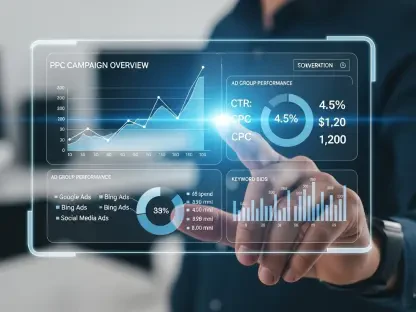

Advertisers who once relied exclusively on platform-provided metrics are now discovering that the most profound competitive advantage lies within their own proprietary customer databases. This shift marks a pivotal moment in digital marketing, where the ability to seamlessly integrate first-party data is becoming the new standard for campaign success. The focus is moving away from broad, anonymous signals toward a more nuanced understanding of customer value, directly influencing every dollar of ad spend.
The New Frontier of Google Ads Your First Party Data
The digital advertising ecosystem is undergoing a fundamental transformation, moving decisively toward an era dominated by first-party data. This change is not merely a trend but a necessary evolution driven by consumer privacy expectations and the phasing out of third-party cookies. In response, Google is developing features that empower advertisers to leverage the data they rightfully own, closing the gap between online advertising efforts and real-world business outcomes.
A new beta feature allowing for the direct integration of external data sources within Google Ads conversion settings represents this new frontier. It facilitates a more direct and frictionless pipeline for an advertiser’s proprietary information, such as sales records or CRM data, to inform campaign measurement. This guide explores how this capability reshapes campaign measurement, enhances optimization, and ultimately drives a more transparent return on investment.
Why Connecting Your Data Is No Longer Optional
Navigating the modern advertising landscape presents significant hurdles, from stringent privacy regulations to the signal loss caused by the end of third-party cookies. These challenges often create a blind spot in performance data, making it difficult to understand the true impact of advertising campaigns. Without a complete view of the customer journey, advertisers risk making decisions based on incomplete or inaccurate information, leading to wasted ad spend and missed opportunities.
Direct data integration offers a powerful solution to these problems. By connecting a business’s own data sources to Google Ads, it is possible to overcome the data gaps left by cookie deprecation, ensuring more accurate and resilient measurement. Moreover, this enriched data provides Google’s automated bidding algorithms with higher-quality performance signals, allowing them to optimize for outcomes that matter most, such as customer lifetime value rather than just initial conversions. Consequently, this leads to clearer attribution, linking ad clicks to tangible business results like offline sales and delivering a much stronger return on investment.
Leveraging the New Data Integration A Practical Guide
Successfully implementing this new feature requires careful preparation and a strategic approach. The goal is to create a seamless flow of high-quality, proprietary data into the Google Ads platform. This process involves identifying valuable data sources within the business, ensuring the data is clean and structured, and then establishing the technical connection to enrich campaign signals.
Actionable use of this integration goes beyond a simple setup. It involves a strategic mindset where advertisers continuously analyze which data points provide the most lift to their campaigns. By treating first-party data as a dynamic asset, businesses can refine their bidding strategies, improve targeting, and unlock a more holistic understanding of campaign performance that was previously unattainable.
Directly Connecting Your Database as a Conversion Source
The new integration appears within the conversion action settings, offering a streamlined method for linking external data. This feature allows advertisers to connect databases like BigQuery or MySQL directly to their Google tag, establishing an official conversion source that pipes proprietary data into the platform. This connection serves as a bridge, allowing information from a company’s internal systems to communicate directly with Google’s advertising ecosystem.
For instance, consider a retailer with both an e-commerce site and physical stores. By connecting its point-of-sale system to Google Ads, the business can attribute in-store purchases to specific online campaigns. When a customer who clicked an ad makes a purchase in-store, that sales data is fed back to Google Ads, providing a complete picture of how digital advertising drives offline revenue. This closes a critical loop in attribution, revealing the true ROI of their online efforts.
Enriching Conversion Signals for Smarter Bidding
Simply tracking conversions is no longer sufficient for achieving a competitive edge. The true power of this integration lies in sending enriched, high-quality data that goes beyond basic transaction events. By passing proprietary signals such as calculated customer lifetime value, lead quality scores, or product margins, advertisers can teach Google’s algorithms what a truly valuable customer looks like for their specific business.
A B2B SaaS company provides a compelling example. Instead of optimizing for all form submissions, the company can pass lead qualification data from its CRM directly into Google Ads. As leads are qualified by the sales team, that information is sent back as an enriched conversion signal. Over time, this trains the platform to deprioritize low-quality inquiries and aggressively bid for traffic that is most likely to result in high-value, enterprise-level customers.
The Verdict Is This Beta Feature Right for You?
The strategic importance of this direct data integration capability was undeniable. It represented a crucial step toward a more transparent, effective, and privacy-conscious advertising future. By placing first-party data at the core of campaign optimization, this tool empowered businesses to build more resilient and intelligent marketing strategies that were less dependent on third-party signals.
This feature offered significant benefits to a wide spectrum of advertisers, from small businesses using a CRM to track qualified leads to large enterprises managing complex customer databases. The democratization of such a sophisticated tool meant that advanced measurement was no longer the exclusive domain of companies with extensive technical resources. However, it was important to acknowledge the feature’s beta status and the prerequisite of a well-maintained first-party data strategy. Businesses that had already invested in organizing their customer data were best positioned to capitalize on this powerful new capability.