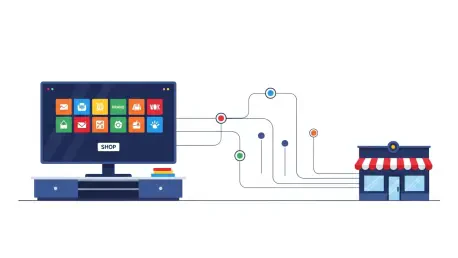

The landscape of global commerce is currently undergoing a radical metamorphosis as traditional retailers pivot toward becoming high-tech advertising engines that rival the power of legacy silicon valley firms. Walmart’s recent acquisition of Vibe.co for approximately $1.4 billion signifies a monumental shift in how the organization perceives its role within the digital advertising ecosystem. By integrating this advanced connected television technology, the retail giant is transcending its heritage as a brick-and-mortar storefront to establish itself as a formidable media titan through its Walmart Connect arm. This strategic maneuver is not merely about increasing brand visibility; it represents a calculated attempt to own the platforms where digital advertisements are served to consumers. By controlling the technology stack used to deploy streaming advertisements, the company is effectively moving away from being a mere purchaser of media space to becoming a landlord of the digital world, where brands pay for access to a loyal audience.
Strategic Transition from Advertiser to Media Owner
Central to this acquisition is the targeted objective of unlocking the vast potential found within the small and medium-sized business sector, which has historically been priced out of the television market. Vibe.co serves as a critical activation layer that simplifies the complex process of purchasing and deploying advertisements on streaming platforms, stripping away technical hurdles that once required massive agencies. By making connected TV ads as accessible and manageable as social media or search engine marketing, Walmart is inviting a new wave of diverse advertisers into the living room environment. This shift democratizes access to premium screen real estate, allowing smaller boutique brands to compete for attention alongside multinational corporations. The result is a more vibrant and competitive advertising marketplace where the barrier to entry is no longer a multi-million dollar budget but rather a well-targeted campaign powered by sophisticated retail data that ensures every dollar spent reaches its intended buyer.
Building on this foundation, the transition from being a heavy advertiser on external platforms to owning the media pipeline allows for unprecedented control over the customer journey and advertising lifecycle. Historically, the company spent hundreds of millions of dollars to reach potential shoppers on third-party websites and social networks, but the current strategy prioritizes internalizing these costs to boost overall profitability. By leveraging a massive repository of first-party consumer data gathered from millions of daily transactions, the company offers advertisers a degree of targeting precision that traditional media companies simply cannot match. This move mirrors a broader industry trend where retailers are transforming into media networks to capture high-margin revenue streams that offset the lower margins typically associated with physical retail goods. As the organization develops this ecosystem, it creates a self-sustaining cycle where consumer insights drive advertising efficiency and retail growth.
Technological Integration of Hardware and Data
This technological evolution is further bolstered by the strategic integration of Vizio, the smart TV manufacturer that was recently brought under the corporate umbrella to provide a hardware foundation for these efforts. By owning both the physical devices in the living rooms of millions of households and the software infrastructure used to manage ad inventory, the company has created a seamless end-to-end media environment. This vertical integration allows for direct control over the viewing experience, enabling the retailer to place advertisements precisely when and where they are most likely to influence consumer behavior. The ability to bridge the gap between what a consumer watches on their television and what they eventually purchase in a physical store or online represents a significant leap forward in marketing technology. Unlike legacy television advertising which often relied on broad demographics, this model provides granular visibility into how specific media exposures translate into commerce across multiple touchpoints.
One of the most revolutionary aspects of this integrated model is the implementation of a robust closed-loop measurement system that provides marketers with definitive proof of their advertising effectiveness. In a traditional media setting, it was nearly impossible to tell if a television commercial directly resulted in a sale, leading to significant waste in marketing budgets and a lack of accountability for spend. However, the current infrastructure enables the company to link an ad impression on a Vizio screen directly to a verified purchase through a customer’s Walmart account or credit card data. This level of transparency provides a verifiable return on investment that modern marketers demand in an increasingly data-driven global economy. By offering this precision, the company has established a new standard for accountability in the advertising industry, forcing competitors to rethink how they justify their own media offerings while providing brand partners with the confidence to scale their digital investments significantly.
Future Implications for Interactive Commercial Content
As this infrastructure matures, the focus has shifted toward pioneering shoppable media formats where viewers can purchase products directly through their television screens without ever leaving their favorite shows. This strategy blurs the lines between passive entertainment and active commerce, utilizing original content and influencer partnerships to create a frictionless shopping experience. By integrating QR codes, remote-controlled purchasing, and voice-activated commerce into the streaming environment, the organization is effectively turning every consumer touchpoint into a potential point of sale. This innovation places the company in a unique competitive position against other digital giants like Amazon and Google, who are also racing to dominate the intersection of media and retail. The combination of a massive physical footprint with advanced digital ad-tech provides a distinct advantage that digital-only entities struggle to replicate as the living room becomes the newest frontline for modern retail competition.
The successful integration of these diverse technologies moved the company into a leadership position within the retail media sector while establishing a clear roadmap for future growth. Decision-makers throughout the industry recognized that the ownership of both data and distribution channels was essential for survival in a rapidly consolidating market. By prioritizing the development of a closed-loop ecosystem, the organization addressed the long-standing problem of advertising attribution and paved the way for more efficient marketing strategies. Brands that embraced these new platforms found they could reach niche audiences with localized precision that was previously unattainable on a national scale. Forward-looking strategies then focused on refining the user experience to ensure that commercial content felt like a value-added service rather than an interruption. This era of transformation proved that the most successful retailers were those who viewed their customers as an audience whose attention was as valuable as their collective shopping power.