
Anastasia Braitsik, a global leader in SEO, content marketing, and data analytics, stands at the forefront of the next evolution in digital marketing operations. With years of experience navigating the complexities of multi-channel performance, she has become a leading voice on how to move beyond basic automation toward deep, structural integration of artificial intelligence. Her insights are particularly timely as marketing teams struggle to balance the speed of AI with the need for high-level human judgment and brand-specific nuance.
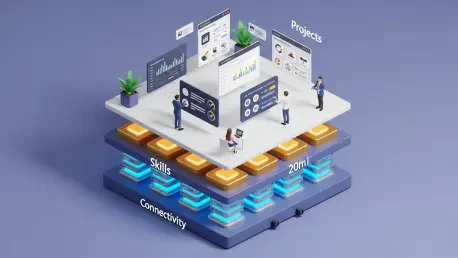
Our discussion focuses on the transition from using AI as a simple execution tool to treating it as a foundational piece of business infrastructure. We explore the limitations of the current “copy-paste” workflow that leaves many analysts frustrated with generic results. The conversation highlights a three-layer stack consisting of the Model Context Protocol for live connectivity, “Skills” for maintaining behavioral consistency across teams, and Claude Projects for organizing institutional knowledge. Together, these elements transform AI from a novelty into a sophisticated member of the marketing team.
Many marketing teams rely on static CSV exports and manual data pasting into AI models. What are the fundamental risks of this “AI-assisted copy-pasting,” and how does it compromise the quality of marketing insights?
The most immediate danger is that the AI is effectively working in a vacuum, operating on a static snapshot that is often outdated before the analysis is even finished. When you log into Google Ads, export a report, and manually move that data, you are feeding a high-performance engine stale fuel that lacks the pulse of your actual business. This painful, repetitive process means the AI is blind to your current cost-per-acquisition targets or the specific shifts that occurred between Monday and Friday. It creates a ceiling on quality where the output feels inconsistent—sometimes sharp, but often generic—requiring the team to spend more time editing than they would have spent doing the work manually. Instead of a powerful strategist, the AI becomes a very expensive clipboard, unable to recognize if a campaign is underperforming against your goals in real-time.
The Model Context Protocol is described as giving AI “eyes” into a business. Could you explain how this shifts the dynamic for a PPC team when they are managing live Google Ads accounts?
The Model Context Protocol, or MCP, acts as the vital sensory layer that finally allows an AI to see and interact with live data sources directly. For a PPC team, this means the AI is no longer a passive recipient of old CSV files; it can query the Google Ads official MCP server to surface search term reports or budget pacing issues as they happen. You can ask for a comparison of performance across campaigns and receive an answer based on what is happening in the account right now, rather than waiting for a manual export. This shift is categorical because the performance gap between acting on fresh data versus data from three days ago is real and measurable in our industry. It removes the friction of manual formatting, allowing the strategist to focus on high-stakes decisions rather than the logistics of data movement.
One of the biggest challenges for agencies is scaling senior-level expertise. How do “Skills” within an AI framework help bridge the gap between a junior hire and a seasoned analyst?
Skills represent the single biggest operational unlock because they capture the implicit, “unwritten” knowledge that usually takes a junior hire six months to absorb through osmosis. By defining a set of persistent instructions once, you bake the senior analyst’s judgment into every single conversation the team has with the AI. This includes everything from how to structure a campaign audit to the specific tone required for a conservative client versus a growth-stage startup. Instead of relying on a junior staffer to remember to check Quality Score distribution or conversion lag windows, the Skill ensures that Claude follows that exact checklist every time. This effectively floors the minimum quality of work, making the agency’s output predictable, consistent, and reflective of its best practices from day one.
When we look at the operational container of Claude Projects, how should an in-house marketing team versus a global agency structure these environments to maximize productivity?
For an agency, the most effective setup is typically one Project per client, where the environment is pre-loaded with that specific brand’s business model, audience data, and historical performance benchmarks. This ensures that any team member, from an account lead to a strategist covering for a colleague, starts from a fully briefed position. In contrast, an in-house team thrives by building Projects around specific functions or workflows, such as a dedicated paid search Project that holds naming conventions and bidding philosophies. In this environment, a question about which campaigns are over-budget becomes a two-second query rather than a 20-minute reporting exercise. Whether it’s a content Project holding a brand voice guide or a reporting Project that knows exactly what the CMO cares about, the goal is to make every conversation build on the last one rather than starting from scratch.
Setting up this three-layer stack sounds like a significant shift in philosophy. What are the practical steps a team needs to take to move from seeing AI as a shortcut to treating it as essential infrastructure?
The shift isn’t actually a massive technical hurdle, but rather a decision to prioritize the environment over the individual prompt. Setting up a Google Ads MCP connection can be done in a single afternoon, and drafting a core Skills document usually takes just a few hours and one honest conversation about what your best people do differently. You have to move away from the “novelty” phase where you hope for a lucky prompt and instead build a durable framework where context accumulates over time. This involves loading your brand guidelines, seasonal patterns, and specific attribution models into Projects so the AI can function as a well-briefed team member. Once the infrastructure is in place, the environment gets smarter with every interaction, separating the teams that are building something lasting from those still stuck in the “export and paste” cycle.
What is your forecast for the future of AI-driven marketing operations?
I believe we are rapidly approaching a point where the “execution layer” of marketing—the actual pulling of reports and drafting of basic copy—will be entirely handled by these live-connected environments. The real value will shift entirely to the “judgment layer,” where human experts focus on refining the Skills and context that guide these models. We will see the end of the “generalist AI” in professional settings, replaced by highly specialized, live-data environments that possess the institutional memory of the entire firm. Teams that invest the few hours needed to set up these stacks now will see a compounding productivity gain that will be nearly impossible for “copy-paste” competitors to catch up with in the coming years.