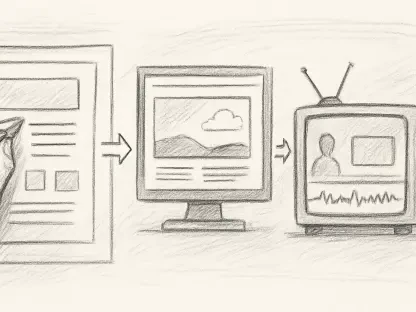

The traditional banner ad is no longer the silent workhorse of the digital marketing world as consumer habits have pivoted sharply toward immersive video feeds and interactive content experiences. This shift marks the decline of the legacy Google Display Network and the rise of Demand Gen, a platform built to thrive in an era defined by visual storytelling and algorithmic discovery. By unifying various touchpoints, Google aims to streamline the path from initial brand awareness to direct action.
Artificial intelligence serves as the backbone of this transition, moving beyond simple keyword matching to a sophisticated understanding of consumer intent. Brands are now tasked with moving from static imagery to multi-platform experiences that adapt to the user environment in real time. The integration of Discovery, Video, and Display into a single umbrella allows for a cohesive narrative that follows the user across their favorite digital spaces.
The current landscape is dominated by personalized content streams where attention is a scarce and valuable commodity. To capture this interest, the advertising ecosystem has evolved to prioritize native-feeling placements that blend into the user experience. As video feeds become the primary method of content consumption, the shift to Demand Gen ensures that marketing efforts remain relevant and engaging to a modern audience.
The Evolution of Visual Advertising in the AI Era
The transition from static banners to immersive formats reflects a fundamental change in how media is consumed across the web. While the Google Display Network once relied on being seen in the periphery, Demand Gen places the brand at the center of the action on YouTube and Discover. This evolution acknowledges that modern users interact with ads that feel like an organic extension of their social or entertainment browsing.
Machine learning models now analyze trillions of signals to predict which creative variations will resonate with specific segments. This shift allows advertisers to capture consumer interest the moment it is piqued, rather than waiting for a specific search query. By leveraging AI, the platform identifies high-value users who exhibit behaviors suggesting they are ready for a new brand discovery.
The unification of Discovery, Video, and Display assets under a single campaign type simplifies the management of complex digital journeys. Instead of managing fragmented campaigns, advertisers can now provide a consistent visual experience that bridges the gap between different Google properties. This strategic push ensures that every impression contributes to a holistic understanding of the consumer.
Major Shifts in Consumer Engagement and Market Projections
Emerging Technologies and the Rise of Social-Style Ad Formats
The influence of YouTube Shorts and Google Discover has fundamentally altered the expectations for advertising effectiveness. Users are increasingly drawn to vertical, short-form video content that offers quick bursts of information and entertainment. Consequently, the Demand Gen framework prioritizes these social-style formats to mirror the scrolling habits that define the mobile-first era.
AI-driven lookalike segments have become the primary method for scaling reach, effectively replacing traditional interest-based targeting which often lacked precision. By analyzing the characteristics of existing high-performing customers, these segments find new prospects with uncanny accuracy. This move toward shoppable and interactive ad creatives reduces the friction between the initial moment of discovery and the final purchase.
Performance Metrics and the Future Growth of Demand Gen
Data-driven projections for 2026 and 2027 suggest that advertisers will see significant conversion lifts by moving away from legacy formats. Video-first advertising spend within the Google ecosystem is expected to grow as brands prioritize engagement over simple reach. Early adopters of Demand Gen have already reported higher click-through rates compared to traditional Display ads.
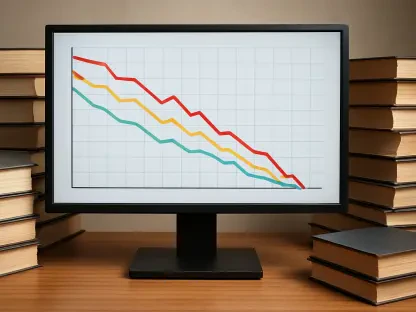
As the 2027 mandatory migration deadline approaches, the adoption rate of AI-powered campaigns is expected to accelerate. Analysts forecast that the return on ad spend will stabilize at higher levels as predictive algorithms become more refined. Comparing legacy Display metrics with current Demand Gen performance reveals a clear trend toward more efficient and active demand stimulation.
Navigating the Challenges of Automated Migration
Transitioning historical campaign data is a complex process that requires careful oversight to avoid performance dips known as cold starts. Utilizing the specialized migration tools provided by Google allows for the porting of up to six weeks of history, ensuring that the AI has a baseline to work from. Maintaining this continuity is essential for businesses that rely on consistent lead generation during the transition.
Advertisers must also manage the mandatory inclusion of the Google Display Network during the initial stages of migration. While the goal is to expand into video and social feeds, the legacy network still provides a broad reach that serves as a foundation for the new campaign type. Balancing these diverse placements requires a nuanced approach to creative asset management and budget allocation.
The shift from static assets to high-resolution video and carousels presents a significant creative hurdle for many traditional marketing departments. High-quality production is no longer optional; it is the currency of the Demand Gen platform. Ensuring that bidding strategies are aligned with these new assets is critical to maintaining cost efficiency while scaling brand presence.
Compliance, Reporting, and the New Regulatory Landscape
The phase-out of third-party cookies has pushed the industry toward privacy-centric lookalike modeling. Demand Gen leverages first-party data to maintain targeting accuracy without compromising user privacy. This adaptation ensures that brands can still reach relevant audiences in a landscape where traditional tracking methods are no longer viable or compliant.
Transparency requirements are met through format-level segmentation reporting, which allows advertisers to see exactly where their budget is being utilized. Understanding the performance of individual placements across YouTube, Gmail, and Google Maps is vital for optimizing ROI. This level of detail helps brands ensure their safety across diverse and high-traffic digital environments.
Adapting to automated optimization standards requires a balance between machine efficiency and human oversight. While the algorithms handle the heavy lifting of placement and bidding, advertisers must remain vigilant regarding data security. Maintaining compliance with global regulations while utilizing advanced AI tools is the hallmark of a modern, responsible marketing strategy.
The Future of Intent-Based Marketing and Predictive Algorithms
Predictive AI is set to further refine how high-value customers are identified before they even realize a need for a specific product. By analyzing subtle patterns in browsing and engagement, algorithms can place ads in front of users at the exact moment of peak receptivity. This level of foresight transforms advertising from a reactive tool into a proactive engine of business growth.
The integration of generative AI will soon allow for the creation of thousands of dynamic ad variations tailored to individual preferences. This means that two different users may see entirely different visual treatments of the same product based on what the AI predicts will appeal to them. Such deep personalization was once a theoretical goal but is now becoming a functional reality within the Google ecosystem.
Global ad spend is anticipated to shift heavily toward these immersive, full-funnel experiences as platforms prioritize user engagement. Machine learning will continue to streamline the cross-channel journey, making the transition from a YouTube video to a Gmail promotion feel seamless. The end goal is an ecosystem where the user never feels interrupted, but rather guided by relevant and timely suggestions.
Strategic Recommendations for a Seamless Transition
The migration process that began in 2026 was a pivotal moment for digital marketers who sought to modernize their reach. The 2026-2027 timeline required a disciplined approach to asset auditing and the adoption of manual migration tools. This period demonstrated that early movers who embraced lookalike segments gained a significant competitive advantage over those who clung to outdated interest targeting.
The transition to Demand Gen solidified the importance of high-definition video as the primary medium for consumer persuasion. The platform effectively bridged the gap between passive awareness and intent-driven action, proving that AI could manage complex user journeys with minimal manual intervention. Businesses that invested in their creative libraries and moved away from static imagery were rewarded with more robust data sets and improved optimization cycles.
Actionable steps for the current cycle involve a thorough audit of all creative assets to ensure they meet the specific requirements for YouTube Shorts and Discover. Advertisers should prioritize the implementation of first-party data to fuel lookalike modeling, as this remains the most effective way to scale in a privacy-first world. Finally, testing various bidding strategies against the new format-level reporting will ensure that budgets are deployed with maximum efficiency for long-term growth.