
The metamorphosis from a text-centric interface into a multifaceted visual engine has fundamentally redefined the parameters of professional and personal creative workflows. This evolution signifies a departure from the era of isolated digital experiments, positioning synthetic imagery as a central pillar of the modern creative economy. By integrating sophisticated generative capabilities directly into a conversational framework, the technology has bridged the gap between complex prompt engineering and intuitive human intent. This review examines how this transition has empowered a new generation of creators to move beyond linguistic interaction toward a fully realized multimodal experience.
The integration of advanced visual models within the OpenAI ecosystem represents a strategic pivot toward versatility and accessibility. In the current landscape of 2026, the technology is no longer viewed as a standalone novelty but as a foundational layer for diverse industrial applications. This relevance is underscored by the shift from a passive tool that responds to queries to an active participant in the creative process. This change matters because it democratizes high-end visual production, allowing individuals without formal graphic design training to manifest complex ideas with a level of fidelity previously reserved for specialized studios.
The Evolution of Generative Art within the OpenAI Ecosystem
The core principles of this technology rely on a deep understanding of the relationship between descriptive language and visual composition. Unlike earlier iterations that often misinterpreted nuanced instructions, the current model uses a more sophisticated latent diffusion process to ensure that the output aligns with the user’s specific intent. This component-based approach allows for a granular level of detail, where lighting, texture, and perspective are treated as interconnected variables rather than randomized elements.
This evolution is particularly significant within the broader technological landscape as it marks the completion of the transition to a multimodal powerhouse. By merging natural language processing with high-fidelity image synthesis, the system provides a seamless workflow that reduces the friction of switching between different creative tools. The uniqueness of this implementation lies in its ability to maintain a conversational thread, where the model remembers previous iterations and can make precise adjustments based on follow-up dialogue, a feature that distinguishes it from static competitors.
Core Technical Features and Performance Metrics
Advanced Visual Reasoning and Text Rendering
One of the most impressive technical milestones in this review is the model’s performance in generating accurate textual elements within images. For years, synthetic art was plagued by nonsensical characters and distorted fonts, making it nearly impossible to use AI for professional branding or editorial work. However, the current iteration demonstrates a robust capacity for text rendering, maintaining clear ligatures and consistent kerning even in complex layouts. This capability is vital for designers who need to produce mockups, posters, or social media assets that require immediate legibility.
The significance of this visual reasoning extends to how the model understands the spatial hierarchy of objects. It no longer simply “hallucinates” items into a frame; instead, it places them with a logical understanding of physics and occlusion. This means that if a user requests a skateboarder suspended over a cityscape, the model correctly calculates the shadows and the perspective of the buildings below. For professional design workflows, this precision reduces the need for extensive manual retouching, allowing for a faster transition from concept to final product.
Stylistic Control and Aspect Ratio Flexibility
Another critical feature is the enhanced control over artistic styles, ranging from hyper-realistic photography to abstract expressionism. Users can manipulate the “mood” of an image by referencing specific cinematic lighting or historical art movements without the model losing the structural integrity of the subject. This technical depth allows for a highly customized output that fits the specific aesthetic requirements of a brand or project. The model functions as a digital chameleon, adapting its brushstrokes and color palettes to match the user’s unique vision.
The flexibility in aspect ratios further cements the technology’s utility across various digital and physical media formats. Whether a project requires a vertical 9:16 orientation for social platforms or a wide 21:9 cinematic banner, the model intelligently recomposes the scene rather than simply cropping it. This customization ensures that the focal points remain balanced regardless of the dimensions. This technical adaptability is a major advantage for marketing teams who must deploy a single concept across a multitude of advertising channels, from mobile screens to massive urban billboards.
The Shift Toward Two-Directional Creative Philosophy
The most recent developments in this field highlight a transition toward a “two-directional” creative philosophy, where the developer provides the foundation and the user base defines the ultimate value. This approach, championed by leadership in community and culture, suggests that the technology is most effective when it serves as a silent partner to human imagination. By focusing on creator-led showcases, the narrative has shifted away from the autonomous power of the algorithm toward the unique perspectives of the people using it. This philosophy prioritizes the “soul” of the artwork, ensuring that the technology remains a tool for expression rather than a replacement for it.
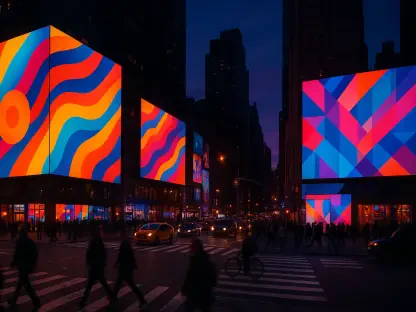
Urban marketing campaigns are currently reflecting this shift by moving away from showcasing technical utility and toward highlighting collaborative human expression. Instead of advertising the software’s speed or processing power, recent initiatives have turned metropolitan hubs into public galleries. This strategy humanizes the AI, presenting it as a shared canvas for the community. By emphasizing how local artists reimagine their own surroundings, the campaign fosters a sense of ownership among the public, making the technology feel like a communal resource rather than a distant corporate product.
Real-World Applications and Localized Storytelling
The deployment of this technology in cities like Detroit, Chicago, and Miami offers a glimpse into its real-world potential for urban marketing and cinematic storytelling. In these environments, the AI is used to transform traditional advertising spaces into interactive digital galleries. For example, the use of curved billboards in major hubs creates a “visual portal” effect, drawing pedestrians into a localized narrative that reflects the specific architecture and energy of their city. This application proves that generative art can enhance physical landscapes, providing a more dynamic and engaging alternative to static imagery.
Localized storytelling is further exemplified by unique use cases that reflect regional cultural backdrops. In Miami, dynamic displays near the Pérez Art Museum feature user-submitted concepts, such as surreal creatures interacting with local landmarks, which creates a rotating exhibition of neighborhood imagination. This level of engagement turns the city itself into a digital gallery, where the technology serves as the bridge between metropolitan geography and individual creativity. These examples demonstrate that the technology is not just for digital consumption but has a tangible, transformative impact on public art and communal identity.
Navigating Technical Constraints and Ethical Implementation
Despite the rapid progress, the technology faces notable hurdles, particularly in maintaining artistic consistency across multiple generated images. While a single frame may look perfect, achieving the same character likeness or environmental detail in a subsequent prompt remains a technical challenge for many creators. This limitation can hinder widespread professional adoption in industries like filmmaking or long-form graphic novels where continuity is non-negotiable. Ongoing development efforts are currently focused on refining these “persistent” elements to allow for more complex, narrative-driven storytelling.
Ethical implementation and regulatory hurdles also present significant obstacles, especially concerning public AI displays. As synthetic imagery becomes more prevalent in urban spaces, questions regarding the transparency of AI-generated content and its impact on the labor market for traditional artists have intensified. Some markets have seen resistance to the widespread use of automated art in public spheres, citing concerns over the “authenticity” of urban aesthetics. Navigating these issues requires a balanced approach that promotes technical innovation while respecting the cultural and professional standards of the creative community.
Future Outlook: AI as a Collaborative Partner
The trajectory of ChatGPT image generation suggests it will soon evolve from a simple generator into a sophisticated, real-time production partner. We are moving toward a period where the distinction between “creating” and “directing” becomes increasingly blurred. Breakthroughs in real-time manipulation will likely allow users to edit specific layers of an image during the generation process, providing a level of surgical precision that was previously impossible. This evolution will transform the interface into a living workspace where the AI anticipates the needs of the creator, suggesting improvements in composition or lighting.
Long-term development will likely focus on humanizing the AI as a global canvas for imagination. This means moving beyond the “input-output” model and toward a relationship where the technology understands the cultural and emotional context behind a request. By becoming more attuned to human nuance, the model will serve as a powerful tool for global storytelling, allowing voices from diverse backgrounds to visualize their histories and futures with unprecedented ease. The long-term impact of this shift will be a more inclusive creative landscape, where the barriers to high-quality visual expression are permanently lowered.
Final Assessment of the Creative Landscape
The bridge between complex software and everyday creativity was successfully established through the strategic integration of creator-led initiatives and technical refinements. This review indicated that the technology was most effective when it functioned as an invisible collaborator, amplifying the intent of the human user rather than dictating the final output. The successful deployment of urban galleries across the United States demonstrated that synthetic media had the power to enhance physical reality when guided by localized, human-centric narratives. This assessment highlighted that the true value of the tool lay in its ability to democratize imagination, making high-end production accessible to all.
The state of the technology suggested that future advancements would rely on deeper integration between technical precision and ethical transparency. Professionals who leaned into the collaborative nature of the tool discovered new avenues for storytelling that were previously cost-prohibitive. As the industry moved forward, the emphasis shifted from the novelty of generation toward the utility of sophisticated production. Ultimately, the creative landscape was forever changed by the realization that AI was not a replacement for the artist, but a vast, programmable canvas that expanded the boundaries of what was possible to visualize in the modern world.