
The traditional landscape of channel management has long been defined by a fundamental irony: enterprises spend millions on partner portals that their distributors and resellers almost universally despise. This structural inefficiency has created a digital graveyard of unused marketing assets, where high-quality content sits trapped behind complex navigation menus and login screens. The arrival of the AI-native Partner Marketing Execution Platform (PMEP) marks a decisive break from this history, shifting the burden of campaign execution from the human partner to a coordinated system of intelligent agents.
The Evolution of Partner Marketing: From Portals to AI-Native Systems
For decades, the “portal” was the gold standard for partner engagement, yet it functioned more as a friction-heavy repository than a growth engine. Partners were expected to act as amateur marketers, manually searching for white papers, resizing banners, and translating copy for local markets. This manual dependency acted as a hidden tax on global productivity, often resulting in a small fraction of a partner network actually generating demand.
The shift toward AI-native systems represents a fundamental re-engineering of the user experience. Instead of requiring a partner to learn a specific software interface, these new platforms prioritize conversational interaction. By moving away from static libraries and toward dynamic generation, the technology addresses the primary reason most channel programs fail: the sheer amount of time required for a partner to launch a single campaign.
Technical Architecture and Core Functionalities
Multi-Agent AI Systems and Workflow Automation
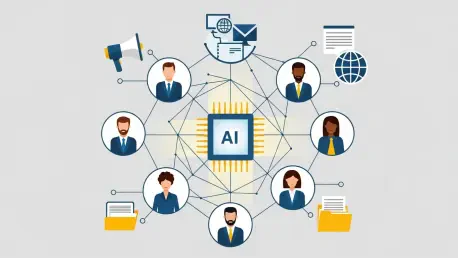
At the heart of the PMEP lies a multi-agent architecture that functions like a digital marketing department. Unlike basic chatbots that simply answer questions, these agents are specialized to handle specific domains such as budget allocation, creative design, and lead tracking. They coordinate with one another to ensure that a request for a “webinar series” results in a complete set of invitations, landing pages, and follow-up sequences.
This orchestration is what separates true AI-native tools from legacy software with an added AI “skin.” By automating the administrative labor that previously required dozens of manual steps, the system allows enterprises to scale their operations without a linear increase in headcount. The agents maintain a persistent state, meaning they remember previous campaign performance and adjust future recommendations accordingly.
The “Just Ask” Natural Language Interface
The technical sophistication of the platform is hidden behind a deceptively simple “Just Ask” interface. This conversational UI utilizes advanced natural language processing to translate vague partner goals into executable marketing tactics. For instance, a reseller can prompt the system to “build a month-long campaign for healthcare clients in Germany,” and the platform will instantly synthesize the necessary assets.
This interface effectively democratizes sophisticated marketing capabilities. It removes the technical barrier to entry, allowing sales-focused partners who lack dedicated marketing teams to compete at an enterprise level. The backend translates these prompts into complex API calls and content generation tasks, bridging the gap between human intent and digital execution.
Automated Localization and Brand Governance Engines
One of the most significant performance benchmarks of this platform is its ability to maintain brand integrity across thousands of autonomous partners. Historically, localization was a slow, expensive process prone to error. The PMEP uses integrated brand governance engines that act as automated gatekeepers, ensuring that every AI-generated asset adheres to the latest corporate style guides and legal requirements.
The localization tools go beyond simple translation by adapting cultural nuances and local formatting. Because these checks happen in real-time within the generation workflow, the risk of “shadow marketing”—where partners create their own off-brand materials—is virtually eliminated. This creates a rare balance between local flexibility and global control.
Emerging Trends in Frictionless Partner Execution
The industry is currently witnessing a move toward “total partner activation,” where the goal is to involve every segment of the channel, not just the top-tier players. This trend is fueled by the realization that untapped potential exists in the “long tail” of smaller partners who were previously ignored due to the high cost of support. AI eliminates this cost barrier, making it possible to provide high-touch marketing assistance to every reseller simultaneously.
Moreover, the integration of generative AI is fundamentally changing B2B buyer behavior. Customers now expect personalized, relevant content at every touchpoint. In contrast to old-school mass mailing, the new era of partner marketing focuses on hyper-targeted execution. This shift is removing the productivity tax that once plagued indirect sales, allowing for a more fluid movement of information and value across the ecosystem.
Real-World Applications and Large-Scale Deployments
Enterprise-Level Integration within the Microsoft Ecosystem
The most prominent validation of this technology is its deployment across Microsoft’s expansive network of over 500,000 partners. By utilizing the Azure OpenAI Service as the backbone for the PMEP, Microsoft has demonstrated that AI-native marketing can scale to handle the complexities of a global leader. This implementation serves as a blueprint for how massive content repositories can be made accessible through a single, intelligent gateway.
This deployment proves that the platform can survive the rigors of a diverse partner base with varying levels of technical maturity. The ability to manage such a vast volume of data while maintaining sub-second response times for conversational queries highlights the maturity of the underlying infrastructure.
Optimizing Indirect Revenue Streams and Pipeline Visibility
Enterprises are deploying these systems to gain much-needed visibility into their global sales pipelines. Traditionally, the “indirect” side of the business was a black box, with corporate headquarters having little insight into how partners were actually promoting products. By centralizing execution through an AI-native platform, companies gain real-time data on which campaigns are being launched and which are resonating with customers.
This data-driven approach allows for a more tactical allocation of market development funds. Instead of guessing which partners deserve investment, leadership can see exactly who is engaging and where the revenue is likely to emerge. This transparency directly correlates with higher growth in indirect revenue streams.
Navigating Technical Obstacles and Market Adoption
Despite the clear advantages, the technology faces hurdles, particularly regarding the integration with legacy CRM and ERP systems. Many organizations still rely on fragmented data silos that can hinder the AI’s ability to provide accurate insights. Ensuring that the multi-agent system has a clean, unified view of customer data remains a primary focus for ongoing development.
Furthermore, navigating the complex landscape of global data privacy regulations, such as GDPR, requires constant vigilance. The platform must ensure that while it automates localization and personalization, it does not inadvertently mishandle sensitive partner or lead information. Balancing automated efficiency with rigid compliance is an ongoing technical challenge that requires sophisticated data anonymization and encryption protocols.
The Future of AI-Driven Channel Marketing
The trajectory of this technology points toward hyper-personalized partner journeys that are entirely predictive. Future versions of these platforms will likely anticipate a partner’s needs before they even ask, suggesting specific campaigns based on emerging market trends or localized economic shifts. Predictive analytics will move from a secondary feature to the core driver of the entire marketing strategy.
We are also likely to see breakthroughs in how these systems interact with non-human entities, such as automated procurement bots. As the enterprise landscape becomes more autonomous, the PMEP will evolve to negotiate and execute marketing tasks between different AI agents with minimal human oversight. This would represent the final stage of the transition to a truly frictionless global market.
Comprehensive Review Summary and Outlook
The transition from manual, self-service portals to automated, AI-driven marketing engines has fundamentally altered the relationship between enterprises and their partners. By removing the administrative burdens that previously stifled creativity and speed, the Partner Marketing Execution Platform has turned a fragmented ecosystem into a unified growth vehicle. This technology proved that the “hidden tax” on channel productivity was not an inevitable cost of doing business, but rather a limitation of the previous generation of software.
Moving forward, organizations should prioritize the consolidation of their data environments to fully leverage these multi-agent systems. The shift toward natural language interfaces will continue to lower the barrier for partner participation, making “total activation” an achievable goal rather than a theoretical ambition. As these platforms become more integrated with predictive modeling, the focus will shift from simply executing campaigns to optimizing the entire partner lifecycle in real-time. The era of the passive partner portal has officially ended, replaced by an era of proactive, intelligent execution.