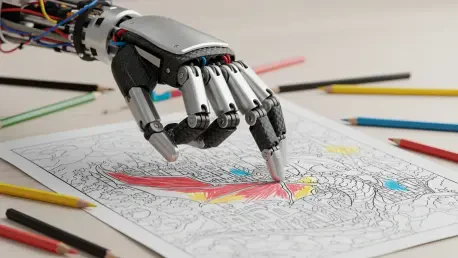

In a digital landscape saturated with fleeting advertisements and algorithm-driven content, brands are discovering that the most effective way to capture consumer loyalty is not through louder messages but through shared creative experiences. The challenge of cutting through the incessant noise has prompted a search for more meaningful forms of engagement. This quest has led marketers to an unconventional yet powerful tool: AI-generated coloring pages, a technology that merges the nostalgic, hands-on appeal of a classic pastime with the sophisticated capabilities of artificial intelligence.
This innovative approach offers a unique marketing asset that does more than just display a product; it invites the consumer into a collaborative brand interaction. By transforming brand imagery into interactive art, companies are fostering deeper connections and creating memorable touchpoints that traditional digital advertising struggles to achieve. The rise of this technology signals a significant shift in marketing strategy, prioritizing active participation over passive consumption and demonstrating that genuine engagement can be as simple and enjoyable as a coloring activity.
Beyond the Banner Ad: Can a Coloring Page Genuinely Capture Customer Attention?
The modern consumer has developed a high level of immunity to conventional digital advertising. Banner blindness, the phenomenon where users consciously or unconsciously ignore ad-like information, is a pervasive challenge for marketers. Standard display ads are often perceived as intrusive interruptions rather than valuable content, leading to low engagement rates and diminished brand recall. This digital advertising fatigue necessitates a fundamental rethinking of how brands approach their audience, moving away from disruptive tactics toward more inviting and interactive methods.
In this context, AI-generated coloring pages emerge as a surprisingly effective solution. They function not as an advertisement to be ignored, but as a gift of creative expression. By offering a relaxing and engaging activity, a brand can capture a user’s undivided attention for a significant period, far longer than the few seconds a typical ad might receive. This unique format leverages the universal appeal of coloring—a calming, nostalgic activity—and combines it with the novelty of cutting-edge technology, creating a marketing tool that feels less like a promotion and more like a personalized experience.
The New Frontline of Customer Engagement: Why Interactive Content Matters
The consumer-brand relationship has evolved significantly, with audiences now expecting more than passive content. There is a growing demand for active, participatory experiences that allow individuals to interact with and even co-create brand content. This shift is at the heart of experiential marketing, a strategy focused on immersing customers within a brand’s world to foster a more profound and emotional connection. Interactive content is no longer a novelty but a core component of successful engagement strategies.
AI coloring pages directly align with this trend by transforming a marketing message into a memorable, hands-on activity. When a customer spends time coloring a brand’s logo, a new product, or a custom-designed scene, they are not just seeing the brand; they are actively engaging with it on a creative level. This process builds positive associations and fosters a sense of personal investment that a static advertisement could never replicate. The result is not just fleeting attention but the foundation of deeper brand loyalty, built on a positive, shared experience.
Unpacking the Technology: How AI Transforms Brand Assets into Engaging Content
The technological foundation of AI coloring page generators is what makes this marketing tool both powerful and accessible. A key feature is the dual-input generation process, which allows businesses to create content from either visual or textual sources. Marketers can upload existing assets like product photos, company logos, or images from a recent event, and the AI converts them into detailed line art. Alternatively, they can use creative text prompts—such as “a family enjoying our new beverage at a summer picnic”—to generate entirely new, custom scenes. This flexibility enables a wide range of applications, from turning a new product line into an interactive launch campaign to creating thematic content for seasonal promotions.
Precision and brand alignment are ensured through a suite of advanced customization tools. Businesses can adjust aspect ratios to fit specific formats, remove distracting backgrounds for cleaner designs, and upscale the resolution to guarantee professional, print-ready quality. For more detailed adjustments, a “Remix” function allows users to refine a generated image without starting over. Using a simple brush tool to highlight an area and a text command to describe the desired change, a marketer can fine-tune designs to perfectly match brand guidelines. This level of control ensures that the final output is not only engaging but also a polished representation of the brand.
These platforms are built to meet business needs for efficiency and scalability. The generation process is remarkably fast, converting inputs into coloring pages in a matter of seconds. Furthermore, bulk generation capabilities empower companies to create large quantities of assets for extensive projects, such as preparing hundreds of unique activity sheets for a trade show or developing a full coloring book as a promotional giveaway. This combination of speed and scale makes it a practical tool for campaigns of any size. The quality of the output is paramount, with the AI preserving intricate details, from facial expressions in a photograph to fine textures on a product, delivering high-fidelity PDF and PNG files ready for both digital distribution and physical printing.
A Marketer’s Review: The Standout Features Driving Campaign Success
From a business perspective, the most significant advantage of this technology is its ability to produce exceptionally sharp and detailed line art. In a market where quality reflects on the brand, offering a crisp, professionally rendered coloring page creates a premium customer experience that sets a company apart. This high fidelity ensures that whether the image is of a complex product or a detailed logo, the resulting coloring page is engaging and aesthetically pleasing, reinforcing a perception of quality and care.
Industry experts highlight the platform’s flexibility as a primary driver of its utility across diverse marketing departments. The capacity to generate designs from both visual uploads and text-based prompts makes it an incredibly adaptable tool. A social media manager can quickly create content for an online contest, while an event planner can design on-theme activities for attendees. This versatility breaks down creative silos and provides a single, powerful resource for multiple marketing functions. A compelling anecdote comes from a small retail business that transformed a simple photograph of its storefront into a community-wide coloring contest. This initiative generated significant local buzz, drove foot traffic, and filled their social media feeds with user-generated content, all from a single, easily created asset.
Launching Your First Interactive Campaign: A Three-Step Guide
Embarking on an interactive marketing campaign with AI coloring pages is a straightforward and accessible process. The first step involves instant access and creation. Marketers can navigate directly to a browser-based tool like ColorMe.ai, which requires no software downloads or tedious sign-up processes. This immediate accessibility eliminates barriers to entry, allowing for rapid experimentation and content creation right from the homepage.
The second step is to provide the creative asset that will form the basis of the coloring page. A user can choose one of two paths: either upload a specific brand image, such as a new product photo or a corporate logo, to have it converted into a detailed coloring sheet, or input a descriptive text prompt to have the AI generate a completely original scene from scratch. This dual-input system provides maximum creative freedom, catering to both asset-driven and concept-driven campaign needs.
Finally, the third step is to download and deploy the newly created marketing tool. After the AI generates the design, it can be previewed for any final adjustments. Once approved, the high-quality PDF or PNG file is downloaded and ready for immediate integration into various marketing channels. This could include sharing it in a social media post to drive engagement, embedding it in an email newsletter as exclusive content for subscribers, printing it as a flyer for an in-store event, or featuring it on a website as a downloadable activity for visitors.
The strategic implementation of AI-generated coloring pages marked a pivotal shift from broadcast advertising to interactive brand-building. Businesses that adopted this technology found a novel way to cut through the digital clutter, offering customers a valuable and enjoyable experience instead of another disruptive ad. The process transformed static brand assets into dynamic points of engagement, fostering creativity and building positive associations that strengthened customer loyalty. This approach demonstrated that effective marketing was not about who shouted the loudest, but who created the most meaningful connections. The success of these campaigns rested on a simple truth: giving an audience a way to participate with a brand was far more powerful than just asking for their attention.