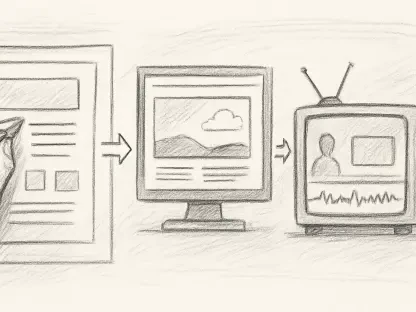

In a bustling urban environment, the sheer volume of visual information can overwhelm the senses, yet many digital billboards still broadcast the same static message regardless of who is watching or what is happening around them. This fundamental gap between the advanced technology of digital screens and the actual content they display represents a significant missed opportunity for advertisers who are already accustomed to the precision of social media and mobile platforms. Digital Out-of-Home advertising is currently moving away from its origins as a one-to-many broadcast medium and is rapidly evolving into a sophisticated tool for contextual, hyper-local communication. By integrating Dynamic Creative Optimization, brands are finally beginning to bridge the divide between their internal consumer datasets and the physical infrastructure of public spaces. This transition marks a significant departure from traditional mass-market strategies, shifting the focus toward localized content that adapts to environmental factors.
Modernizing the Creative Landscape
Overcoming Historical Barriers: The Shift toward Efficiency
Historically, the primary argument against implementing highly localized or dynamic content in out-of-home advertising centered on the perceived complexity and prohibitive costs of production at scale. Advertisers often felt that the effort required to create hundreds of individual variations for different locations far outweighed the potential return on investment, leading many to stick with generic, national creative. However, the maturation of digital screen networks and the standardization of creative templates have effectively dismantled these old barriers, allowing assets to be generated automatically based on live data feeds. The current challenge for the industry is no longer found in the technical limitations of the hardware or the software, but rather in an outdated perception that these tools are difficult to manage. Modern platforms now enable marketers to deploy sophisticated, data-driven campaigns across multiple global networks with the same ease as a standard digital display ad.
Scaling Dynamic Creative: Automation and Programmatic Delivery
The introduction of programmatic buying into the out-of-home sector has further accelerated this transition by providing the necessary pipes for dynamic content delivery across vast geographic areas. While the infrastructure is now robust, a significant number of creative agencies and brand managers still treat high-resolution digital displays like traditional paper billboards, failing to utilize the personalization tools that are already sitting in their marketing stacks. This disconnect prevents campaigns from reaching their full potential, as the intelligence used to target mobile users is rarely extended to the one medium that uniquely captures attention in the physical world. Moving forward, the emphasis must shift from simply buying screen time to creating intelligent systems where the creative itself responds to the immediate environment. By prioritizing a more agile approach to content creation, brands can ensure their public messaging is as relevant and timely as a smartphone notification.
Integrating Brand Intelligence: The Power of First-Party Data
Integrating brand-specific intelligence directly into public advertising represents the next logical step for companies looking to maximize the impact of their existing data repositories. Most large organizations already possess massive amounts of first-party data, ranging from real-time inventory levels to customer loyalty program metrics, yet this information is rarely used to inform the creative content of nearby digital screens. Dynamic Creative Optimization serves as the vital technological link that turns a static public display into a contextually aware platform, capable of surfacing the exact information a viewer needs at any given moment. For example, a major retailer could use its internal inventory tracking to show only products that are currently in stock at the nearest store location. This level of synchronization ensures that advertising spend is never wasted on promoting unavailable items, while simultaneously providing a more streamlined experience for the consumer.
Behavioral Context: Adapting to the Environment in Real Time
The transition toward data-integrated displays also allows for a more sophisticated understanding of how physical space influences consumer behavior throughout different parts of the day. Unlike mobile advertising, which focuses on the individual, localized digital out-of-home ads capitalize on the shared experience of a specific location, whether it is a transit hub or a shopping center. When a brand connects its CRM data with these public touchpoints, it creates a powerful synergy that reinforces the brand’s presence in the consumer’s daily life. This strategy moves beyond simple demographics and enters the realm of behavioral context, where the message changes based on whether it is a rainy morning commute or a sunny weekend afternoon. As brands become more adept at leveraging these real-time triggers, the line between traditional outdoor advertising and personalized digital service will continue to blur, making the medium more indispensable for reaching modern audiences.
Driving Practical Results Through Local Context
Localized Resonance: Connecting National Brands with Communities
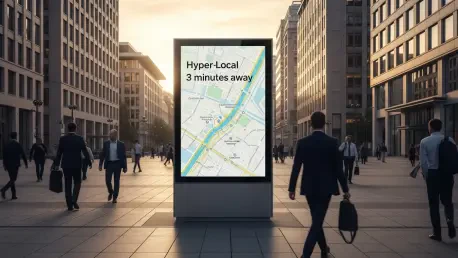
Localization offers a robust framework for national brands to establish a genuine sense of belonging within specific communities, transforming a generic corporate message into a locally relevant conversation. By automatically inserting hyper-local details, such as the specific neighborhood name or the distance to a nearby landmark, advertisers can significantly increase the resonance of their campaigns. This approach addresses the common criticism that national advertising feels detached or impersonal, as it acknowledges the unique geography and culture of the audience viewing the screen. When a consumer sees an ad that mentions their specific town or points them toward a shop just three blocks away, the mental barrier between the brand and the individual begins to dissolve. This strategy is particularly effective in high-traffic urban areas where consumers are often looking for immediate solutions or directions, turning an advertisement into a functional piece of local information.
Strategic Implementation: Evolving toward a Responsive Model
Successful marketers recognized that the path forward required a fundamental shift in how they approached the relationship between their data and the physical world. They implemented strategies that prioritized the integration of live environmental triggers, ensuring that every screen served a specific purpose for its local audience rather than acting as a static image. By moving away from rigid, pre-rendered content, organizations discovered that they could increase the efficiency of their campaigns while simultaneously reducing the friction between the brand and the consumer. The decision to embrace localized, dynamic systems provided a clear roadmap for growth, emphasizing that the most effective advertising was that which remained responsive to its surroundings. Professionals who adopted these methods early were able to secure a competitive advantage by turning public displays into intelligent, helpful platforms. This evolution proved that the strength of the medium resided in its ability to deliver the right information at exactly the right location.