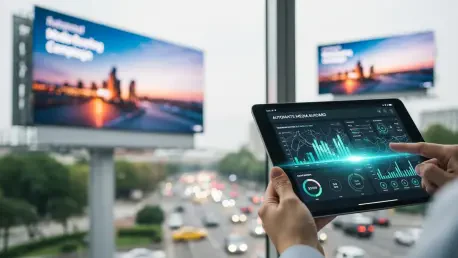

The traditional static billboard has undergone a radical transformation into a dynamic, data-driven engine that effectively bridges the gap between massive physical reach and digital precision. This shift has turned Digital Out-of-Home (DOOH) from a peripheral experiment into a central component of modern media strategies. By merging the scale of public screens with the automation of digital platforms, brands now command physical spaces with the same agility as social media feeds.
Major market players are redefining public-space advertising in a world where digital saturation makes physical presence more valuable. Technological synergy between demand-side platforms and physical inventory allows for a seamless integration of out-of-home assets into broader omnichannel campaigns.
The Evolution of Programmatic DOOH from Niche Experiment to Mainstream Powerhouse
The transition toward automated buying has allowed DOOH to shed its reputation as a rigid, manual medium. Advertisers now leverage programmatic pipes to access premium inventory instantly, allowing for a more fluid allocation of resources across various geographic markets and screen types.
This evolution reflects a broader trend where the physical world is treated as an extension of the digital ecosystem. As iconic placements become accessible via standardized bidding, the medium has secured its place as a powerhouse for both local and global brand initiatives.
Modern Drivers and Market Dynamics Propelling DOOH Investment
Emergent Technologies and the Shift Toward Performance-Driven Media Planning
Media buyers no longer view large-scale screens solely as awareness tools, as the integration of real-time data triggers has turned the medium into a responsive channel. Factors like traffic patterns and weather conditions now dictate creative delivery, ensuring messages resonate with the immediate environment.
Precision targeting, once reserved for mobile or desktop display, is now a reality in the public square. This allows brands to capture consumer attention during critical moments of the physical journey, making every impression more relevant to the surrounding context.
Analyzing Growth Projections and the Influx of Incremental Budgets
Financial momentum behind this channel is significant, with growth rates often outpacing other high-interest sectors like connected TV. A large portion of this capital represents incremental spending, suggesting that marketers see unique value in DOOH that other digital channels cannot replicate.
The shift is further supported by a change in key performance indicators toward outcome-oriented metrics. Buyers now prioritize search uplift and store visitation alongside traditional reach, proving that physical screens can drive measurable bottom-funnel actions.
Navigating the Complexities of a Fragmented Digital-Physical Ecosystem
Despite the rapid ascent of the medium, the fragmentation of inventory across different providers remains a logistical challenge. Media buyers must navigate a landscape of varying screen resolutions and technical requirements to maintain creative consistency across large-scale networks.
The gap between digital attribution and physical reality necessitates more sophisticated measurement strategies. Reconciling these differences is essential for proving the total value of a campaign and ensuring that omnichannel strategies remain cohesive across all touchpoints.
Ensuring Accountability through Privacy Standards and Measurement Frameworks
As the industry becomes more data-reliant, adherence to global privacy standards like GDPR and CCPA has become a top priority. Adopting privacy-by-design frameworks ensures that location-based targeting remains effective without compromising the integrity of consumer information or public trust.
Standardized measurement protocols are being established to provide a transparent view of campaign performance. These frameworks allow advertisers to compare DOOH impact directly with other media, fostering a sustainable environment for long-term investment and accountability.
The Future of Out-of-Home: Blurring the Lines Between Branding and Performance
The trajectory of the market points toward a hybrid model where the distinction between brand awareness and direct conversion continues to fade. Emerging technologies like AI-driven creative optimization are set to lower the barriers for smaller brands, increasing market diversity and efficiency.
As global economic conditions demand higher returns on ad spend, DOOH is positioned as the primary bridge between digital planning and physical consumer behavior. This convergence will likely result in even more immersive experiences that blend seamlessly into the daily lives of audiences.
Securing the Competitive Edge in the Next Era of Programmatic Advertising
Forward-thinking brands successfully adopted programmatic screens as a primary pillar of their media mix to drive tangible growth. They moved away from viewing physical advertising as a secondary tactic and instead integrated it into their core automated workflows to maximize impact.
The most effective strategies involved a deep commitment to advanced measurement and real-time flexibility. By embracing these tools, marketers ensured their messages remained visible and relevant in an increasingly crowded media environment, setting a new standard for efficient public communication.