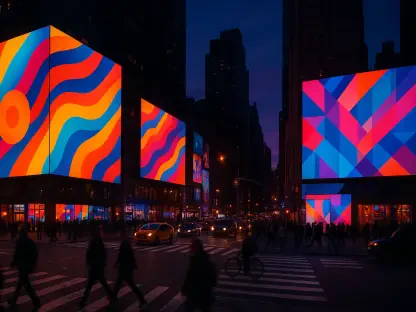

The move toward digital integration ensures that outdoor advertising remains a cornerstone of the marketing mix in an increasingly connected and mobile society. While the industry once relied on static images that stood unchanged for months, the current environment demands an agile approach that responds to the fluid nature of consumer movement. This transition has rendered the labor-intensive practices of printing large-scale vinyl and manual installation largely obsolete for high-traffic zones. Instead, modern technology enables brands to inhabit physical spaces with a vitality that matches the digital interfaces found in pockets and on desks. This radical metamorphosis has turned the traditional billboard from a passive background element into an active participant in the broader media landscape. As urban centers become more crowded with information, the ability to refresh content instantly has become a critical competitive advantage for agencies seeking to maintain high levels of visibility.
Strategic Drivers and Contextual Versatility
Digital Out-of-Home (DOOH) advertising has bridged the gap between physical reality and digital precision by introducing unprecedented levels of tactical flexibility. Unlike the analog boards of previous decades, today’s digital screens allow for sophisticated dayparting, where specific messages are triggered by time or environmental conditions. A beverage company can now promote hot coffee during a cold morning rush and seamlessly switch to advertisements for refreshing iced drinks as the afternoon sun peaks. This contextual relevance ensures that marketing budgets are deployed with maximum efficiency, as messaging remains tailored to the immediate needs and moods of the audience. By utilizing real-time weather feeds or traffic data, advertisers can adjust their creative assets to solve consumer problems in the moment, such as suggesting car washes after a storm. This level of responsiveness was impossible in the era of static vinyl, where a single message had to suffice for weeks.
The visual dominance afforded by high-resolution LED panels represents a significant upgrade over traditional media formats. These vibrant displays are engineered to cut through the significant visual noise inherent in modern metropolitan environments, providing a level of brightness and clarity that commands attention even in direct sunlight. Beyond the aesthetic appeal, the transition to digital infrastructure has fundamentally changed the operational economics of the industry. While the initial capital expenditure for advanced hardware is notable, the long-term operational savings are substantial. The elimination of physical printing, shipping, and specialized labor for installation allows for a higher volume of creative rotations without the associated logistical overhead. This shift enables brands to experiment with more daring visual storytelling, knowing they can iterate or change course without waiting weeks for a new physical board to be produced and hung by a professional crew.
Data Integration and Programmatic Infrastructure
One of the most transformative aspects of the current evolution is the introduction of rigorous accountability to outdoor media. In the past, agencies were forced to rely on historical traffic counts and broad estimates to justify the efficacy of a billboard location. Today, the integration of anonymized location data and advanced sensors provides a granular understanding of the audience passing a screen. These systems can identify demographic trends, foot traffic volume, and even dwell times without compromising individual privacy. This wealth of information allows for a level of transparency that was previously exclusive to online advertising platforms. Advertisers now have access to detailed reporting that shows exactly how many people were exposed to a specific creative execution and at what time of day. This shift toward empirical evidence has turned outdoor advertising into a measurable performance channel that can be integrated directly into broader data-driven marketing strategies for global brands.
Strategists who optimized their digital workflows successfully navigated the complexities of this transition. They prioritized the adoption of programmatic platforms to ensure real-time responsiveness to market fluctuations. By investing in specialized creative talent, organizations produced high-impact visuals that leveraged the unique capabilities of LED technology. These leaders also established rigorous data protocols to verify audience engagement and justify marketing spend to stakeholders. The integration of mobile-to-screen interactivity proved to be a decisive factor in driving retail foot traffic and brand loyalty. Ultimately, the industry moved away from isolated advertising silos toward a holistic ecosystem where digital and physical touchpoints worked in tandem. Businesses that viewed the digital screen as a vital node in a connected network managed to secure long-term growth and high visibility in an increasingly competitive environment.