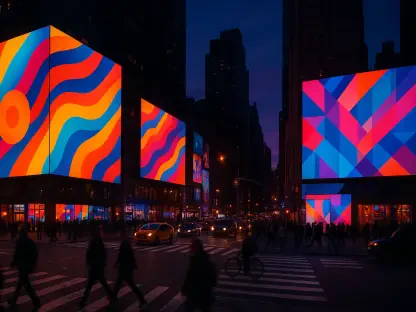

The rapid metamorphosis of urban landscapes into interconnected digital ecosystems is no longer a distant projection but a lived reality for the millions of commuters navigating the modern transit corridors of the United Kingdom. As the digital out-of-home (DOOH) industry matures, a distinct shift toward premium roadside assets has become the defining characteristic of market leadership. Major players are moving away from traditional coverage models to focus on high-traffic commuter corridors where brand dominance can be established through sheer frequency and visual impact. Route Media’s recent expansion in Cardiff serves as a prime example of this trend, utilizing massive screen portfolios to redefine how regional markets engage with national advertising campaigns.
This strategic pivot is anchored in the significance of high-visibility locations like the A4232 Cardiff Link Road. By securing a presence at these critical junctions, media operators can bridge the gap between national brand reach and hyper-local community engagement. The integration of advanced display technology into the daily commute transforms these transit routes into powerful storytelling platforms. As modern infrastructure continues to evolve, the synergy between technological integration and physical location remains the most potent tool for media companies aiming to maintain a competitive edge in an increasingly crowded digital landscape.
Dynamics Shaping the Modern Media Landscape
Technological Advancements and Real-Time Audience Engagement
The transition from static billboards to agile, data-driven digital screens has revolutionized the way brands communicate. In the current media environment, the ability to deliver synchronized messaging based on real-time triggers is essential for capturing attention in the moments that matter most to consumers. Agile platforms allow for instantaneous updates, enabling advertisers to pivot their creative content to match live events, current weather conditions, or even time-of-day specific behaviors.
Furthermore, these technological advancements provide a level of responsiveness that was previously impossible. Brands can now utilize reactive marketing strategies to ensure their messaging remains relevant throughout the day. This shift from a one-size-fits-all approach to a more nuanced, moment-based strategy reflects the evolving expectations of a savvy consumer base that demands relevance and immediacy in every interaction with outdoor media.
Measuring Success Through Market Expansion and Traffic Analytics
Success in the modern DOOH sector is increasingly measured by the quality of traffic analytics and the strategic expansion of network reach. The impact of securing key junctions like Culverhouse Cross and the Queensgate Roundabout is underscored by the staggering figure of 100,000 daily vehicle movements. These metrics provide a concrete foundation for calculating return on investment, making premium digital locations highly attractive to both public and private sector advertisers.
Growth projections for DOOH networks in Wales and Northern Ireland suggest a steady climb from 2026 to 2028, driven by increased infrastructure investment and a focus on high-frequency transit hubs. Performance indicators now prioritize long-term engagement and reach over simple screen count. By focusing on junctions that connect city centers with major motorways and residential areas, media operators ensure that every digital impression contributes to a broader narrative of market dominance and economic influence.
Navigating Operational Hurdles in Digital Infrastructure Deployment
Deploying high-impact digital screens at vital commuter junctions involves a complex set of logistical challenges that require meticulous planning. Installing massive hardware in high-traffic environments like the A4232 necessitates a balance between rapid execution and minimal disruption to the flow of vehicles. Strategies for maintaining advertising continuity are critical during the transition from traditional static sites to digital platforms, ensuring that existing clients do not lose visibility while the infrastructure is being modernized.
Beyond the physical installation, technical challenges persist in managing a diverse estate of over 1,000 sites across varying geographic territories. Coordinating the hardware and software needs of a network that spans Wales and Northern Ireland requires a robust technological backbone. Maintaining high uptime and addressing connectivity issues across different jurisdictions demands a sophisticated operational approach, proving that the move to digital is as much a feat of engineering as it is a marketing evolution.
Public-Private Collaboration and the Regulatory Framework
The modernization of urban advertising landscapes relies heavily on the synergy between media operators and local authorities. In Cardiff, the collaboration between Route Media and the Cardiff Council has been instrumental in facilitating the efficient installation of new digital assets. Such partnerships ensure that urban modernization projects align with the broader goals of the city, including economic engagement and the revitalization of key transit hubs. This cooperative model serves as a blueprint for how private investment can support public infrastructure goals.
Regulatory compliance remains a cornerstone of roadside digital display management. Adhering to safety standards and planning regulations is essential to ensure that bright, high-impact screens do not compromise driver safety or visual harmony. Structured partnerships allow for a transparent dialogue regarding site selection and lighting levels, ensuring that every new screen meets the rigorous requirements set by local planning departments while still delivering maximum value to the advertisers who fund these modern networks.
The Horizon of Digital Connectivity and Integrated Networks
The future of regional advertising lies in the creation of unified ecosystems where roadside screens are seamlessly linked with bus interchanges, rail stations, and other transit hubs. By constructing a cohesive network that follows the consumer journey from the highway to the city center, media operators can provide a holistic advertising experience. Emerging technologies, including AI-driven responsiveness, are set to further enhance this integration by allowing for hyper-localized content delivery that adapts to the specific demographic profile of the passing crowd.
Projecting the expansion of these advanced advertising solutions throughout the regional transport networks of the UK reveals a landscape where connectivity is king. The potential for screens to communicate with mobile devices and transit apps creates new opportunities for interactive marketing. This integrated approach ensures that digital out-of-home media remains a vital component of the broader marketing mix, providing a physical anchor for digital campaigns in an increasingly fragmented media world.
Solidifying a Technology-Led Future for Regional Advertising
The expansion of Route Media’s digital portfolio in Cardiff fundamentally altered the regional media landscape. By prioritizing high-impact assets at the intersection of major transit routes, the company successfully demonstrated the strategic value of sustained investment in premium locations. The project showcased how advanced digital infrastructure could drive higher engagement levels for both local businesses and national brands. This shift toward a more agile and data-informed advertising model provided a clear path forward for the industry, emphasizing the necessity of blending physical scale with technological sophistication.
Stakeholders across the media and government sectors recognized that such digital advancements were vital for the continued economic growth of the region. The move set a high standard for future deployments, proving that efficiency and professionalism in execution were as important as the technology itself. As the Welsh and UK media markets continued to evolve, the lessons learned from this expansion highlighted the importance of staying ahead of consumer trends. Ultimately, the successful integration of these high-traffic sites provided a robust foundation for the next generation of outdoor advertising solutions.