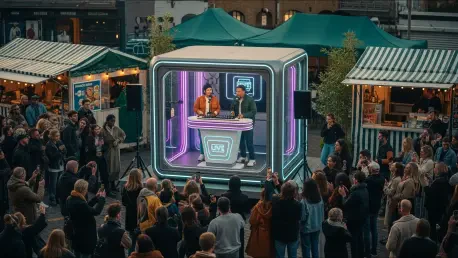

The traditional media landscape is currently undergoing a radical transformation as audio-centric brands migrate from the airwaves into the tangible world of high-impact physical experiences. A landmark instance of this evolution surfaced during the recent KISS Breakfast campaign at London’s Vinegar Yard, which successfully reinvented a standard morning radio broadcast into a high-visibility, interactive public event. By intentionally stepping outside the confines of the recording studio, the brand effectively challenged the long-held perception of radio as a “blind” medium. This shift proves that legacy audio platforms possess the inherent capability to compete for physical attention even in a digital ecosystem saturated by short-form video and visual social media. This strategic pivot addresses a fundamental challenge for contemporary broadcasters: the tendency for radio to be relegated to mere background noise while listeners are multitasking during their morning routines. This specific installation demanded active engagement by placing presenters Tyler West and Chloe Burrows in a vibrant, high-footfall environment. The transformation from a private listening habit into a shared public spectacle allowed the brand to capture focus through multi-sensory touchpoints rather than relying solely on sound. By creating a physical presence, the station established a new level of legitimacy in the urban environment, ensuring that the brand is seen as much as it is heard.
Strategic Identity: Leveraging Presenter Equity and Emotional Bonds
The core insight behind this experiential activation lies in the profound emotional bond that exists between loyal listeners and radio personalities. Morning show hosts are frequently woven into the daily rituals of their audience, providing a sense of companionship that few other media formats can replicate. However, when these connections are confined strictly to audio, they remain largely parasocial and abstract in the mind of the consumer. By physically situating the presenters within a prominent public space, the campaign fostered what industry experts call “emotional proximity,” allowing the audience to finally put a face to the voices they invite into their homes and cars every day. This move away from the invisible studio creates a level of transparency that resonates deeply with younger demographics, who prioritize authentic interaction over polished, distant corporate messaging. When listeners see the hosts interacting in real-time, the barrier between the broadcaster and the audience dissolves, making the brand feel significantly more accessible and humanized.
This approach aligns perfectly with the rise of creator culture, where the personality is often more influential than the platform itself. In the current media climate, audiences are drawn to individuals who feel relatable and real, rather than generic voices reading scripted segments. By showcasing Tyler West and Chloe Burrows in a live setting, KISS Breakfast effectively treated its hosts as live influencers, leveraging their charisma to anchor the brand in the physical world. This strategy did more than just promote a radio show; it validated the listener’s choice of station by making them feel part of an exclusive, yet public, community. The physical visibility of the presenters serves as a powerful endorsement of the station’s cultural relevance, signaling to passersby that this is a brand that lives and breathes in the same spaces they do. Ultimately, the activation transformed the abstract concept of “brand loyalty” into a tangible experience of “brand participation,” bridging the gap between digital audio consumption and real-world social interaction.
Tactical Execution: The Power of Participatory Environments
Selecting Vinegar Yard as the primary site for this activation was a calculated tactical decision designed to reach consumers who were already in a “participation” mindset. As a hub for socializing, street food, and urban culture, the venue provided the perfect backdrop for a brand that prides itself on being at the cutting edge of music and lifestyle trends. Rather than functioning as a passive billboard that people might walk past without a second thought, the special build acted as a live performance stage where the audience could experience the brand’s energy firsthand. This methodology represents a significant departure from traditional advertising, which typically relies on telling an audience what to do or how to feel. Instead, this experiential approach provided a live demonstration of the show’s format and personality, allowing the brand to speak for itself through action. This creates an immediate, visceral memory for those in attendance, turning a casual morning commute into a memorable event that differentiates the station from its digital competitors.
Beyond the immediate physical impact, the execution was designed with social media amplification in mind, recognizing that a physical event is only the beginning of a modern campaign. The visual nature of the “special build” provided endless opportunities for organic content creation, as fans and passersby captured the scene on their smartphones to share across various platforms. This effectively turned the audience into a secondary marketing force, extending the reach of the London-based activation to a global digital audience. By creating a spectacle that was inherently “shareable,” the campaign capitalized on the intersection of Out-of-Home media and social networking. The live energy of the broadcast provided high-quality, authentic footage that outperformed standard studio-based clips in terms of engagement and reach. This synergy between the physical and digital realms ensures that the investment in a one-time event yields long-tail benefits in terms of brand awareness. The activation served as a content engine, fueling the station’s digital channels with imagery and video that felt far more dynamic than traditional promotional material.
Media Infrastructure: The Collaborative Model of Innovation
The success of the KISS Breakfast campaign was driven by a sophisticated collaboration between several industry leaders, including Grand Visual, the7stars, Bauer Media Group, and Wieden+Kennedy. This partnership reflects a broader trend in the advertising industry where Out-of-Home media is being radically reimagined as “entertainment infrastructure” rather than just a collection of posters. Within this new framework, media planners and creative agencies work in tandem to transform public spaces into interactive hubs designed to drive active participation rather than passive observation. This shift acknowledges that in a saturated digital market, the most effective way to break through the clutter is through surprise and genuine physical engagement. By pooling the expertise of specialized agencies, the brand was able to execute a technically complex live broadcast in a non-traditional environment without sacrificing the quality of the audio or the visual impact of the installation. This level of coordination demonstrates that the future of branding lies in the ability to merge technical broadcast requirements with creative outdoor design.
In this evolving landscape, the value of a media buy is no longer calculated solely by the number of impressions or “eyeballs” on a static image. Instead, the focus has shifted toward the quality of the interaction and the depth of the brand experience. The collaborative nature of the project allowed for a seamless integration of audio technology and physical construction, creating a “brand world” that listeners could actually step into. This transition toward infrastructure-based marketing means that brands are increasingly looking for ways to add value to the urban environment rather than just taking up space. Whether through live music, interactive displays, or live broadcasting, the goal is to create a destination that people want to visit. This collaborative innovation ensures that radio remains a competitive force by utilizing the physical world as a massive, interactive laboratory for brand building. By treating the city as a canvas, the stakeholders involved in the KISS campaign have set a new benchmark for how legacy media brands can utilize modern media infrastructure to remain vital and engaging.
Behavioral Shifts: Creating Lasting Brand Anchors
From a psychological perspective, live activations create a level of “emotional specificity” that traditional commercials and digital banners simply cannot match. While a standard advertisement might be quickly forgotten due to the sheer volume of marketing messages encountered daily, the experience of witnessing a live broadcast creates a lasting mental anchor in the brain of the observer. This phenomenon is critical for reinforcing the daily listening habit that radio relies on for its long-term survival. The next time a consumer tunes in and hears the familiar voices of Tyler West or Chloe Burrows, they will have a vivid, three-dimensional visual reference point to attach to the audio stream. This deepening of “presenter equity” makes the hosts—and by extension, the station itself—significantly more valuable in a highly fragmented media market. By associating the brand with a positive, real-world memory, the station ensures it remains a prominent and preferred part of the listener’s daily routine, even when they are faced with a near-infinite number of alternative entertainment choices.
The strategy successfully transitioned the brand from a background utility into a cultural protagonist capable of commanding public attention. Moving forward, the blueprint established by this campaign suggested that audio brands must continue to seek out physical intersections where they can interact with their audience in person. Stakeholders successfully identified that the tactile nature of experiential marketing provided a necessary counterweight to the transience of digital streams. They moved beyond simple metrics to prioritize the longevity of memory and the strength of the listener-presenter bond. To capitalize on this momentum, future efforts should focus on scaling these “pop-up” broadcast hubs to different regions, ensuring that the physical presence of the brand is not limited to a single metropolitan center. By consistently showing up in the real world, radio stations can reclaim their status as social anchors. The integration of augmented reality could further bridge the gap between the physical build and the digital listener, providing an even more immersive layer to the experience. Ultimately, the success of the Vinegar Yard event proved that when radio steps out into the light, it finds a much larger and more engaged audience waiting to connect.