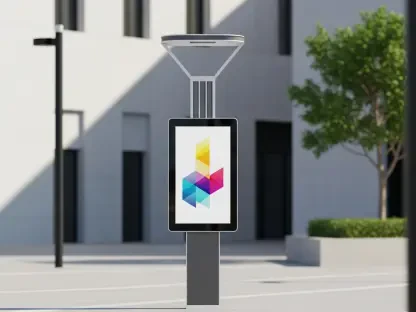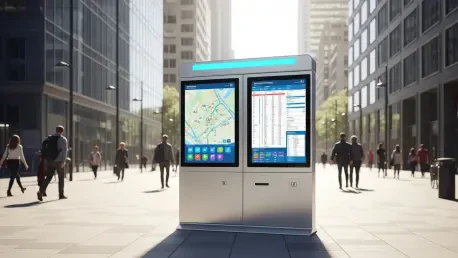

The rapid densification of metropolitan hubs has forced city planners to reconsider how physical space can serve a dual purpose by providing essential services while generating the capital required to maintain them. Interactive digital kiosks have emerged as the primary solution to this urban puzzle, functioning as sophisticated nodes that connect high-speed data networks with the immediate needs of pedestrians. These installations move beyond the static nature of traditional signage, offering a dynamic interface that adapts to the real-time requirements of a modern city.
The Evolution of Interactive Urban Infrastructure
Modern digital kiosks operate on a sophisticated framework of touch-responsive hardware and cloud-synchronized content management systems. This technology has transitioned from being a mere novelty to a cornerstone of the “Smart City” movement, where data-driven efficiency dictates infrastructure design. By serving as a bridge between the digital world and the physical environment, these units provide a centralized hub for information that was previously scattered across mobile apps and paper maps.
The context of this emergence is deeply tied to the necessity of bridging the digital divide in high-traffic corridors. As urban centers become more complex, the need for intuitive, physical touchpoints grows. Unlike personal smartphones, which rely on individual data plans and battery life, these kiosks offer a persistent, public-facing portal that ensures accessibility for all residents and visitors, regardless of their personal technological constraints.
Core Technical Pillars of Modern Digital Kiosks
Integrated Wayfinding and Public Service Systems
The technical sophistication of these units lies in their ability to aggregate diverse data streams into a cohesive user interface. By integrating real-time transit schedules, hyperlocal business directories, and active event listings, the software transforms a simple map into a comprehensive navigation tool. This integration is crucial because it reduces the friction of urban travel, allowing users to pivot their plans based on live updates regarding bus delays or sudden changes in event venues.
Beyond simple directions, these systems function as vital communication tools for the municipality. The ability to push emergency alerts and public service announcements instantly across a network of kiosks provides a layer of safety that traditional infrastructure cannot match. This capability demonstrates that the software is not just an informational layer but an active participant in city management and public safety coordination.
High-Output Advertising and Revenue Generation Modules
A significant engineering challenge for these kiosks involves maintaining visibility under direct sunlight while managing the heat generated by high-brightness displays. These screens are designed for extreme durability and programmatic precision, allowing for a diverse rotation of advertisements that generate substantial non-tax revenue. This financial model is what makes the technology viable for cities, as the advertising profits are often earmarked for social programs and infrastructure maintenance.
By leveraging automated ad-bidding platforms, these kiosks maximize the value of their physical location without requiring constant manual oversight from city officials. This programmatic approach ensures that the content remains relevant to the time of day and the specific demographics of the neighborhood. Consequently, the hardware pays for itself while providing a steady stream of funding that can be diverted to critical municipal needs such as park upkeep or social services.
Emerging Trends in Digital Public Engagement
Recent advancements in the field have seen a decisive shift toward privacy-conscious engineering. Modern hardware often omits cameras entirely to alleviate surveillance concerns, focusing instead on providing utility through free high-speed Wi-Fi and USB charging ports. This “privacy-first” approach is essential for gaining public trust, ensuring that the kiosks are seen as helpful amenities rather than tools for municipal data harvesting.
Furthermore, the integration of emergency override systems has become a standard feature. During a crisis, the programmatic advertising modules are bypassed to display critical safety information, such as weather warnings or evacuation routes. This prioritization of public welfare over commercial interests highlights a maturing industry that recognizes its responsibility within the public realm, balancing monetization with genuine social utility.
Real-World Applications and Municipal Deployments
Major Texas metropolitan areas, including Austin, Houston, and San Antonio, have become testing grounds for the large-scale implementation of these systems. In Austin, the deployment of roughly 100 units through the IKE Smart City program illustrates a strategic effort to modernize the downtown core. These deployments are not merely about aesthetics; they are functional responses to the pressure of growing populations and limited municipal budgets.
The most compelling aspect of these deployments is the direct link between commercial success and public benefit. For instance, the revenue generated from digital displays is frequently used to subsidize homelessness assistance and other essential services. This creates a self-sustaining cycle where the commercialization of a small physical footprint provides the financial backbone for programs that benefit the most vulnerable members of the community.
Critical Challenges and Regulatory Hurdles
Despite the technical benefits, the adoption of digital kiosks often meets resistance regarding the perceived “visual clutter” they introduce to the streetscape. Critics argue that the proliferation of bright screens contributes to a sensory overload and the unwanted commercialization of public spaces. These ideological debates present a significant hurdle for city councils, who must weigh the financial gains against the aesthetic integrity of their historic or residential districts.
Addressing these concerns requires robust regulatory frameworks and corporate sponsorship guidelines. Establishing clear rules on screen brightness, ad content, and the density of kiosk placement is necessary to mitigate public pushback. Ongoing policy discussions aim to find a middle ground where the technology can exist as a functional tool without overwhelming the unique character of the neighborhoods in which they are installed.
The Future of Interactive Municipal Interfaces
The trajectory of this technology points toward a deeper integration with the broader Internet of Things (IoT) ecosystem. We can expect future iterations to feature augmented reality overlays for navigation and sensor arrays that monitor air quality or noise levels in real-time. These enhancements would turn every kiosk into a multifunctional environmental laboratory, providing cities with invaluable data to improve urban livability and response times.
Long-term impact will likely be seen in how cities manage persistent budget deficits. As these kiosks become a standard fixture, the revenue they generate will move from being a “bonus” to a structural component of municipal finance. This shift will necessitate more sophisticated interactions between local governments and technology providers, ensuring that the digital interface remains a servant of the public interest even as it pursues commercial viability.
Final Assessment of Digital Kiosk Implementation
The implementation of interactive kiosks proved to be a pivotal moment for urban centers seeking to modernize without placing additional burdens on taxpayers. By successfully merging wayfinding utility with high-output advertising, these systems demonstrated that public infrastructure could be both functional and self-funding. The balance achieved between providing free services and generating revenue set a new benchmark for how cities should approach the integration of private technology within public rights-of-way.
Looking forward, the success of these programs suggested that the next phase of urban development would rely heavily on the versatility of digital interfaces. Municipalities that adopted this technology early gained a significant advantage in both fiscal health and pedestrian engagement. As the digital and physical worlds continue to converge, these kiosks will likely evolve from being helpful additions to becoming the essential connective tissue of the modern metropolitan experience.