
The strategic decision unveiled by DIRECTV Advertising at this year’s Consumer Electronics Show, opening its massive out-of-home television network to programmatic buying, represents far more than a simple channel expansion; it is a foundational shift poised to redefine how brands connect with consumers in the physical world. This move, which integrates thousands of live television screens in commercial venues into the automated digital advertising ecosystem, addresses long-standing challenges of scale, measurement, and workflow efficiency that have historically constrained the digital-out-of-home market. By transforming a premium, high-engagement environment into a seamless component of omnichannel media strategies, DIRECTV is not just participating in the evolution of advertising—it is actively accelerating it.
The Evolving Landscape of Screens Beyond the Living Room
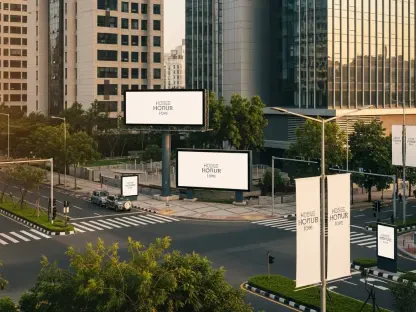
The out-of-home (OOH) advertising sector has long been a powerful medium for brand visibility, traditionally dominated by static billboards and displays. The advent of digital-out-of-home (DOOH) introduced dynamic capabilities, yet for years, the industry largely operated on a direct-sales model. This required manual negotiations, separate workflows, and specialized knowledge, creating significant friction for media buyers accustomed to the speed and data-rich environment of online programmatic advertising. However, the rise of sophisticated supply-side and demand-side platforms has steadily chipped away at these barriers, paving the way for the automation and efficiency that programmatic buying promises.
Within this landscape, venue-based advertising has emerged as a particularly valuable niche. Screens located in commercial establishments such as bars, restaurants, corporate offices, and medical waiting rooms offer a distinct advantage: a captive audience with significant dwell time. Unlike a passing glance at a roadside billboard, consumers in these environments are often seated and engaged for extended periods, making them more receptive to contextually relevant video content. This creates a high-impact advertising opportunity that combines the reach of broadcast with the targeting potential of digital.
Before this recent development, the venue-based DOOH market consisted of various specialized network operators. However, DIRECTV’s commercial footprint, established through its DIRECTV FOR BUSINESS division, brings an unprecedented level of national scale to the programmatic marketplace. The company’s network spans hundreds of thousands of screens in a diverse array of locations, reaching millions of consumers daily. By making this extensive inventory available through automated channels, DIRECTV is not merely entering the market but is fundamentally altering its competitive dynamics, offering advertisers a single point of access to a vast and previously fragmented audience.
Catalysts for Change Market Dynamics and Future Projections
The Convergence of Technology and Consumer Behavior
The industry’s readiness for DIRECTV’s programmatic initiative is underpinned by a powerful convergence of market forces. A significant trend is the market-wide pivot toward dynamic video content in DOOH environments. Advertisers increasingly recognize that the motion and sound offered by video are far more effective at capturing attention than static digital images. This preference has elevated screens that can deliver a full-fledged television experience, complete with live programming, into a premium asset class, setting the stage for inventory like DIRECTV’s to command greater interest and investment.
This shift coincides with an industry-wide mandate for omnichannel unification. Marketers are aggressively working to break down the operational silos that have long separated channels like connected television (CTV), digital video, and DOOH. The goal is to create a holistic view of the consumer journey and execute campaigns that deliver a consistent brand message across every touchpoint. DIRECTV’s move directly supports this objective by allowing media buyers to purchase in-home CTV and out-of-home DOOH inventory through the same platforms and workflows, enabling truly integrated planning, activation, and measurement.
Driving these changes is the maturation of the programmatic DOOH infrastructure itself. Recent advancements have introduced more sophisticated buying mechanisms, such as programmatic guaranteed deals, which provide the inventory and pricing certainty that major brands require for flagship campaigns. This evolution has elevated DOOH from an experimental channel to a reliable, scalable component of the media mix. Furthermore, advertisers are actively diversifying their budgets away from traditional channels, spurred by challenges in search and other established formats. This reallocation of spending creates a significant opportunity for emerging, high-impact channels like programmatic DOOH to capture new investment.
Quantifying the Momentum Growth Performance and Projections
The strategic importance of video in the out-of-home sector is validated by compelling market data. According to a recent Programmatic OOH Trends Report from Place Exchange by Broadsign, spending on video screens and televisions has officially surpassed spending on traditional billboards to become the largest asset category in programmatic OOH. This milestone confirms that advertisers are prioritizing the engaging, story-telling capabilities of video to connect with consumers on the go, making DIRECTV’s live television inventory exceptionally well-timed.
Beyond performance, sustainability has emerged as a critical consideration in media planning, and here, DOOH demonstrates a distinct advantage. A report from VIOOH highlighted the channel’s remarkable carbon efficiency compared to other programmatic avenues. Due to its one-to-many broadcast nature—where a single ad play reaches multiple viewers simultaneously—programmatic DOOH operates with a significantly lower carbon footprint per impression than channels like programmatic display or online video. This environmental benefit provides an additional incentive for brands focused on corporate responsibility to integrate DOOH into their strategies.
Looking forward, the programmatic accessibility of premium inventory like DIRECTV’s is projected to be a primary driver of new growth. Increased advertiser demand is fueled by the promise of measurable, brand-safe, and high-impact placements that can be seamlessly integrated into broader campaigns. As more brands experience the efficiency and effectiveness of programmatic DOOH, the channel is expected to attract a larger share of advertising budgets. This influx of investment will, in turn, fuel further innovation and expansion, creating a virtuous cycle that scales the entire ecosystem and solidifies its position as an essential part of modern marketing.
Overcoming Yesterday’s Hurdles Addressing DOOH’s Core Challenges
For much of its history, the growth of DOOH has been hampered by a set of persistent challenges, beginning with measurement. The historical difficulty in accurately quantifying audience viewership and proving campaign effectiveness was a major deterrent for data-driven marketers. Without reliable metrics for impressions, reach, and frequency, it was nearly impossible to calculate return on investment or compare DOOH performance against other, more measurable digital channels. This lack of clear attribution relegated the medium to a secondary role focused primarily on top-of-funnel brand awareness.
Compounding the measurement issue were significant operational frictions. The reliance on manual, siloed buying processes created workflow inefficiencies for agencies and brands. Purchasing DOOH inventory often required separate teams, specialized tools, and direct negotiations with multiple network owners, a stark contrast to the automated, platform-based buying that defines the rest of the digital landscape. This friction not only increased operational costs but also made it difficult to activate campaigns quickly or make dynamic adjustments based on real-time performance data.
Finally, an educational barrier has long stood in the way of wider adoption. Many advertisers and media planners remained unfamiliar with the unique capabilities, buying processes, and measurement methodologies of the DOOH channel. This lack of understanding created a hesitancy to invest, as teams defaulted to more familiar channels where their expertise and comfort levels were higher. DIRECTV’s strategy, built on key partnerships and technology, directly confronts these long-standing issues. By integrating with leading demand-side platforms like Basis and The Trade Desk, it places its inventory within the familiar workflows advertisers already use, dramatically lowering the educational curve. Simultaneously, its adoption of the Place Exchange PerView measurement solution provides the robust, OOHAA-compliant audience metrics necessary to build advertiser confidence and prove campaign value.
Forging a Framework The Role of Standards and Governance
The maturation of the DOOH industry into a trusted, mainstream advertising channel is being built upon a foundation of clear standards and robust governance. Industry bodies like the Out of Home Advertising Association of America (OOHAA) have been instrumental in this process. By establishing and promoting standardized guidelines for measurement and methodology, the OOHAA has provided a common framework that ensures consistency and comparability across different DOOH networks. This work has been critical in moving the industry away from proprietary, black-box measurement solutions toward transparent systems that advertisers can trust.
This push for standardization is being reinforced by new technical requirements from major advertising technology platforms. For example, recent mandates for CTV and DOOH inventory require that ad requests include specific parameters like precise screen location and unique session identifiers. These technical specifications are essential for ensuring transparency in the supply chain, preventing fraud, and enabling more accurate targeting and measurement. Compliance with these standards is no longer optional for publishers who want to access programmatic demand, thereby raising the quality and reliability of the entire ecosystem.
Central to building advertiser trust is the implementation of robust and defensible data methodologies for audience measurement. The reliance on deterministic mobile device data, which is continuously updated to reflect real-world consumer movement and presence, represents a significant leap forward from older, model-based approaches. This methodology, which underpins solutions like Place Exchange’s PerView, provides a more accurate and dynamic picture of who is actually being exposed to an ad. This level of precision allows DOOH to be measured with a rigor that is comparable to other digital channels, fostering greater confidence and investment. Furthermore, ensuring brand safety and content suitability is paramount in public viewing environments, and programmatic platforms provide sophisticated tools to manage these aspects, guaranteeing that ads appear in appropriate contexts.
The Next Frontier Envisioning the Future of Public Screen Advertising
With programmatic infrastructure and measurement now firmly in place, the DOOH industry is turning its attention to the next frontier of innovation, led by the unique power of live content. The emerging paradigm of “live” DOOH, centered on major sporting events, breaking news, and cultural moments, serves as a key differentiator for networks like DIRECTV. Advertising alongside these high-engagement broadcasts creates a powerful contextual alignment, allowing brands to become part of a shared public experience. This ability to tap into the excitement and immediacy of live programming offers a level of audience connection that pre-recorded ad loops cannot match.
The potential for expansion into new, high-value venues represents another significant growth vector. The planned inclusion of premium hotels within DIRECTV’s programmatic network later this year will unlock access to highly sought-after audience segments, such as affluent business travelers and vacationers. These environments are characterized by long dwell times and a receptive mindset, offering a unique opportunity for brands in categories like luxury goods, travel, and financial services to deliver targeted messaging. As the DOOH footprint extends into more diverse and specialized locations, the potential for granular audience targeting will continue to grow.
This expansion will be coupled with future opportunities for more dynamic, data-driven creative. As programmatic platforms become more sophisticated, advertisers will be able to move beyond one-size-fits-all messaging and toward creative that can be tailored based on factors like time of day, location, weather, or even the content being shown on screen. This enables a form of continuous brand storytelling, where a campaign’s narrative can evolve as a consumer moves from their living room to a restaurant to an airport lounge. This dynamic capability will transform DOOH from a broadcast medium into a truly interactive and responsive channel.
The Final Verdict A New Era of Integrated Advertising
DIRECTV’s launch of its programmatic DOOH network has marked a pivotal moment, signaling a fundamental transformation for the out-of-home industry. This initiative serves as a powerful validation of the channel’s maturation, providing the scale, technology, and measurement framework necessary to elevate DOOH from a specialized consideration to a core component of modern advertising. The fusion of premium live television content with the efficiency of automated buying has created an entirely new value proposition for brands seeking to engage with consumers in high-impact public spaces.
The conclusive viewpoint is that DOOH is no longer a siloed channel operating at the periphery of media plans. It has become an essential, integrated element within truly omnichannel strategies. The ability to plan, purchase, and measure DOOH alongside CTV and other digital video formats within a single platform breaks down long-standing operational barriers and empowers advertisers to create a seamless brand narrative that follows the consumer throughout their day. This unification unlocks new levels of strategic sophistication, enabling more effective frequency management and cross-channel attribution.
This new era presents immense prospects for advertisers aiming to connect with consumers at every critical step of their journey. The availability of brand-safe, viewable, and programmatically accessible inventory in environments with long dwell times and captive audiences addresses many of the core challenges facing digital marketers today. It provides a potent complement to in-home advertising, extending campaign reach to moments when consumers are actively engaged in social, commercial, and professional activities. For brands looking to maximize impact and build meaningful connections, the integration of programmatic DOOH is no longer an option but a strategic imperative.