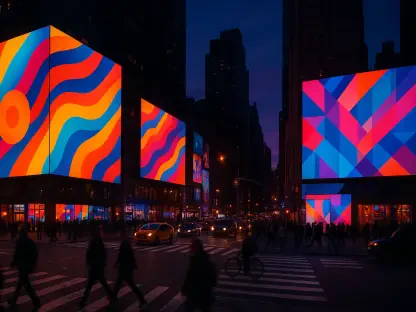

The reveal of the Cannes Lions 2026 Outdoor Lions shortlist represents far more than a mere collection of advertising finalists; it stands as a sophisticated diagnostic of how brands are currently reclaiming physical space in a world saturated by digital noise. With 135 finalists selected across 23 diverse categories, the competition highlights a rigorous distillation of the most impactful creative work produced globally over the past twelve months. This extensive collection proves that out-of-home media has successfully transcended its traditional role as a secondary supporting channel, becoming an essential component of the urban fabric that shapes how citizens perceive their surroundings. Historically, the outdoor category was often pigeonholed into static billboards and simple bus stop posters, yet the modern landscape reveals a dramatic evolution toward live activations, dynamic digital interfaces, and large-scale architectural installations. Brands are no longer just placing advertisements; they are executing interventions that demand attention in a physical world that grows more crowded with competing digital distractions every day. This shift signifies a maturation of the medium, where the benchmark for success is no longer just visibility but the ability to create meaningful cultural resonance and lasting psychological impact within a public environment.
The Transformation of the Urban Platform
One of the most prominent shifts observed in current advertising strategies involves the seamless integration of real-time utility and high-end technology into shared physical spaces. Campaigns are no longer restricted to static imagery that remains unchanged for weeks; instead, they respond dynamically to the environment through interactive digital screens and sophisticated data-driven updates. This technological leap allows brands to utilize out-of-home infrastructure for high-stakes communication, ranging from live event scores to critical emergency alerts that serve a functional purpose for the pedestrian. By providing immediate value beyond a simple sales pitch, these installations justify their presence in the public eye and build a level of trust that traditional advertising often lacks. The ability to pivot messaging based on weather, traffic, or local news has turned the city itself into a responsive interface, where the line between a corporate message and a public service becomes increasingly blurred for the benefit of the urban dweller.
Building on this technological evolution, there is a growing emphasis on environmental consciousness and the aesthetic preservation of the city nightscape. Innovations such as “dark mode” advertising have emerged as a significant trend, reflecting a collective effort among agencies to reduce light pollution while maintaining a high visual impact. By utilizing high-contrast designs that favor dark backgrounds and targeted illumination, digital billboards are becoming less intrusive and more harmonious with their architectural surroundings. This approach acknowledges that the public’s tolerance for bright, flashing screens is reaching a breaking point, and brands that respect the sensory experience of the street are rewarded with better engagement. This transition toward “polite” technology ensures that digital out-of-home media is seen as a sophisticated addition to the city rather than a visual nuisance, proving that efficiency and elegance can coexist within the modern advertising ecosystem.
Cultural and social relevance has also become a non-negotiable cornerstone for any successful out-of-home campaign seeking to make a lasting impression. Brands are increasingly leveraging the public nature of outdoor media to address local social tensions or tap into the collective habits and idiosyncrasies of a specific population. Because these advertisements occupy the same physical space where social issues are experienced and debated, they act as a mirror to the community, reflecting shared values and concerns in real time. This strategy moves away from global, one-size-fits-all messaging in favor of hyper-local insights that resonate deeply with the people walking past the display. Whether it is acknowledging a local sports victory or participating in a community-wide conversation about urban development, the most effective campaigns are those that prove the brand is an active participant in the local culture rather than a distant, impersonal entity.
Simplicity and Visual Craftsmanship
A recurring theme among the most celebrated creative entries in the current landscape is the undeniable power of minimalist aesthetics and superior visual craft. In an era where consumers are bombarded with complex digital narratives and multi-layered social media threads, many high-performing campaigns rely on a single, perfectly executed image to convey a brand’s essence. This focus on visual simplicity creates an immediate psychological connection with an audience that is often on the move, whether commuting to work or walking through a busy shopping district. By stripping away unnecessary text and secondary graphics, these ads achieve a level of clarity that cuts through the visual noise of the city with surgical precision. The mastery of negative space, color theory, and high-definition photography allows a brand to tell a complete story in a fraction of a second, proving that in the physical world, less is frequently more effective for memory retention.
Contextual intelligence plays a vital role in how these minimalist messages are received and interpreted by the public. The most brilliant ideas currently being deployed leverage a specific location, a particular time of day, or a common human behavior to create a “right place, right time” impact that feels almost serendipitous. By understanding the flow of human traffic and the psychological state of a person at a specific street corner, brands can make a simple image feel profoundly relevant to the viewer’s current situation. For instance, an ad that changes its tone during a rainy afternoon or one that appears only during the high-stress hours of a morning commute demonstrates a level of empathy that resonates with the consumer. This strategic use of context ensures that the advertisement does not feel like an interruption but rather like a thoughtful observation that enhances the viewer’s immediate reality.
Humor continues to serve as an exceptionally powerful tool for breaking through the daily grind of urban life and building a genuine rapport with the public. Using witty, self-deprecating, or even surrealist humor helps brands appear more human and approachable in a marketplace that is often dominated by sterile corporate language. These humorous interventions turn a routine commute or a boring wait for a bus into a genuine moment of entertainment, which significantly increases the likelihood of the brand being remembered and discussed. By inviting the passerby to share in a joke or a clever observation about modern life, companies can foster a sense of goodwill that carries over into their digital and physical sales channels. This approach treats the audience with intelligence and respect, acknowledging that people are more likely to engage with a brand that brings a bit of levity to their day-to-day experience.
Brand Leadership and Strategic Dominance
Certain global brands have mastered the art of owning a specific creative territory by utilizing the unique physical constraints of outdoor media to their advantage. For example, some companies have successfully claimed the concept of a “break” or a “pause” by using the literal edges of a billboard or the negative space of a transit terminal to tell a story about relaxation. This sophisticated use of physical space serves as a constant reminder for people to slow down within the frantic, fast-paced environment of a major metropolitan area. By associating their brand with these moments of reflection, these companies move beyond selling a product and begin to sell a psychological state. This level of strategic dominance is achieved not through high-frequency repetition but through the consistent application of a creative philosophy that transforms every physical touchpoint into a coherent part of a larger brand narrative.
Other leaders in the advertising field are focusing heavily on facilitating social experiences and fostering human connections through their physical presence. Their work often blurs the line between a traditional commercial advertisement and a valuable community service or public event. These campaigns use outdoor media as a catalyst for real-world conversations, encouraging people to step away from their personal devices and interact with the physical world and each other. Whether it is a billboard that provides a place to sit, a screen that hosts a live interactive game for strangers, or an installation that records community stories, these efforts prove that physical advertising can be a pro-social force. By creating these shared experiences, brands earn a place in the collective memory of the city, positioning themselves as facilitators of community engagement rather than just providers of goods and services.
Traditional consumer goods and retail brands are also experiencing a significant revitalization of their physical presence through the use of clever copywriting and high-quality photography. Even the most basic household products are being elevated to iconic status through smart placements that emphasize product recognition and aesthetic appeal. These brands are increasingly treating the city as a high-end gallery, showcasing their products in ways that feel both aspirational and accessible to the general public. By focusing on the tangible qualities of their offerings—texture, color, and form—they provide a sensory experience that digital screens struggle to replicate. This return to the fundamentals of advertising, combined with modern printing and display technologies, ensures that even the most established brands can maintain a sense of freshness and relevance in a rapidly changing urban landscape.
Moving Beyond Two-Dimensional Space
The architectural side of outdoor media represents one of the most ambitious and visually stunning areas of current innovation. Special builds and large-scale physical installations are turning static advertisements into functional or theatrical objects that literally change the skyline or the streetscape. These projects force the public to engage with a brand in a three-dimensional way, transforming a simple marketing message into a temporary physical landmark that people go out of their way to see. By manipulating the physical environment—through the use of unconventional materials, lighting, or structural engineering—brands can create a sense of awe that is impossible to achieve through a standard two-dimensional frame. This architectural approach to advertising acknowledges that the most effective way to capture attention in 2026 is to become a part of the city’s physical history, even if only for a limited time.
Interactive and immersive digital screens represent the future of the medium by turning passive onlookers into active participants in a brand’s story. Through the use of touch sensitivity, motion tracking, and real-time data integration, these displays encourage the public to engage directly with the content on the screen. This level of interaction ensures that the advertising experience is active rather than passive, leaving a much deeper and more lasting impression on the participant. When a person influences what they see on a screen through their movements or choices, they form a personal connection with the brand that is far more powerful than any traditional viewing experience. These immersive platforms are particularly effective in high-traffic areas like plazas and shopping centers, where they can turn a high volume of foot traffic into a high volume of active brand ambassadors.
Transit and ambient categories focus on the constant movement of people throughout the city, seeking to intercept consumers during their daily journeys in innovative ways. Whether on a train, inside a rideshare vehicle, or walking through a subterranean pedestrian plaza, brands are finding ways to turn these often mundane moments into unexpected brand interactions. This strategy involves integrating the message into the “real-world” flow of life, using the specific characteristics of the transit environment to enhance the narrative. An ad that wraps an entire subway car or an ambient installation that uses the acoustics of a tunnel creates a comprehensive sensory environment that surrounds the consumer. By occupying these transitional spaces, brands can reach people during their “in-between” moments when they are often more open to new ideas and visual stimuli, making the message feel like a natural part of the journey.
Purpose-Driven Urbanism and Social Impact
A significant number of creative entries in the modern era are tackling serious social issues, utilizing the public square as a powerful platform for advocacy and change. Because outdoor media exists in the shared environment, it possesses a unique authority to address topics that affect the collective well-being of the population. These campaigns address everything from gender inequality and mental health awareness to humanitarian crises and environmental protection, making the city a place for both awareness and immediate action. By placing these messages in high-visibility areas, brands and non-profit organizations can force important conversations into the public consciousness that might otherwise be ignored in the private sphere of digital feeds. This use of urban space as a forum for social discourse reaffirms the role of the city as a center for democratic expression and collective progress.
By turning billboards and urban spaces into platforms for purpose, brands are demonstrating that they can influence societal habits and even change hearts and minds on critical issues. These interventions show that the outdoor medium is at its absolute best when it contributes to the public good, providing information or inspiration that improves the quality of urban life. For example, campaigns that provide sun protection, promote water conservation, or offer resources for the homeless transform a commercial space into a social asset. These actions allow brands to participate in the life of the city in a way that goes far beyond simple commercial transactions, building deep-seated brand equity based on values rather than just features. This shift toward purpose-driven urbanism reflects a broader consumer demand for corporate responsibility and a desire for the physical environment to reflect a more compassionate and informed society.
The long-term impact of these social interventions is measured not just in sales but in the shifting perceptions and behaviors of the urban population. When a brand takes a stand on a difficult issue within the public square, it signals a commitment to the community that transcends the typical advertising cycle. These campaigns often spark wider discussions in the media and on social platforms, extending the life of the physical installation far beyond its actual presence on the street. This synergy between the physical and the digital allows a local urban intervention to have a global reach, proving that the most powerful messages are those that are grounded in real-world truth. As the urban landscape continues to evolve, the brands that thrive will be those that recognize their responsibility to contribute positively to the shared human experience of the city.
A Global Perspective on Media Innovation
The landscape of creative excellence in outdoor media is truly global in 2026, with different regions bringing unique cultural nuances and technological approaches to the medium. While traditional advertising hubs continue to produce high-quality work, emerging markets are increasingly pushing the boundaries of what is possible by utilizing local insights to create truly original platforms. These regions often face unique urban challenges, leading to creative solutions that are both culturally specific and globally inspiring. For instance, innovations in solar-powered displays in sun-drenched climates or high-density digital installations in rapidly growing megacities provide a blueprint for the future of the industry. This global exchange of ideas ensures that the medium remains vibrant and continuously evolving, as agencies from different continents learn from each other’s successes and failures in the public arena.
Ultimately, the shift toward “format-fluid” ideas ensures that the most successful creative concepts are no longer confined to a single subcategory of advertising. Whether an idea begins as a piece of technology, a social intervention, or a minimalist visual display, its ultimate success depends on its ability to engage the public across multiple dimensions. The best campaigns today are those that work seamlessly across billboards, transit, digital screens, and physical activations, creating a unified brand presence that follows the consumer through their entire urban journey. As brands seek to regain and hold attention in an increasingly fragmented world, the city remains the ultimate canvas for defining the future of communication. The outdoor media landscape has proven that it is not just surviving the digital revolution; it is leading it by providing the one thing digital screens cannot: a tangible, shared, and inescapable physical reality.
Strategic Frameworks for Future Urban Engagement
The successful execution of outdoor media over the past year has demonstrated that the intersection of technology and human empathy is where the most significant brand value is created. Organizations that prioritized the sensory and psychological needs of the pedestrian over mere reach and frequency metrics saw a marked increase in both brand sentiment and long-term recall. By adopting a “citizen-first” approach to advertising, these entities transformed their commercial presence into a welcomed part of the urban experience. Moving forward, the industry must continue to refine the use of data so that it serves the public’s interest, ensuring that smart cities remain habitable and vibrant. The lessons learned from the recent shortlist of innovators suggest that the future of the medium lies in its ability to be both a high-tech interface and a low-tech sanctuary for the human spirit.
To maintain this momentum, brands and agencies should focus on the radical integration of accessibility and sustainability into every physical installation. Future strategies must move beyond “dark mode” and recycled materials toward becoming carbon-negative and providing universal utility for all citizens, including those with disabilities. Actionable steps for the coming year include the deployment of haptic feedback in transit ads, the use of atmospheric water generators in billboard structures, and the implementation of AI-driven linguistic translation on public screens. By viewing every outdoor placement as an opportunity to solve a local problem or enhance a local joy, the advertising industry can secure its role as a vital architect of the future urban experience. The transition from being a visual medium to a multi-sensory urban service is already well underway, and the path forward is defined by those who see the city not as a captive audience, but as a living partner.