
Anastasia Braitsik is a powerhouse in the digital marketing landscape, renowned for her deep expertise in SEO, content strategy, and the nuances of data analytics. As the industry grapples with the disruptive force of artificial intelligence, she has emerged as a key voice in navigating the transition from traditional search to “Answer Engine Optimization.” Her insights into MediaPact showcase a bold attempt to modernize the antiquated world of direct media buying, which has long been bogged down by manual processes and fragmented communication. In this conversation, we explore how the advertising playbook is being rewritten, the emergence of non-technical founders using AI to build platforms, and what the death of the “click” means for the future of brand growth.
The interview explores the shift from programmatic banner ads to high-authority direct placements, the revolutionary impact of AI-assisted coding for non-technical entrepreneurs, and the evolution of marketing metrics. We delve into the “Cold Start Problem” of marketplaces, the transition from last-click attribution to authority-based value, and the strategic importance of being cited within AI-generated responses.
The process of managing flat-fee media buys has historically been a logistical nightmare involving fragmented email threads and manual paperwork. How do you plan to dismantle this “final_FINAL_v3” culture that still dominates the industry?
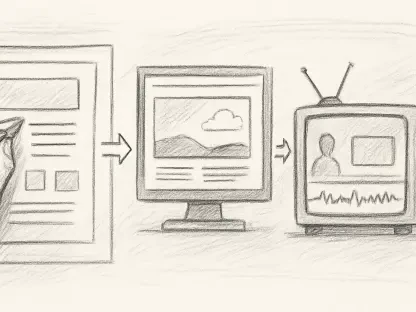
It is honestly staggering that even in 2026, we find ourselves in a landscape where nine out of ten publishers describe their workflow as a chaotic loop of manual email threads and hand-built PDFs. I have seen countless marketing teams sitting on significant budgets, yet they are unable to deploy them efficiently because they are stuck chasing invoices for 60 days or managing a Google Sheet named “final_FINAL_v3.” My obsession is to transform this massive, clunky market into something as streamlined and painless as booking a flight. We are standardizing seller inventory into a searchable format so that the entire journey—from discovery and negotiation to signing the insertion order and processing payment—happens in one centralized marketplace. By eliminating that dreaded 40-email thread, we allow both the buyer and the publisher to focus on the actual strategy rather than the administrative friction that has stifled direct media for decades.
You have mentioned building and shipping your entire platform using Claude Code despite having no traditional background in engineering. What does this shift signify for the future of startup development and the role of the non-technical founder?
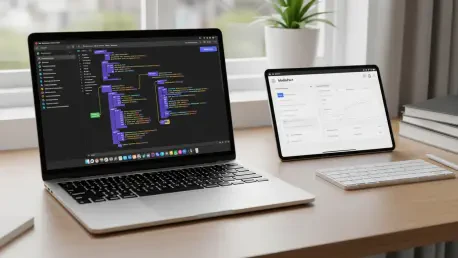
This is a fundamental, structural change in who gets to build companies and how quickly they can move from an idea to a live product. I have zero experience writing code or managing sprawling development teams, yet I was able to build the entire MediaPact infrastructure—utilizing React, TypeScript, Supabase, and Stripe Connect—entirely through AI assistance. The ability to ship complex features to production in less than a day without a product management degree is incredibly empowering and levels the playing field for veterans who have deep domain expertise but lack a computer science degree. It shifts the focus from the “how” of technical execution to the “why” of solving customer pain points. When a single person can raise a $200,000 friends and family round and launch a platform that supports major names like BroBible and Penske Media, it proves that the barrier to entry has officially been shattered.
With the rise of AI-generated answers, many are concerned about the “death of the click” in traditional search results. How should brands adjust their strategies to remain relevant when users no longer feel the need to visit a website?
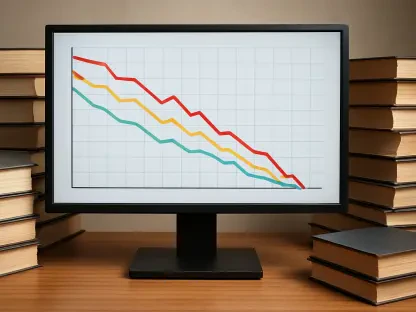
We are witnessing a era where AI is “eating the click,” and while that sounds ominous for traditional SEO, it actually presents a massive opportunity for those who pivot toward Answer Engine Optimization. When an AI provides a direct answer, the user often stops searching, but if your brand is the high-authority source cited within that answer, the conversion rate can be as much as 4.4 times higher than standard results. Brands can no longer afford to just compete for rankings; they must compete to be the foundational content that these AI models trust and reference. MediaPact was designed specifically to help buyers secure these high-authority editorial placements, ensuring they are baked into the source material that these models rely on. It’s about moving away from chasing traffic for the sake of traffic and instead focusing on the authority that drives real, high-intent conversions in an AI-driven discovery environment.
There is a common misconception that MediaPact is primarily a tool for affiliate marketers, yet you’ve stated it’s actually the opposite. Why is it so important to move away from last-click attribution in the current climate?
The industry has been shortchanging publishers for decades by relying on last-click attribution, which often fails to capture the true value of an audience or the authority of a placement. Many people see my background and assume I’m building for cookies and revenue-share models, but I am actually championing guaranteed flat-fee placements where sellers are paid for their reach and influence upfront. We’ve seen that the most sophisticated brand marketers—those at mid-stage consumer brands who have plateaued on Google and Meta—are looking for something beyond the over-scrutinized, science-only approach of performance agencies. These marketers understand that top-of-funnel growth requires a blend of art and science, and they need a way to reach partners that influence behavior in ways that aren’t always captured by a simple tracking link. By automating the payment and the insertion order, we provide a reliable ecosystem where publishers are finally compensated fairly for their authority.
Marketplaces are notoriously difficult to launch due to the “Cold Start Problem.” What did your initial customer discovery reveal about the balance between supply and demand in this specific niche?
I went into this thinking that with 15 years of industry experience, I could sign publishers all day and the demand would naturally follow, but I quickly learned that I wasn’t the exception to the rule. While I could easily bring on names like Gadget Review and various high-authority newsletters, finding the right buyers required a much broader perspective than I initially anticipated. I had to step out of my comfortable network of performance-based agencies, who often avoid the risk of guaranteed placements, and find the brand and shopper marketers who truly value audience alignment. It was a tough decision to pivot away from the “warm calls” of my affiliate network to pursue media planning teams who didn’t know me yet. However, by building those new relationships and focusing on the pain points of mid-stage brands, we were able to create a marketplace where the demand is just as robust as the high-quality supply we’ve curated.
What is your forecast for the future of direct media buying and the role of the founder in a mature marketplace?
I believe we are heading toward a future where the “authority economy” replaces the “click economy,” and direct media buys will become the primary way brands establish that necessary trust with both AI models and human consumers. Success for MediaPact will be the moment I am no longer a necessary middleman in the transaction; I want to hear a seller tell a brand to “just send the deal through MediaPact” without me even being in the room. We will know we have truly made it when the platform functions as a self-sustaining ecosystem that empowers innovation and allows founders to move out of “hustle mode” and into “visionary mode.” As more companies realize that they can no longer rely on the diminishing returns of traditional programmatic ads, the shift toward streamlined, direct, and accountable media deals will become the new gold standard for the entire digital advertising industry.