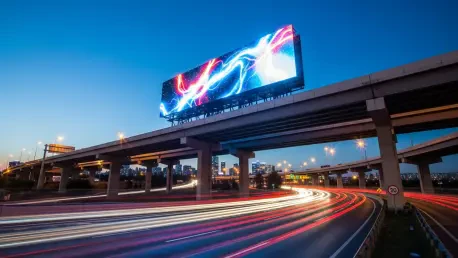

The familiar sight of a roadside billboard is undergoing a profound transformation, evolving from a static image into a dynamic digital canvas that captures the attention of millions on the move. In this rapidly changing environment, the strategies employed by key industry players offer a clear view of where the future of out-of-home (OOH) advertising is headed. The industry’s evolution is not just about technology; it is a story of strategic positioning, calculated growth, and the relentless pursuit of high-impact visibility in a world saturated with messages.
Setting the Stage in the Out of Home Advertising Arena
The modern OOH advertising landscape is characterized by a significant shift away from traditional static displays toward vibrant, programmable digital billboards. This technological transition allows for real-time content updates, targeted messaging, and greater creative flexibility, making it an increasingly attractive medium for brands. Consequently, companies that can build a robust digital portfolio are positioning themselves for sustained relevance and profitability in an increasingly competitive field.
Within this arena, Adams Outdoor Advertising has established itself as a formidable force. As the fourth-largest privately held OOH company in the U.S., its expansion strategies are closely watched as indicators of broader industry trends. The company’s ability to compete with larger public corporations hinges on its agility and its focus on acquiring premium assets that deliver maximum value to advertisers. This positioning requires a disciplined approach to growth, ensuring that each new asset enhances its overall network.
Ultimately, the effectiveness of any OOH asset is fundamentally tied to its physical location. The most valuable billboards are those situated along high-traffic corridors, major interstates, and key entry points to metropolitan markets. These strategic placements guarantee a high volume of impressions from desirable consumer demographics, such as daily commuters and travelers. For companies like Adams Outdoor, securing these prime locations is the cornerstone of a successful expansion strategy, as it directly translates to higher advertiser demand and revenue.
Decoding Market Momentum and Future Horizons
The Digital Revolution and Strategic Location as a Market Driver
The industry’s momentum is increasingly driven by the acquisition of high-impact digital billboards. Advertisers now demand the ability to launch dynamic and measurable campaigns, a need that static displays alone cannot fulfill. Digital screens offer the flexibility to change creatives based on time of day, traffic patterns, or even weather conditions, providing a level of targeting previously unattainable in the OOH space. This trend forces media owners to continuously upgrade their inventory to stay competitive.
This digital shift aligns perfectly with the evolving behavior of consumers, particularly daily commuters. As people spend more time in their vehicles, the value of reaching them during their journey increases. Targeting these audiences in key Designated Market Areas (DMAs) has become a crucial objective for advertisers. Assets that offer a clear line of sight to inbound city traffic or are located near major commercial hubs provide an unparalleled opportunity to influence purchasing decisions and build brand awareness among a captive audience.
To deepen their presence in these valuable markets, companies are employing “tuck-in” acquisitions as a key strategic tool. This approach involves purchasing existing, high-performing assets within an established territory rather than building new ones from the ground up. Such acquisitions allow a company to immediately enhance its network density and market share, as seen in Adams Outdoor’s recent purchase in Charlotte. This method strengthens a company’s portfolio while efficiently increasing its competitive footing in a core market.
Projecting Growth in Key Southeastern Markets
The Charlotte and Richmond-Petersburg DMAs serve as prime examples of high-value, competitive markets in the Southeast. Charlotte, a major financial and commercial hub, boasts a dense and growing population of daily commuters, making it a top-tier market for OOH advertising. Similarly, the Richmond-Petersburg area, ranked 56th nationally, represents a significant and previously untapped market for Adams Outdoor, offering substantial opportunities for new growth and client engagement.
By expanding its footprint into a new top-60 DMA like Richmond-Petersburg, Adams Outdoor positions itself for significant future revenue streams. Entering a new market diversifies the company’s geographic portfolio and opens the door to relationships with a new set of local and regional advertisers. This strategic entry demonstrates a forward-looking perspective on market expansion, balancing the reinforcement of existing strongholds with the calculated exploration of new territories.
The performance indicators for these new assets are exceptionally strong. Acquiring billboards near major commercial centers like Southpark Mall, key interstates, and community landmarks like Fort Lee ensures high visibility and extended read times. These locations are not just points on a map; they are strategic touchpoints in the daily lives of consumers. The ability to secure such premium inventory is a powerful signal of a company’s potential for long-term growth and market leadership.
Overcoming Hurdles in a Saturated Marketplace
One of the most significant challenges in the OOH industry is securing premium, high-visibility billboard locations in competitive urban and suburban areas. As markets become more developed, the number of available prime spots dwindles, leading to intense competition for existing inventory. This scarcity drives up the value of established assets and makes organic growth through new construction increasingly difficult, forcing companies to find alternative pathways to expansion.
This market saturation introduces complexities related to market entry. The decision to build a new billboard versus acquiring an existing one carries distinct strategic implications. New construction is often a lengthy and uncertain process, fraught with regulatory hurdles and high initial costs. In contrast, acquiring established assets provides immediate market access and a predictable revenue stream, making it a more efficient route to growth in densely populated regions.
Adams Outdoor’s strategy directly addresses these challenges through disciplined and calculated acquisitions. By focusing on purchasing proven, high-performing assets, the company bypasses the uncertainties of new development while ensuring a high return on investment. This approach allows Adams to overcome the barriers of market saturation and strategically enhance its network with billboards that are already delivering results for advertisers, proving that smart acquisition is a powerful solution in a crowded marketplace.
Navigating Local Zoning and Advertising Regulations
The outdoor advertising industry operates within a complex regulatory landscape governed by a patchwork of local zoning laws, permitting requirements, and state-level compliance standards. Navigating this web of regulations can be a time-consuming and resource-intensive endeavor, often delaying or even preventing the construction of new billboards. Each municipality has its own set of rules regarding placement, size, lighting, and digital conversion, making regulatory expertise a critical component of any OOH operation.
Acquisitions offer a strategic advantage by allowing companies to bypass many of the regulatory hurdles and lengthy timelines associated with new construction. When a company purchases an existing billboard, it also acquires the permits and legal standing that come with it. This is particularly valuable for digital displays, as securing permits for new digital conversions can be especially challenging in many jurisdictions. Buying a pre-approved, operational asset is often the most expedient way to expand a digital network.
By securing permitted, high-value digital and static displays through acquisition, a company like Adams Outdoor strengthens both its operational footprint and its legal standing in a market. Each permitted sign represents a durable asset that is less vulnerable to future regulatory challenges. This approach not only facilitates faster growth but also builds a more resilient and defensible portfolio, ensuring the company can continue to serve advertisers without interruption.
A Blueprint for Future Expansion in Outdoor Media
The future of the OOH industry appears to lie in a hybrid portfolio that balances the dynamism of digital billboards with the consistent impact of high-quality static displays. This dual approach allows media owners to cater to a wider range of advertiser needs and budgets. While digital offers flexibility and immediacy, premium static billboards in prime locations continue to provide unmatched brand-building power and market presence, making a combined inventory the most effective model for growth.
Adams Outdoor’s recent activities exemplify this balanced strategy. The company’s “tuck-in” acquisition in Charlotte strengthens its digital network in a core market, while its entry into the Richmond-Petersburg DMA with a dual-faced digital and static asset marks a significant geographic expansion. This two-pronged approach—reinforcing existing territories while simultaneously entering new ones—serves as a sustainable model for growing market share and diversifying revenue sources.
These strategic moves also highlight the increasing importance of mergers and acquisitions as the primary vehicle for industry expansion. In a mature market with limited opportunities for new construction, growth is increasingly achieved by acquiring existing assets. Specialized M&A firms play a crucial role in this process, facilitating transactions that allow companies to consolidate their market positions and expand their reach efficiently. This trend is expected to continue as the industry becomes more consolidated.
Concluding Insights on a Disciplined Growth Strategy
Adams Outdoor’s recent acquisitions in North Carolina and Virginia provided a clear illustration of a focused, high-impact expansion strategy. The company demonstrated a disciplined approach, targeting premium assets that either deepened its penetration in a core competitive market or established a foundational presence in a new, high-potential region. These moves were not opportunistic but were calculated steps designed to enhance the overall value of its network.
The company’s trajectory reflected a firm commitment to providing advertisers with meaningful reach and measurable results. By prioritizing high-visibility locations along commuter-heavy corridors, Adams Outdoor ensured its inventory delivered maximum impact. This focus on quality over quantity has solidified its reputation as a trusted partner for brands seeking to connect with consumers in the physical world. Its expansion was guided by the principle of acquiring assets that truly matter.
Ultimately, the prospects for the OOH industry remained bright, with strategic acquisitions in high-growth regions identified as a critical path to success. As the landscape continues to evolve, companies that combine a strong digital portfolio with premium static displays, all while navigating a complex regulatory environment through smart acquisitions, were best positioned for long-term leadership. The disciplined growth model exemplified by Adams Outdoor served as a compelling blueprint for the future.