
While the rapid expansion of digital ecosystems has systematically dismantled many pillars of traditional media, out-of-home advertising has managed to navigate these tumultuous waters with a surprising degree of resilience and sophistication. Unlike print magazines or broadcast television, which have seen their audiences fractured by the infinite scroll of social media, billboards have capitalized on their physical presence to maintain a consistent hold on the public consciousness. In a landscape where digital saturation has led to widespread ad-blocker usage and general consumer fatigue, the outdoor sector has repositioned itself not as a relic of the past, but as a vital partner to the digital world. By the start of 2026, the industry has solidified its standing, capturing approximately 6.5 percent of the global advertising expenditure and generating nearly $39 billion in annual revenue. This stability is largely attributed to the “un-skippable” nature of physical displays; a consumer cannot simply close a tab or pay for a premium subscription to avoid a massive LED installation looming over a major highway. These structures command attention because they occupy real, tangible space in our daily environment, providing a sense of scale and permanence that a mobile banner could never hope to achieve. As people spend more time outside their homes following the global shifts in work-life balance, the billboard has evolved from a static background element into a dynamic, high-tech interface that bridges the gap between the physical and virtual realms.
Digital Evolution: Transforming Static Steel into Dynamic Data
The transition from traditional vinyl and paper-and-paste posters to high-definition digital screens represents the most significant shift in the outdoor advertising business model since the invention of the electric sign. This evolution has fundamentally altered the economics of physical space, allowing media owners to maximize the utility of every square inch of their inventory. Where a static board was once limited to a single advertiser for weeks at a time, a digital panel can now cycle through a dozen different brands in a matter of minutes. This rotation capability exponentially increases the revenue potential of prime real estate, enabling thousands of individual “postings” to occur annually at a single high-traffic intersection. Moreover, the production costs associated with digital campaigns are significantly lower over time, as there are no physical materials to print, ship, or manually install. This agility allows brands to launch campaigns in hours rather than weeks, making outdoor media a viable option for fast-moving retail sectors or companies responding to immediate market changes. The sheer clarity and brightness of modern LED technology also ensure that these messages remain visible in all lighting conditions, further cementing their role as unavoidable fixtures of the urban landscape. By 2026, the integration of high-resolution displays has become the standard for new installations, ensuring that the visual quality of outdoor ads matches the premium feel of the latest consumer electronics.
Beyond the mere multiplication of ad slots, digital out-of-home technology has introduced a layer of temporal precision that was previously the exclusive domain of internet marketing. Modern advertisers are no longer just buying a location; they are buying specific “moments” that align with the shifting mindsets of their target audience throughout the day. For instance, a financial services firm might choose to dominate major transit hub screens during the Monday morning commute to reach professionals in a business-focused frame of mind, while a luxury streaming service takes over the same screens on Friday evenings to capture people planning their weekend entertainment. This programmatic capability allows for a level of efficiency that minimizes wasted impressions and maximizes the relevance of every view. By leveraging real-time data feeds, these displays can even adapt their creative content based on external variables such as weather conditions, traffic patterns, or live sporting results. When a sudden rainstorm hits a city, a footwear brand can instantly switch its creative to promote waterproof boots, creating a direct and immediate connection between the physical environment and the consumer’s current needs. This synthesis of physical scale and digital intelligence has turned billboards into highly responsive tools for modern brand storytelling, allowing for a narrative depth that was once impossible to achieve in the outdoor medium.
Psychological Strengths: Why Physical Scale Still Commands Trust
There is an inherent psychological weight to outdoor advertising that stems from what social scientists often refer to as the “Peacock’s Tail” effect, where the overt expense of a display signals a company’s strength. When a consumer sees a massive, high-production advertisement in a prestigious location like Times Square or London’s Piccadilly Circus, they subconsciously register the brand as a legitimate and successful player in its industry. This perception of authority is difficult to replicate through hyper-targeted mobile ads, which can often feel cheap, intrusive, or even fraudulent to the average user. Because a billboard is a public statement made in the physical world, it carries a level of accountability and transparency that digital platforms currently lack. Brands are willing to invest heavily in these displays because they know that high-visibility placements act as a form of “costly signaling,” demonstrating to the market that they have the financial resources and the confidence to claim public space. This dynamic fosters a deep sense of brand credibility, as the message is not hidden in a personalized algorithm but is instead presented for all to see simultaneously. In a marketplace increasingly crowded with ephemeral digital content, the permanence and grandeur of a physical sign serve as a grounding force for consumer trust. This psychological anchoring is particularly vital for newer companies looking to establish themselves alongside legacy competitors in a way that feels substantial and permanent.
In an era where digital consumption has become a deeply solitary and often isolating activity, outdoor advertising provides a rare opportunity for a shared communal experience. While most people spend a significant portion of their day looking down at individual phone screens, a large-scale public advertisement creates a collective awareness among everyone in the vicinity. This communal aspect is vital for building a “brand culture,” where consumers feel part of a larger trend or movement because they see the same message being consumed by their peers in real time. Furthermore, the outdoor environment offers a level of “brand safety” that is increasingly hard to find in the programmatic digital landscape. On the internet, a high-end fashion brand might find its advertisement placed next to controversial or low-quality automated content due to algorithmic errors, potentially damaging its reputation. In contrast, a billboard exists in a controlled, predictable, and high-prestige physical environment where the context is always known and visible. This environmental stability is particularly attractive to blue-chip corporations and luxury retailers who prioritize the integrity of their brand image above all else. By placing their message in the physical public square, these companies ensure that their identity is associated with the vibrancy and prestige of the city rather than the unpredictability of the web. This public presence also lends a certain “special intensity” to the messaging, transforming a simple commercial into a cultural artifact that exists within the shared life of the community.
Strategic Urbanization: Navigating the Global Cityscape
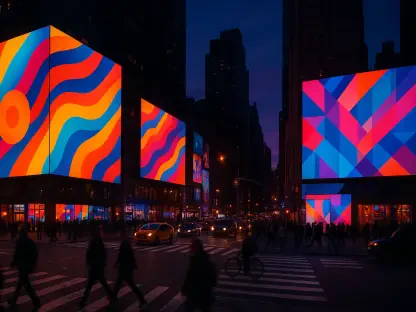
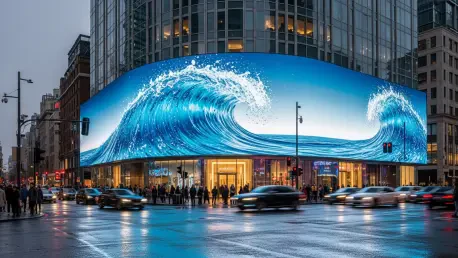
The ongoing trend of global urbanization continues to act as a powerful tailwind for the outdoor advertising industry, as more of the world’s population migrates toward densely populated metropolises. As cities become more crowded and transit times increase, the number of “eyeballs” available to billboards and street furniture grows proportionally, ensuring a steady supply of potential impressions. This demographic shift reinforces the strategic importance of hyper-public communication channels that can reach diverse audiences without relying on intrusive cookies or personal data tracking. In major global hubs, the architecture itself is becoming increasingly integrated with advertising technology, with curved LED screens and interactive installations becoming part of the urban fabric. For example, in the Gangnam district of Seoul, massive digital displays wrap around buildings to create immersive visual experiences that draw tourists and locals alike, turning commercial messages into public entertainment. These installations are no longer seen as eyesores but as landmarks that contribute to the modern, high-tech aesthetic of a world-class city. This synergy between urban development and advertising ensures that billboards remain a central component of the metropolitan experience, evolving alongside the infrastructure they inhabit to meet the needs of a more mobile and connected population that spends more time in transit and public spaces than ever before.
Successful out-of-home strategies are rarely one-size-fits-all, as they must be carefully tailored to the unique logistical and cultural landscape of each specific region. In car-centric cities such as Los Angeles, the focus remains on large-format billboards positioned along major freeways to capture the attention of commuters traveling at high speeds, requiring bold visuals and minimal text. In contrast, dense urban environments like Hong Kong or London favor “slow” advertising, such as branded double-decker buses or comprehensive transit station takeovers, which give pedestrians more time to absorb complex messages and detailed imagery. Some regions have even successfully integrated advertising into public utility projects to gain favor with both local governments and the public. In Switzerland, the use of classic glass cylinders serves a dual purpose as functional street furniture and lucrative advertising space, maintaining a high level of public acceptance through their aesthetic appeal and utility. Even in cities with strict regulations regarding visual clutter, creative media companies have found ways to provide public services like outdoor clocks and weather updates that also host subtle commercial branding. This level of adaptability allows the billboard industry to thrive in diverse regulatory environments by positioning itself as a contributor to the urban experience rather than a distraction from it. By respecting the local architectural character and communal needs, outdoor media companies ensure their continued relevance in an increasingly regulated urban world.
Technological Integration: Bridging the Gap between Physical and Virtual
The current wave of innovation has introduced a level of interactivity that turns static ads into engaging social experiences, often leveraging the very mobile devices that were once thought to be the medium’s competition. Modern outdoor campaigns frequently utilize tools like facial recognition to tailor content to the specific demographic standing in front of the screen or use virtual characters that interact with commuters in real time. These prototypes show how the medium is evolving from a passive display into a living, social experience that encourages public participation. For instance, 3D anamorphic displays, which create the illusion of three-dimensional objects leaping out of a flat screen, have become viral sensations on social media, proving that physical ads can drive massive digital engagement. When a person sees a particularly impressive outdoor installation, they are likely to photograph it and share it on their own social channels, effectively turning one physical impression into thousands of digital ones. This “amplification effect” makes high-impact outdoor sites more valuable than ever, as they act as the starting point for global digital conversations. Furthermore, the use of augmented reality allows passersby to point their phones at a billboard and unlock hidden content, exclusive discounts, or immersive brand stories. This seamless connection between the physical sign and the personal device creates a full-funnel marketing experience that captures attention in the real world and drives conversion in the digital one.
The integration of advanced data analytics has also provided a level of accountability and precision that was previously missing from the outdoor sector. By 2026, media owners have perfected the use of anonymized mobile location data to provide advertisers with detailed insights into who is seeing their ads and how those individuals behave after exposure. This allows brands to measure the direct impact of a billboard on store visits, website traffic, or purchase intent with a degree of accuracy that rivals online tracking. This data-driven approach removes the guesswork from media buying, making it easier for marketing departments to justify their investment in large-scale outdoor placements. Additionally, the rise of programmatic buying platforms has simplified the process of purchasing outdoor space, allowing advertisers to bid on inventory in real time just as they would for a social media ad. This democratization of access has opened the door for smaller, digitally native brands to experiment with physical displays, further diversifying the types of companies seen on our city streets. As the technology continues to mature, we are seeing the emergence of “smart” billboards that can detect the make and model of passing cars or the specific brands of clothing worn by pedestrians, allowing for hyper-relevant messaging that feels personal without being intrusive. This balance of mass reach and targeted precision is the cornerstone of the modern out-of-home resurgence, ensuring the medium’s dominance in the multi-channel marketing mix.
Future Synergies: Aligning Innovation with Sustainable Growth
The recent evolution of the outdoor advertising sector proved that physical media could thrive by embracing digital tools rather than resisting them. Forward-thinking brands successfully leveraged the scale of traditional billboards while integrating the precision of programmatic buying and the engagement of interactive technology. This hybrid approach allowed for a more nuanced relationship between a brand and its audience, moving beyond simple impressions to create meaningful public moments that resonated across multiple platforms. To maintain this momentum, stakeholders focused on deepening the integration between mobile technology and physical displays, using geofencing and augmented reality to bridge the gap between seeing an ad and taking immediate action. Decision-makers also prioritized environmental sustainability, transitioning to solar-powered displays and recyclable materials to align with the values of the modern consumer. The industry effectively demonstrated that in a world of fleeting digital pixels, the weight and presence of a physical message remained an unparalleled asset for establishing long-term authority and cultural relevance. By treating the city as a living canvas rather than just a collection of ad spaces, advertisers ensured that the resurgence of the billboard was not merely a temporary trend but a permanent shift in the marketing hierarchy. Moving forward, the most successful campaigns will be those that treat the physical world as a destination for discovery, using digital innovation to enhance, rather than replace, the tangible power of a well-placed sign.
To ensure continued growth and public favor, the industry turned its focus toward social responsibility and the creation of “smart city” infrastructure that benefited the community. This included the deployment of outdoor screens that functioned as emergency alert systems, public Wi-Fi hotspots, and real-time environmental sensors to monitor air quality. By providing these essential services, media companies secured their place in the urban ecosystem and justified the continued expansion of digital signage in protected areas. Advertisers also shifted their creative strategies toward “contextual harmony,” ensuring that their visuals complemented the surrounding architecture and local culture rather than clashing with it. This aesthetic sensitivity helped reduce public pushback against large-scale displays and fostered a more positive relationship between brands and the citizens who lived among their messages. The past several years showed that when technology is used to respect and enhance the physical environment, the potential for brand growth is nearly limitless. Brands that invested in high-quality, creatively ambitious outdoor installations saw significant returns in terms of both consumer trust and social media amplification. Ultimately, the billboard’s survival was secured by its ability to provide something the internet could not: a sense of place, a moment of wonder, and a shared connection in the heart of the modern metropolis. The path ahead requires a continued commitment to this balance of data-driven efficiency and monumental, public-facing creativity.