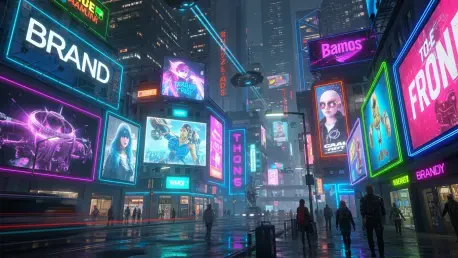

In a world saturated with digital noise, something unexpected has happened: the humble billboard has become one of the most powerful tools for social media engagement. We’re joined by Tom Stone, a partner and co-founder at re:act, who argues that Out-of-Home (OOH) advertising is no longer a legacy medium but a dynamic content engine. He explains how the most innovative brands are designing for two screens—the one on the street and the one in your pocket—creating authentic, shareable moments that achieve true cultural cut-through. We’ll explore how this quiet revolution happened, why physical presence builds unparalleled credibility, and what it takes to turn a static ad into a viral ecosystem.
You mention the quiet shift of billboards becoming content. Can you share an example of a campaign that first proved a single OOH execution could generate more engagement than a month of paid social? Please detail the metrics you used to measure that success.
It was less a single campaign and more of a creeping realization. We started seeing these striking executions, perhaps a bold installation on a major thoroughfare like Oxford Street, and noticed a fundamental change in how people reacted. The old metric was simple footfall—how many people walked past it. But suddenly, the real value wasn’t just in who saw it, but in who shared it. We stopped counting eyeballs and started tracking screenshots, Instagram stories, and the number of times it was dropped into group chats with a “have you seen this?” That’s genuine engagement, and it became clear that one brilliant, physically present idea could spark more organic conversation and peer-to-peer endorsement in a week than an entire month’s budget of carefully targeted, but ultimately skippable, social ads.
The article discusses designing for two audiences: those on the street and those on their phones. Could you walk us through the creative process for a campaign that did this well? How did the physical design choices specifically encourage sharing on platforms like TikTok or Instagram?
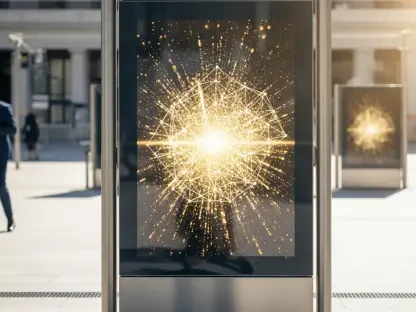
The process begins by shattering the old assumption that an OOH placement is a one-way broadcast. Instead, we ask: “What would make someone stop, pull out their phone, and want to frame this for their followers?” This means the physical design must be inherently photographic. We’re thinking about things like 3D installations that warp perspective and look incredible on camera, or digital screens that display live, relevant data that feels immediate and newsworthy. The key is to create a visual spectacle. The design choices are intentional; we might use bold colors that pop on a phone screen or create a composition that perfectly fits a vertical video format. It’s no longer just advertising; it’s crafting a piece of cultural commentary or street art that people feel compelled to capture and make part of their own social story.
You make a great point about the authenticity of user-generated photos. Beyond just creating a witty or spectacular visual, what specific tactics can turn a passive viewer into an active participant who pulls out their phone?
The magic is in creating a moment that feels like a personal discovery. It’s not about a call-to-action that says “Share this!” but about baking in the instincts of great social content from the start. Wit is a powerful tool; a clever line that feels like an inside joke makes people want to be in on it. Surprise is another—an execution that defies expectations or plays with its environment creates an irresistible urge to document it. And timing is everything. A placement that taps into a current cultural conversation feels relevant and urgent. An activation that successfully sparks this doesn’t just present a message; it offers an experience, making the viewer feel like they’ve stumbled upon something special that their friends just have to see.
You argue that the physical execution is just the start of building an “ecosystem.” Can you break down the steps a brand should take after an OOH placement goes live? How do they effectively drive their community to the location and then amplify the resulting content?
Absolutely. Just letting a billboard run its cycle is a huge missed opportunity. The brands who get this right see the live date as day one of a multi-layered campaign. First, they use their social channels to drive their existing community to the physical location, teasing it as an event or a must-see spot. This creates an initial wave of content. The next step is to actively encourage interaction, maybe by rewarding participation with exclusive access to a product drop or a unique experience. This transforms passive viewers into active collaborators. Finally, and this is crucial, they amplify the best of that user-generated content back through their paid social channels. This extends the reach exponentially, turning one week of OOH into seven days of sustained social momentum and thousands of earned impressions that cost nothing beyond the initial media buy.
You highlight the mistake of OOH and social teams working in silos. For a campaign to achieve “cultural cut-through,” what does that ideal collaboration look like? At what stage should the teams join forces, and what key information must they share to ensure success?
The collaboration has to start from the absolute beginning, at the briefing stage. It’s a complete waste to have the OOH team create something in a vacuum and then just throw it over the wall to the social team to “amplify.” The ideal process is a constant dialogue. The social team brings insights on what’s currently resonating online—the visual trends, the tone, the memes—and the OOH team brings their expertise in creating physical impact and spectacle. They must work together to design an execution that performs brilliantly in both contexts: the physical placement generates curiosity and scale, while the social layer generates conversation and stickiness. When they combine their strengths, they create something that neither could achieve alone—a true cultural moment.
What is your forecast for the future of OOH? How will the integration of real-time social sentiment and interactive elements change what a “billboard” even is over the next five years?
The next phase is all about leveling up from shareable moments to truly integrated experiences. I believe the concept of a static “billboard” will feel incredibly dated. Instead, we’ll see dynamic creative that responds in real-time to social media sentiment, a digital OOH display that might change its message based on a trending hashtag or online poll. We’ll see physical installations that evolve based on online participation, where the actions of the digital audience directly impact what happens in the real world. These activations will become living campaigns, designed to reward both the people who show up in person and those who amplify the message from afar. Ultimately, OOH won’t just be feeding social media; it will be bringing the energy and interactivity of social media back into our physical world.