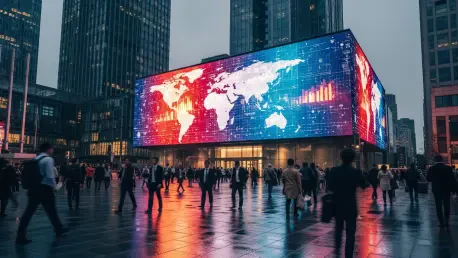

The rapid metamorphosis of Chinese enterprises into formidable global icons is currently being accelerated by a sophisticated fusion of real-world physical presence and advanced algorithmic precision. This strategic shift marks a definitive departure from the high-frequency, low-margin performance models that previously dominated the international expansion of these firms. As e-commerce giants and consumer technology pioneers look beyond the limitations of purely digital interfaces, they are rediscovering the profound psychological impact of the physical world. Establishing a brand in the minds of international consumers now requires more than a targeted social media advertisement; it necessitates a tangible footprint in the urban landscapes where people live and work.
Programmatic digital out-of-home (pDOOH) advertising has emerged as the essential bridge between digital efficiency and physical authority. By leveraging this technology, brands can maintain the flexibility of programmatic buying while achieving the physical gravitas required to build long-term credibility across international borders. This transition represents a maturation of the Chinese business model, moving away from aggressive traffic acquisition toward the cultivation of sustainable global brand equity. The emphasis is no longer solely on the next transaction but on the enduring trust that a recognizable physical presence generates in a crowded marketplace.
The Strategic Evolution of Chinese Brands in the Global Advertising Landscape
The shifting roles of major industry players in the e-commerce, gaming, and consumer electronics sectors highlight a growing realization that short-term performance marketing cannot sustain long-term growth. While direct-response ads were effective for initial market entry, they often failed to build the emotional resonance necessary for brand loyalty. Consequently, leading advertisers are reallocating budgets to focus on storytelling that communicates core values and cultural identity. This evolution allows companies to transcend their origins and be perceived as local staples in diverse foreign markets.
Furthermore, the integration of physical world screens provides a level of legitimacy that mobile devices alone cannot offer. When a brand appears on a massive digital screen in a major metropolitan center, it signals a level of stability and investment that reassures cautious consumers. This physical presence serves as a powerful validation tool, especially for brands entering competitive Western or Middle Eastern markets. By anchoring their digital campaigns with real-world visibility, these companies create a holistic brand experience that effectively bridges the gap between online browsing and physical reality.
Technological Catalysts and Market Dynamics Shaping Global Expansion
Emerging Trends in AI-Powered Creative and Programmatic Flexibility
Artificial Intelligence is currently revolutionizing how global campaigns are planned, traded, and optimized by automating the most complex aspects of media buying. These advanced systems allow brands to identify the most lucrative audience segments and geographic markets with unprecedented speed. AI-powered tools also facilitate the creation of dynamic content that can be adjusted in real-time to suit local conditions, such as weather patterns or local events. This level of programmatic flexibility ensures that every dollar spent is directed toward the most impactful screen at the most opportune moment.
Evolving consumer behaviors further drive this technological adoption as individuals increasingly favor tangible, real-world interactions over saturated and often intrusive social media feeds. There is a growing fatigue associated with digital-only advertising, leading marketers to seek out environments where consumers are more receptive and less likely to ignore brand messaging. This shift away from chasing traffic and toward sophisticated storytelling allows brands to connect with their audience in a more natural and less disruptive manner.
Market Performance Indicators and the Growing Value of Physical Presence
High-impact data from recent global initiatives underscores the immense value of landmark urban locations in establishing brand dominance. For example, synchronized campaigns across multiple continents have demonstrated the ability to generate hundreds of millions of impressions while maintaining a consistent brand voice. This scale of exposure provides a critical multiplier effect for omnichannel marketing frameworks, enhancing the effectiveness of simultaneous digital and television efforts. Such benchmarks are now the gold standard for brands transitioning from localized sales to true global recognition.
Growth projections for pDOOH continue to climb as more brands recognize its potential as a cornerstone of their international strategy. The medium offers a unique combination of high-reach potential and the ability to target specific demographics based on geographic location and movement patterns. As attribution technologies improve, the ability to link physical screen exposure to digital conversions is becoming more precise. This data-driven approach allows for a level of accountability that was previously impossible in traditional out-of-home advertising, making it an attractive prospect for performance-oriented marketers.
Overcoming Geopolitical Pressures and Diminishing Returns in Digital Channels
External pressures, such as rising global tariffs and shifting trade barriers, have forced a re-evaluation of traditional export models. To maintain profitability in an environment of increasing costs, Chinese firms must transition from being low-cost providers to high-value brands. This shift requires an investment in brand equity that can justify premium pricing and sustain demand even in the face of economic headwinds. Diversifying geographic footprints and building local trust are essential strategies for mitigating the risks associated with geopolitical volatility.
At the same time, the skyrocketing cost of customer acquisition in digital ecosystems has made a purely online strategy increasingly unsustainable. As social media platforms become more crowded and expensive, the return on investment for standard digital ads has begun to diminish. Brands that rely solely on these channels find themselves in a constant battle for attention that yields lower margins over time. By incorporating physical screens into their mix, companies can capture attention more efficiently and build a lasting impression that reduces the long-term cost of acquisition.
Navigating the Regulatory Landscape and Global Compliance Standards
Maintaining brand safety and transparency across diverse regional regulatory frameworks is a primary concern for companies expanding their reach. Each international market presents a unique set of challenges, from stringent data privacy laws like GDPR to specific local advertising standards. Successful brands have invested heavily in compliance infrastructure to ensure that their AI-integrated marketing platforms adhere to these rules. This commitment to transparency not only avoids legal complications but also serves to build deeper trust with consumers who are increasingly concerned about their data security.
Moreover, the impact of security measures on AI-driven platforms cannot be overstated, as these systems handle vast amounts of audience data. Ensuring that this data is processed ethically and securely is vital for maintaining the integrity of global campaigns. Brands that prioritize these standards are better positioned to compete in markets where consumer trust is a prerequisite for success. By navigating these complex regulatory landscapes with diligence, advertisers can protect their brand reputation while leveraging the full power of modern advertising technology.
Future Insights: The Convergence of Omnichannel Strategy and Real-Time AI
The upcoming role of advanced attribution models will likely focus on closing the loop between physical exposure and digital action with even greater accuracy. Future systems will enable brands to track a consumer’s journey from seeing a digital billboard to making a purchase on a mobile app with near-instantaneous feedback. This convergence will allow for real-time budget reallocation, where funds are automatically shifted to the most successful channels and locations based on live performance data. Such a level of integration will transform how brands approach global scale and efficiency.
Emerging disruptors, such as AI-generated creative testing at scale, will also allow brands to experiment with hundreds of variations of an ad to find the perfect cultural fit. This capability will significantly reduce the risk associated with entering new markets by providing data-backed insights into what visuals and messages resonate best with local audiences. As global economic conditions continue to fluctuate, the shift toward sustainable and technology-driven expansion will remain a top priority for forward-thinking organizations. These innovations will ensure that brand building remains a precise and highly effective endeavor.
Strategic Recommendations for Scaling Sustainable Global Brand Equity
The transition from transactional marketing to the creation of recognizable global entities was a defining feature of the recent decade. It became clear that the most successful organizations were those that prioritized long-term trust over immediate clicks. By harmonizing physical world screens with personal digital devices, brands achieved a level of recall that was previously unattainable. This integrated approach allowed companies to build a cohesive identity that functioned seamlessly across different cultural and geographic contexts.
Investment prospects favored those who recognized the necessity of blending sophisticated AI integration with a strong real-world presence. The strategy proved that global brand equity was best built through a combination of technological innovation and tangible visibility. This path allowed for a more resilient international presence that could withstand the pressures of a changing global economy. Ultimately, the brands that succeeded were the ones that viewed their marketing not just as a series of advertisements, but as a commitment to being a constant, reliable presence in the lives of their global consumers.