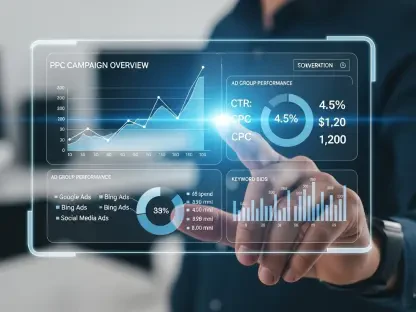

Marketing professionals who still cling to the outdated philosophy of perpetual experimentation often find themselves wondering why their performance metrics are stagnating despite a constant stream of new tests. The once-revered mantra of always be testing was a viable strategy when digital

The digital storefront that once prioritized purely organic discovery has reached a definitive turning point as paid visibility becomes the dominant force in the mobile app economy. This transition marks the most significant overhaul of the App Store infrastructure since its inception, moving

The modern advertising ecosystem has reached a critical juncture where the sheer volume of campaign data often exceeds the human capacity for manual oversight and cross-platform synthesis. For years, the industry operated within rigid silos, but the current shift toward integrated, data-driven

The current digital landscape is defined by a significant paradox where the unprecedented efficiency of generative intelligence threatens to dilute the very brand uniqueness that drives consumer trust. As organizations in the current market cycle rush to automate their content production, the

Digital landscapes are currently shifting beneath the feet of every content creator as the long-standing contract between search engines and websites begins to dissolve. For decades, the internet functioned on a predictable exchange where high-quality publishing led to high-ranking visibility,

Anastasia Braitsik stands at the forefront of the evolving search landscape, bringing a wealth of experience in navigating the shift from manual keyword management to intent-based automation. As a global leader in SEO and performance marketing, she has spent years dissecting the mechanics of data