
Expert in search engine marketing and digital growth, Anastasia Braitsik has spent years at the intersection of technical SEO and paid advertising. Her work focuses on dismantling the silos that traditionally separate organic and paid search teams, advocating for a unified data strategy that maximizes ROI. By leveraging deep technical audits and Google Search Console insights, she helps brands lower their customer acquisition costs while improving site visibility.
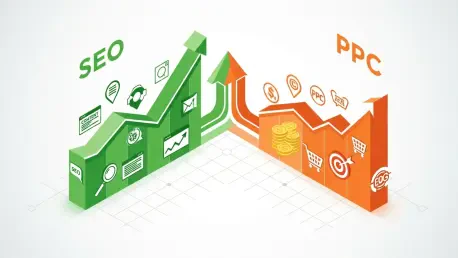
In this discussion, we explore the symbiotic relationship between SEO and PPC, focusing on how technical site improvements and organic data can significantly enhance paid campaign performance. We cover the transition toward AI-driven search models, the nuances of Quality Score, and the strategic decisions required when balancing organic dominance with paid visibility.
Quality Scores depend heavily on the landing page experience, including mobile rendering and load speeds. How do you facilitate communication between SEOs and web developers to prioritize these fixes, and what specific metrics indicate that technical SEO improvements are successfully driving down your cost per click?
The bridge between SEO and development is built on the shared goal of performance, and I facilitate this by framing technical fixes as direct revenue drivers. When I show a developer that a 1-second improvement in load speed or better mobile rendering directly correlates to a higher Quality Score, it shifts the task from a “chore” to a strategic priority. We focus on the “landing page experience” metric within Google Ads as our primary indicator of success. A tangible sign that these technical SEO improvements are working is a visible decrease in Cost Per Click (CPC) alongside a higher ad rank. By offloading the pressure of technical site health to the SEO team, the PPC specialists are freed up to focus entirely on account optimization and bid management.
Ensuring a landing page matches specific search keywords can improve ad relevance and user engagement. What is your step-by-step process for optimizing on-page content to support paid bidding, and how do you handle the trade-offs when a page must serve both organic visitors and high-intent paid traffic?
My process starts with a collaborative mapping session where we identify the high-intent keywords the PPC team is actively bidding on. First, I audit the existing landing page to see if those specific terms and their semantic variations are naturally integrated into the headers and body copy. Second, I refine the content to ensure it aligns perfectly with both the ad copy and the user’s search intent, which boosts the relevance component of the Quality Score. Regarding trade-offs, there is often less conflict than people assume; a page that is highly relevant for a paid visitor is usually exactly what an organic user is looking for as well. The goal is to create a seamless experience where the messaging remains consistent regardless of how the user arrived at the site.
AI-powered campaigns now use website crawling to rewrite headlines and select final URLs based on page content. How does a robust site architecture change the performance of these automated tools, and what anecdotes can you share regarding Google’s algorithms misinterpreting site content for a specific search query?
A clean and logical site architecture acts as a roadmap for Google’s AI tools, such as Performance Max and AI Max for Search. When your site is structured so that Google can easily find, parse, and understand the content, the AI is much more effective at “Final URL Expansion” and rewriting headlines that actually make sense. I’ve seen instances where poor site structure led Google’s algorithms to match search queries with irrelevant sub-pages, essentially misinterpreting the core offer of the business. By applying SEO best practices to make the site more “crawlable,” we ensure that these keyword-less technologies have the context they need to match ads to the most profitable queries. It transforms the AI from a wild guesser into a precision tool.
Google Search Console data offers a view into organic rankings that paid reports often miss. How do you use organic query reports to identify new long-tail keywords for PPC, and what criteria determine if a keyword ranking in positions 7 through 15 deserves a more aggressive paid bid?
Google Search Console is a goldmine for keyword discovery because it reveals the exact phrases users type to find your site organically, often uncovering long-tail gems that PPC reports haven’t captured yet. I regularly link Google Ads and GSC accounts to identify gaps where we rank organically but haven’t yet launched a paid campaign. For keywords sitting in positions 7 through 15, the primary criterion for an aggressive bid is proven relevance. If Google already deems your site relevant enough to rank on the second page or the bottom of the first, it’s a strong signal that the content will convert well and maintain a high Quality Score. Investing in these “middle-ground” keywords allows us to jump to the top of the page immediately while we work on the long-term organic climb.
High-volume keywords often come with expensive costs, even when a site already ranks well organically. Under what specific market conditions should a brand consider pulling back spend on keywords they already dominate in organic search, and how do you measure the potential loss in total traffic?
Pulling back on expensive PPC keywords where you have organic dominance is a high-stakes move that requires a very specific market landscape. I only recommend this when the competitive field is thin; if your competitors are bidding heavily on your top organic terms, you must stay in the paid auction to protect your market share. We measure the potential loss by monitoring “combined organic and paid” reports to see if the organic lift compensates for the lack of a paid ad. If we see a significant dip in total clicks or conversions, it’s a sign that the “halo effect” of having both a paid and organic result is too valuable to lose. It’s an exercise in balancing cost-savings against the risk of becoming invisible to a segment of the audience.
With the upcoming transition from Dynamic Search Ads to AI Max for Search by 2026, advertisers face a new technical landscape. What practical steps should teams take now to prepare their site content for this shift, and how will this change the way we approach keyword-less targeting?
The transition to AI Max for Search means we have until September 2026 to ensure our website content is “AI-ready.” The most practical step teams can take right now is to double down on high-quality, descriptive on-page content that uses natural language rather than just stuffed keywords. Since AI Max will be rewriting ad headlines and descriptions based on your landing pages, your site’s copy effectively becomes your ad copy. This shift moves us away from rigid keyword lists and toward a strategy focused on “context and clarity.” We need to view our websites not just as destinations, but as the primary data source that feeds Google’s automated bidding and creative engines.
What is your forecast for the future of integrated search strategies?
In the coming years, I foresee the total disappearance of the “wall” between SEO and PPC, moving toward a single “Search” department focused on total SERP real estate. As AI-powered, keyword-less targeting becomes the standard, the technical health and content depth of a website will be the single most important factor in determining paid advertising success. Brands that continue to treat these as separate silos will find their PPC costs spiraling as their Quality Scores suffer from neglected landing pages. The future belongs to those who use organic data to inform paid bids and technical SEO to fuel AI-driven campaign performance.