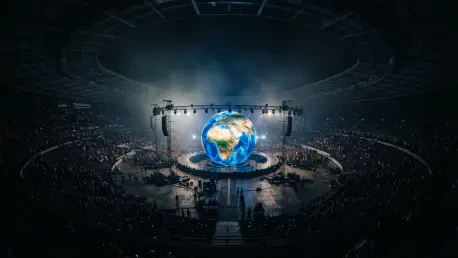

The Jakarta concert incident serves as a definitive case study in how uncoordinated social media teams can form a cohesive campaign through shared visual cues. On October 24, 2026, the performance at Gelora Bung Karno Main Stadium featured a massive, hemisphere-shaped stage designed to represent a globe. This architectural centerpiece provided the artist with a dramatic “world-view” platform, but its influence extended far beyond the stadium walls as it transitioned into a digital template for brand engagement. Within hours, Indonesian social media feeds were flooded with reinterpretations of this distinctive silhouette, as major companies recognized an opportunity to borrow the visual language of the event. This phenomenon of cultural remixing showcased how a single high-profile moment can be stripped of its original context and repurposed to serve various commercial interests. By utilizing the stage’s planetary graphics as a creative foundation, brands demonstrated an exceptional level of market agility and a keen understanding of how to capitalize on global pop culture trends.
The Mechanics of Viral Visual Templates
Trendjacking Strategy: The Power of Visual Mimicry
Trendjacking is a marketing strategy that involves capitalizing on current events or viral topics to boost a brand’s visibility and relevance. In the context of the Jakarta concert, the globe stage functioned as a standardized visual framework that allowed diverse companies to engage in playful, unauthorized branding maneuvers. Unlike traditional sponsorship deals which require months of negotiation and rigid guidelines, these social media responses were fast-paced and characterized by their creative freedom. This instance highlights a shift in how modern marketing teams operate, moving away from formal partnerships toward more organic and agile participation in cultural conversations. The visual template provided by the stage was recognizable enough to maintain a connection to the original event while being flexible enough to accommodate various product placements. This balance is critical for successful trendjacking, as it ensures the brand’s contribution feels like a part of a larger, evolving joke rather than an intrusive advertisement.
Architectural Simplicity: Creating a Digital Universal Language
The viral success of the Jakarta stage can be attributed to its specific visual grammar, which consisted of a simple curved dome and a solitary silhouette atop it. This geometric minimalism provided an immense sense of scale that was easily replicable by designers across different industries. By reducing the complex production of a global tour into a few basic shapes, the concert stage became a “complete-the-visual” exercise for digital audiences. Unlike other viral trends that rely on complex human emotions or specific musical cues, this architectural approach was purely visual, making it accessible to anyone with basic graphic design capabilities. It allowed brands to leverage the hype of the artist without necessarily endorsing his persona or music, focusing instead on the iconic imagery associated with the performance. This simplicity reduced the friction of entry, enabling even conservative corporate brands to participate in a high-traffic moment. The result was a collective digital experience where the audience immediately recognized the reference.
Tactical Brand Executions
Literal Adaptations: Transforming Products into Iconic Shapes
Food and beverage companies were particularly effective in their execution because many of their products naturally mirror the hemispherical shape of the globe stage. Domino’s Indonesia, for instance, substituted the planetary graphics with its “Cheese Volcano Meatmax” pizza, where the central crater of melted cheese stood in for the summit where the artist would appear. This reinterpretation was supported by clever linguistic wordplay that integrated the artist’s name into common Indonesian slang, creating a layered joke that resonated deeply with local consumers. Similarly, brands like Royco and KFC utilized their existing mascots to replace the silhouette of the performer, effectively shifting the scale from a global stadium event to a relatable culinary moment. These literal reinterpretations allowed brands to insert themselves into the conversation with minimal effort, as the visual substitution was intuitive and visually satisfying. By mapping their products onto a trending shape, these companies demonstrated how physical traits can bridge a brand and a viral moment.
Conceptual Reach: Symbolizing Global Standards and Excellence
In contrast to the literal approach of food brands, companies in the finance and healthcare sectors treated the globe as a conceptual symbol representing scale and professional excellence. CIMB Niaga utilized the imagery to promote its international banking services, framing the globe as a representation of global travel and currency reach. By using puns that blended the artist’s name with Indonesian phrases about world travel, the bank was able to turn a pop culture meme into a conversation about serious financial products. Similarly, Siloam International Hospitals placed medical professionals on the dome to emphasize their commitment to “world-class” standards of care. This move by a healthcare provider illustrates that the trend was powerful enough to cross the boundary from lighthearted entertainment to institutional professional identity. These conceptual adaptations show that trendjacking is not limited to physical products; it can be used to reinforce abstract brand values like trust, reliability, and global ambition while participating in a youthful digital dialogue.
Strategic Takeaways for Modern Marketers
Cultural Fluency: Localizing Global Pop Culture Moments
The collective reaction to the Jakarta globe stage demonstrates the growing importance of shared social formats in modern digital marketing. When multiple brands utilize the same visual cue simultaneously, it creates a communal cultural moment that boosts the visibility of every participant through an algorithmic snowball effect. However, the mere act of copying a visual is rarely enough to achieve high engagement; the most successful campaigns in this wave were those that integrated local cultural nuances. For example, the recurring use of the “YE” pun in the Indonesian language added a layer of local flavor that made the global event feel specifically relevant to the Jakarta audience. This highlights a critical lesson for marketers: while a viral event may be global in scope, its execution must be deeply localized to truly connect with a target market. Cultural fluency involves more than just keeping up with trends; it requires the ability to translate those trends into the specific linguistic and social context of the audience. Brands that bridge this gap are seen as active participants.
Future Implementation: Developing Agility in Visual Branding
The Jakarta stage incident demonstrated that successful brand engagement in the digital age relies on the flexibility of the cultural object being utilized. Marketers realized that iconic visual elements provide a common language that can bridge diverse industries, from fast food to high-level finance. Moving forward, organizations should prioritize the identification of “geometric hooks” in pop culture that allow for easy product substitution without losing the original reference’s recognizability. It is essential to develop a rapid-response strategy that prioritizes creative wit over production value, as the window of relevance for these trends is often measured in hours rather than days. Rather than focusing on celebrity endorsements, teams should look for architectural or graphic cues that can be owned by the brand for a short period. The ultimate goal is to move beyond simple imitation and toward a strategic alignment where the meme reinforces a core product benefit or brand identity. As visual trends continue to dominate social media, pivoting quickly will remain a key skill for a competitive brand.