
The conversion of the Tejas Express into a “Sprite Train” illustrates a strategic attempt to make a brand synonymous with the infrastructure it occupies daily. This evolution reflects a broader trend where companies are no longer satisfied with mere visibility; they seek to integrate their visual identity into the very fabric of public movement. Modern advertising is increasingly departing from the era of static roadside billboards and fleeting digital banners, moving toward a philosophy of experiential immersion. By transforming high-speed transit into a mobile brand asset, corporations are effectively rewriting the relationship between public utility and private enterprise. This shift turns an ordinary commute into a curated narrative, where the vehicle serves as a giant, three-dimensional canvas that commands attention in a way no television commercial ever could. As public infrastructure becomes more sophisticated, the opportunity to claim a physical stake in the urban landscape becomes a primary objective for global market leaders in the current economy.
Breaking Traditional Marketing Cycles
Consumption Versus Recall: The Strategic Timing Shift
Most beverage companies traditionally exhaust their marketing budgets during the peak summer months, capitalizing on the immediate, visceral need for hydration when temperatures soar. However, the recent decision to launch a major branding initiative during the cooler monsoon season signals a fundamental change in how market dominance is maintained. By distancing the campaign from the usual summer noise, the brand avoids the seasonal clutter that often drowns out individual messages. This choice moves away from the transactional nature of thirst-driven sales and focuses instead on building a sustainable, year-round presence. Marketing in an off-peak period allows for a more focused engagement with the audience, as there are fewer competing visuals vying for the same eyeballs. This calculated departure from standard industry cycles suggests that the goal is no longer just immediate consumption, but the long-term occupation of the consumer’s subconscious awareness across every season.
Mental Availability: Beyond the Immediate Transaction
The underlying objective of this non-traditional timing is the creation of what industry analysts describe as mental availability. This concept focuses on ensuring that a brand is the first thing a consumer recalls when a category is mentioned, regardless of whether they are currently in the market for a purchase. By establishing a presence during the monsoon, the campaign builds a deep-seated recognition that remains dormant until the next high-demand cycle. This approach generates significant public relations value because the novelty of a fully branded train during a relatively quiet marketing period naturally captures more media attention. The narrative becomes about the spectacle itself rather than just the product, providing a layer of earned media that traditional advertising rarely achieves. Furthermore, this timing ensures that the brand remains relevant during periods of lower competition, effectively securing a stronger foothold in the minds of the public before the summer rush begins again.
Redefining the Transit Landscape
Total Immersion: The Impact of Moving Brand Properties
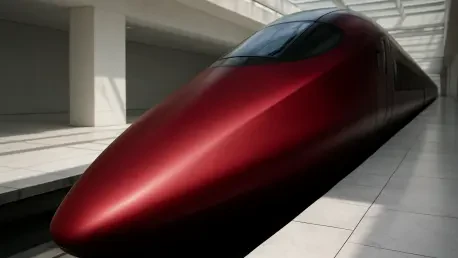
Traditional transit advertising has historically relied on localized stickers or small posters that commuters eventually learn to ignore as part of the background environment. The strategy employed with the Tejas Express represents a departure from this subtlety, utilizing a concept known as total immersion branding. By wrapping the entire exterior of a high-speed train in a signature color palette, the brand effectively claims ownership of the vessel’s identity in the eyes of the traveling public. This level of visual dominance ensures that the infrastructure is no longer seen as just a government-operated utility, but as a moving extension of the brand itself. The train essentially becomes a giant, mobile sculpture that reinforces the brand’s aesthetic at every station it enters. This method of total wrapping transforms the vehicle into a landmark on wheels, making it impossible for passengers or observers to separate the transit service from the corporate identity that now defines its exterior appearance.
Geographic Mobility: Reaching the National Audience
One of the most significant advantages of this infrastructure-based approach is the extreme geographic mobility it offers compared to stationary advertising. Unlike a billboard that is restricted to a single intersection or highway stretch, a branded train acts as a high-velocity media vehicle that traverses diverse regions and demographics. As it travels between major metropolitan hubs, it reaches a vast audience that includes on-board passengers, people waiting at intermediate platforms, and even residents living near the tracks. This creates a wide-reaching impact that provides repeated exposure across different geographic territories without the logistical burden of purchasing hundreds of individual ad spots. The train functions as a persistent presence in the landscape, providing a sense of national reach and scale that few other mediums can match. The ability to move through different socioeconomic zones while maintaining a consistent visual message allows the brand to saturate the public consciousness on a massive scale.
Bridging the Gap Between Physical and Digital
Un-blockable Content: The Power of Physical Interruption
In an era where digital advertising is increasingly prone to being skipped or filtered out by ad-blocking software, physical infrastructure provides a unique and unavoidable alternative. A bright green train represents a physical interruption of the natural environment that cannot be turned off or scrolled past. Because humans are naturally hardwired to notice large-scale changes in their familiar daily surroundings, this type of branding becomes a memorable part of their physical reality. It cuts through the digital clutter by offering a tactile and monumental presence that digital banners simply cannot replicate. The sheer scale of the train ensures that the branding is perceived as a significant event rather than a minor distraction. This physical dominance forces a level of engagement that is increasingly rare, as the brand becomes a component of the user’s actual journey. By occupying the physical space where people live and move, the campaign bypasses digital filters and establishes a direct line to the consumer’s attention.
Social Amplification: Turning Infrastructure Into Viral Media
This physical presence serves as a bridge to the digital realm, as the novelty of the branded train naturally encourages organic social media engagement. When passengers or bystanders encounter such a visually striking alteration to a familiar piece of infrastructure, they are highly likely to document the experience through photographs and videos. This user-generated content then spreads across various social platforms, transforming a single physical asset into a viral digital phenomenon. The brand effectively leverages the audience’s desire to share interesting or unusual sights, allowing the campaign to reach millions of people who may never see the train in person. This synergy between the physical and digital worlds multiplies the return on investment, as each post acts as a personal endorsement from a consumer. By creating a physical spectacle that is share-worthy, the brand ensures that its message is amplified far beyond the tracks, turning every smartphone-carrying commuter into a potential ambassador for the brand’s visual identity.
The Strategy of Spatial Occupation
Architecture and Identity: Occupying the Public Space
There is a clearly emerging trend where major corporations seek to occupy public spaces in a way that goes beyond traditional rental agreements. We are seeing this evolution not just in the branding of locomotives, but also in the acquisition of naming rights for entire metro stations and the redesign of their architectural interiors. The strategic objective is to transition from being a temporary guest in a public space to becoming a permanent fixture of the urban environment’s history and architecture. This level of spatial occupation allows a brand to weave itself into the daily narrative of a city, becoming a recognized landmark that residents use for navigation and reference. When a company manages to influence the physical design and nomenclature of a transit hub, it gains a level of cultural permanence that is far more valuable than a standard advertising contract. This integration makes the brand an inseparable part of the local infrastructure, creating a sense of reliability and institutional presence.
Habitual Engagement: Becoming a Part of the Daily Routine
Successful integration into public infrastructure allows a brand to become a fundamental part of the consumer’s daily routine and spatial memory. If a commuter begins to associate a specific route or a particular station with the visual identity of a brand, the company has achieved a level of psychological ownership that traditional media cannot challenge. This strategy transforms the brand into a functional landmark in the consumer’s life, creating a competitive advantage that is extremely difficult for rivals to disrupt. Once a brand is embedded in the physical architecture of a daily commute, it benefits from the power of habit and environmental cues. The brand is no longer just something people see on a screen; it is something they walk through, sit in, and use to reach their destinations. This deep immersion creates a lasting bond that transcends the superficial nature of modern marketing, providing the brand with a unique defensive moat based on physical presence and the undeniable reality of the built environment.
Long-Term Impact and Competitive Advantage
Disruption and Value: Navigating Future Advertising Trends
The ongoing success of infrastructure-based branding is largely dependent on its ability to act as a significant disruption to the established visual norms of public transit. Currently, a fully branded train remains a novelty that commands immediate attention and earns extensive coverage across major news and social media platforms. This earned media provides a level of credibility and visibility that often far exceeds the initial financial investment required for the partnership. By breaking the monotony of standard government-issued liveries, these moving brand properties create a sense of excitement and curiosity that benefits both the brand and the transit operator. This efficiency in building reputation through spectacle is particularly effective in a crowded marketplace where traditional channels are increasingly saturated. The brand that successfully manages to stand out as a unique physical experience gains a significant edge, as its message is delivered through a medium that still possesses the power to surprise and engage the public.
Strategic Evolution: The Future of Infrastructure Branding
The transition toward using infrastructure as a primary brand asset required a delicate balance to avoid visual saturation and public fatigue. Strategic planners recognized that for these physical interventions to remain effective, they had to maintain a sense of surprise rather than becoming mere background noise. It was found that the most successful implementations were those that added tangible value to the passenger experience, such as improved station amenities or enhanced onboard services integrated with the brand’s identity. Companies that prioritized aesthetic harmony and functional improvements alongside their marketing goals achieved much higher levels of public acceptance. Future strategies were built on the idea that the physical presence must feel like a unique experience rather than a forced intrusion. By focusing on quality and innovation in the physical realm, brands ensured that their occupation of public space continued to be viewed as a positive contribution to the urban landscape. This approach ultimately secured a lasting legacy.