
The once-distinct line between human creativity and machine-driven execution has blurred into a collaborative spectrum, fundamentally reshaping how digital content comes to life. The creative industry is undergoing a seismic shift, with artificial intelligence evolving from a niche tool into the fundamental infrastructure of modern content creation. This analysis explores how AI is not just enhancing but redefining creative workflows, driving unprecedented efficiency and scalability. The top five AI tools essential for creators illustrate a present where human ingenuity is amplified by intelligent automation.
The AI Integration Wave from Novelty to Necessity
Market Adoption and Growth Projections
The rapid integration of AI into creative fields is no longer a forecast but a market reality. Industry reports show exponential growth in the market for AI-powered creative software, with adoption rates among digital media professionals soaring. This trend is fueled by significant investment in AI content generation startups, which are attracting capital based on their ability to solve long-standing production bottlenecks. The scale of this transformation is evident in how quickly agencies, studios, and freelance creators have moved to incorporate these technologies into their core operations.
This shift signifies a fundamental change in industry economics and expectations. Tools that were once considered experimental are now standard, driven by the demand for higher output without a proportional increase in resources. The market’s maturation is reflected not only in the number of users but also in the specialization of the tools available, which now cater to every stage of the creative lifecycle, from initial brainstorming to final distribution.
Real-World Applications Across the Creative Lifecycle
In practice, the deployment of AI is visible across the entire content creation process. Creative agencies now regularly use AI for rapid campaign ideation, generating dozens of concepts and taglines in the time it once took to develop a few. Freelance creators leverage generative tools for visual assets, producing high-quality images and graphics that previously required extensive design skills or stock photo budgets. This democratization of production is a powerful force in the industry.
Furthermore, production houses are implementing AI for complex tasks like pre-visualization and video generation. Scripting, a traditionally labor-intensive process, is accelerated with tools like ChatGPT, which can produce structured drafts and dialogue options. Simultaneously, platforms like Canva have become indispensable for executing high-volume social media campaigns, allowing teams to maintain brand consistency while responding to market trends in real time. These applications demonstrate that AI has firmly moved from a theoretical advantage to a practical necessity.
The Essential AI Toolkit
Foundational Ideation and Strategy with ChatGPT
ChatGPT has solidified its role as the cornerstone of content planning and pre-production. Its primary function is to accelerate the earliest and often most challenging phase of creation: developing a coherent idea. By processing simple prompts, it can generate structured outlines, script frameworks, and strategic content plans that provide a solid foundation for any project. This capability allows creators to bypass the blank page and immediately begin refining and elevating concepts.
This tool fundamentally alters the pre-production workflow by offloading the structural heavy lifting. Instead of spending hours on initial research and outlining, creative professionals can dedicate their expertise to what matters most: injecting nuance, ensuring brand alignment, and providing unique creative direction. Consequently, ChatGPT acts as a strategic partner, streamlining ideation and allowing human talent to focus on higher-level execution and polish.
Visual Content Creation from Mass-Market Design to Integrated Platforms
In the realm of visual creation, two distinct yet complementary approaches have emerged. Canva continues its mission to democratize design, enabling users without formal expertise to produce a high volume of branded assets. Its template-driven workflow and intuitive interface make it the go-to solution for social media graphics, marketing materials, and internal communications, ensuring brand consistency at scale.
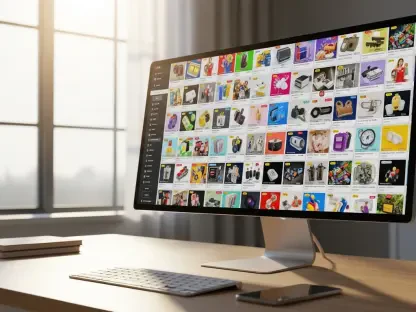
In contrast, iMini AI represents the growing trend toward integrated, multi-modal platforms. By consolidating image and video generation tools into a single environment, it eliminates the friction of switching between multiple applications. Its standout feature, a trend-driven “Inspiration Community,” provides creators with ready-to-use templates and concepts, directly addressing the need for rapid content creation in fast-paced digital ecosystems. This consolidation signals a move toward more holistic creative suites.
Advanced Production and Strategic Oversight with Manus and Veo 3.1
At the higher end of the professional spectrum, specialized tools offer sophisticated capabilities for production and quality control. Manus has emerged as a critical multi-model AI agent, allowing professionals to compare outputs from various AI models within a single interface. This is crucial for ensuring the highest quality, as it empowers users to select the best possible generation for text, design, or analysis rather than being locked into one model’s limitations.
For cinematic production, Veo 3.1 has set a new standard in AI video generation. It delivers near-cinematic quality, giving directors granular control over motion, lighting, and camera work that approaches live-action fidelity. This technology enables creative teams to explore complex visual concepts and produce high-quality B-roll or animated sequences with unprecedented speed, making it an indispensable tool for concept development and execution in modern filmmaking.
Expert Insights The Evolving Role of the Human Creator
Across the industry, a consensus has formed around the partnership between humans and AI. The role of the creative professional is decisively shifting from one of manual execution to one of strategic oversight and curation. AI excels at handling repetitive, time-consuming, and complex generative tasks, whether drafting copy, designing assets, or rendering video sequences. This automation liberates human creators to concentrate on what they do best.
This evolving dynamic places a premium on high-level strategy, creative judgment, and the final, nuanced polish that distinguishes exceptional work from the merely competent. AI is increasingly viewed as an augmentation tool—a powerful assistant that expands creative capacity rather than a replacement for artistic vision. The most successful creators are those who have learned to direct these tools effectively, using them to bring more ambitious ideas to life more efficiently than ever before.
Future Outlook The Hybrid Creative Ecosystem
The long-term implications of these trends point toward a fully integrated, end-to-end creative workflow driven by a hybrid of human and artificial intelligence. From the initial spark of an idea to the final analytics of a distributed campaign, AI is set to connect every dot in the content lifecycle. This integration promises to further democratize high-quality production, enabling smaller teams and individual creators to produce work with a polish that was once the exclusive domain of large studios.
However, this future is not without its challenges. Maintaining authenticity and a distinct creative voice in an environment saturated with AI-generated content will become a key differentiator. Ethical considerations surrounding intellectual property, data privacy, and the potential for misinformation will also require careful navigation. As these tools continue to evolve, they will inevitably reshape the structure of creative teams, prioritizing roles centered on strategy, ethics, and AI management.
Navigating the New Creative Frontier
This analysis showed that the rise of AI as a foundational element in creative workflows became an irreversible and defining trend. The highlighted tools—ChatGPT, Canva, iMini AI, Manus, and Veo 3.1—were emblematic of a maturing ecosystem that enhanced both the efficiency and the quality of creative output. Creators who successfully navigated this new frontier understood that adaptability was paramount. Embracing these tools was not merely about keeping pace with technology; it was about unlocking entirely new levels of innovation and securing a leading position at the forefront of a permanently transformed industry.