
From Frenzy to Focus Navigating AI’s New Reality
The chaotic, breathless scramble for artificial intelligence tools that defined the last two years is officially over, giving way to a more sober and demanding era where tangible results have supplanted novelty as the primary measure of success. The initial phase, a veritable gold rush driven by a potent mix of hype and a corporate fear of missing out, has concluded. Businesses are graduating from “AI tourism”—collecting flashy new tools like souvenirs—to a pragmatic production phase where the only metric that matters is tangible, revenue-generating impact. This market shift signals that competitive advantage no longer belongs to those with the most AI models, but to the savvy orchestrators who can make their entire technology stack work in concert. This analysis will dissect the failures of the gold rush mentality and illuminate the new strategic imperative: building an intelligent, integrated system that turns disconnected data points into decisive action.
A Look Back The Hype-Fueled Era of Indiscriminate Acquisition
To understand where the market is going, it is essential to appreciate where it has been. The recent past can be described as AI’s infatuation period, where the primary benchmark for a new technology was its ability to “generate something cool.” Fueled by endless demos and relentless media coverage, business leaders engaged in speculative acquisition, buying every available solution to avoid being left behind. This behavior created a sprawling, fragmented, and often redundant technology landscape within organizations. The consequences of this spending spree are now setting in, forcing a difficult but necessary reckoning. The piles of underutilized software and siloed AI initiatives serve as a stark reminder that simply owning the tools of a revolution is not the same as participating in it. This context is critical, as it is the very inefficiency of the gold rush that has created the urgent need for a new, more integrated approach.
The High Cost of Disconnected Brilliance
The Pilot Theater Problem When Demos Dont Deliver ROI
The most significant consequence of the gold rush is a phenomenon best described as “Pilot Theater”—the endless presentation of impressive AI demonstrations that look revolutionary in a controlled environment but fail to deliver enterprise-level Return on Investment (ROI) because they operate in isolation. In this theater, organizations have assembled rooms full of brilliant soloists—powerful point solutions for copywriting, creative generation, and ad bidding—but there is no conductor to harmonize their efforts into a cohesive strategy. This is not just a theoretical problem; it has measurable financial consequences. For instance, recent Gartner data reveals that despite massive investment, martech utilization has plummeted to a mere 33%. This means companies are paying for a full suite of technologies but are only extracting value from one-third of it, turning a potential asset into a significant and unsustainable liability.
Exposing the Orchestration Gap Three Scenarios of Lost Revenue
This orchestration gap manifests as tangible revenue risk on a company’s profit and loss statement. Consider three common scenarios that illustrate this vulnerability. First is the Budget Disconnect: a successful television campaign creates a 40% spike in branded search, but the search team, operating in a silo, cannot reallocate budget in time to capture that demand. This delay effectively hands high-intent customers to a competitor. Second is the Experience Break: a high-intent prospect who visited the pricing page is subsequently retargeted with a generic, top-of-funnel ad because the demand-generation platform failed to receive the buying signal from the website. In this instance, the company is literally paying to move a customer backward in the sales funnel. Finally, there is the Content Gap: the sales team repeatedly loses deals over security concerns, yet the content team, unaware of this crucial feedback, continues producing brand stories instead of the security documentation needed to close deals. In each case, the tools and data exist; what’s missing is the connective tissue to make them work together.
Moving Beyond Automation The Rise of Agentic AI Systems
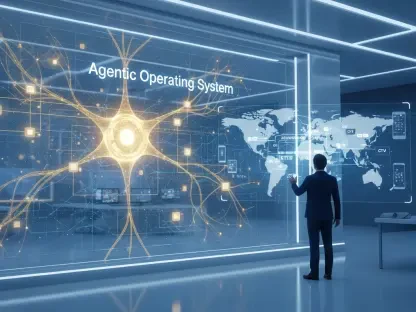
It is crucial to distinguish the emerging paradigm of orchestration from simple automation. Automation is fundamentally rigid and rule-based, operating on a simple premise: “If X happens, then do Y.” Orchestration, by contrast, is adaptive and goal-oriented, designed to “Achieve goal Z using the best available tools and conditions.” The next era of enterprise technology belongs to “agentic” AI systems that act as the nervous system of an organization. These advanced systems do not just execute predefined tasks; they observe the entire technology stack, coordinate disparate tools, and dynamically optimize workflows in real-time to meet strategic objectives. This agentic layer allows an organization to sense a signal in one channel—like a surge in social media engagement—and trigger an immediate, intelligent, and coordinated response across the entire business, from ad bidding to sales outreach. This represents not just a better version of automation but a fundamentally different and more resilient strategy for navigating an unsettled AI market.
The Emerging Blueprint for Success Integration as a Competitive Moat
The most telling sign of this market shift is the dramatic increase in companies building their own internal platforms to bridge these gaps. According to the State of Martech report, the use of custom-built platforms as the core of a company’s stack has jumped fivefold in a single year, from 2% to 10%. This sharp rise indicates that the off-the-shelf ecosystem of point solutions is failing to solve the coordination problem fast enough for enterprise needs. Consequently, forward-thinking leaders are becoming “builders,” taking it upon themselves to construct the integrated orchestration layer their business requires to compete effectively. This trend is further evidenced by the fact that product management tools saw the highest growth of any martech category. This internal development mirrors the strategy of major players like Google, whose Gemini platform derives its power not from a single capability but from deep integration across its entire ecosystem. The lesson is clear: in the age of AI, the most powerful competitive moat is not a single tool, but a seamlessly integrated system.
From Theory to Practice Actionable Orchestration Strategies
The abstract concept of orchestration becomes concrete when applied to real-world workflows that directly impact the bottom line. The primary takeaway for any business leader is that the strategic focus must shift from tool acquisition to system integration. Instead of asking, “What new AI tool can we buy?” the critical question is now, “How can we make our existing tools work together to drive revenue?” Success lies in implementing specific, cross-functional plays designed for this purpose. For example, creating Budget Fluidity by automatically linking TV ad exposure to search bidding allows a company to capture demand instantly. Achieving Buying Group Alignment means recognizing engagement from multiple stakeholders at a target account and shifting the marketing strategy from broad education to targeted social proof. It also requires closing the Sales-to-Content Loop by using conversational intelligence from sales calls to automatically identify and trigger the creation of necessary bottom-of-the-funnel assets. These are the practical, revenue-focused applications that define the production era of AI.
The Conductors Baton Why Orchestration Will Define the Next Decade
The AI gold rush concluded, and the era of production and accountability has begun. The core theme of this new age was the transition from collecting brilliant soloists to conducting a high-performance orchestra. Competitive advantage was defined not by the volume of technology a company owned, but by the intelligence of the integrated system it built. In a volatile market where vendor loyalty proved to be low, an orchestrated, adaptive system became more than just a competitive edge—it was a survival strategy. The future ultimately belonged to the conductors who could harmonize people, processes, and platforms to achieve a singular goal. In this new era, growth was not forced; it was orchestrated.