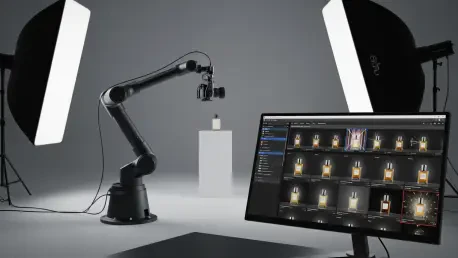

The relentless demand for fresh, high-quality visual content in the global e-commerce marketplace has reached a point where traditional manual design pipelines struggle to keep pace with rapid shifts in consumer behavior and seasonal trends. Nexcore Inc. addressed this bottleneck on July 3, 2026, by integrating Google’s Nano Banana 2 Lite model into its PixPix platform. This strategic update targets marketing professionals who require an agile environment to bridge the gap between abstract AI research and tangible commercial production. By providing advanced image and video generation tools, PixPix facilitates an accelerated workflow where rapid visual experimentation becomes the standard for digital commerce. Sellers now face high-pressure environments where staying competitive requires constant updates across multiple sales channels, and this integration offers a workspace to generate professional assets without the delays inherent in legacy design processes.
Achieving Peak Efficiency: The Technical Prowess of Nano Banana 2 Lite
Rapid Generation: Transforming Prompts into Visual Assets
As the most cost-efficient and high-speed model currently available within Google’s Gemini ecosystem, the Nano Banana 2 Lite was engineered specifically to handle high-throughput demands without compromising on visual coherence. The platform now allows users to transform complex natural-language prompts into high-quality visual outputs in approximately four seconds, effectively eliminating the wait times that previously plagued AI-assisted creative workflows. This leap in performance means that a marketing team can iterate through dozens of variations in the time it previously took to render a single draft. Such speed is not merely a convenience but a fundamental shift in how brands approach digital identity, allowing for real-time adjustments based on live market data. By reducing the compute requirements and operational overhead, this model ensures that large-scale asset generation remains accessible to companies that might have been priced out by more intensive models.
Concept Development: Low-Cost Experimentation and Ideation
Beyond its technical speed, the model serves as a strategic catalyst during the early phases of the creative lifecycle, where exploration is often limited by budget constraints. It enables design teams to pivot quickly between seasonal themes, varying lighting setups, or different cultural aesthetics without incurring significant costs. This efficiency makes it an ideal engine for high-volume brainstorming and rapid ideation, where the goal is to generate a vast quantity of conceptual directions rather than focusing immediately on high-resolution refinement. By using the Nano Banana 2 Lite as a foundational tool, users can discard unsuccessful ideas early and focus their resources on the most promising concepts. This iterative freedom fosters a more adventurous creative culture, as the financial and temporal risk of trying unconventional visual metaphors is greatly reduced. Consequently, brands can maintain a dynamic presence in the digital space.
Transforming Multi-Platform Logistics: Integrated Workflows for Global Markets
Content Scaling: Meeting Multi-Platform Asset Demands
The current reality of digital commerce dictates that a single product listing must be supported by an array of visual assets tailored for distinct platforms, from marketplace hero images to social media reels. Managing this exponential growth in content requirements for every individual SKU has become a significant logistical challenge for even the most well-funded marketing departments. PixPix addresses this complexity by serving as a centralized environment where users can test various visual directions and immediately see how they resonate with target demographics before committing to final production. This ability to preview and adjust lifestyle shots, promotional banners, and product infographics within a single interface reduces the friction associated with traditional multi-step approvals. By providing a playground for rapid asset testing, the platform helps ensure that every piece of content is optimized for its specific destination.
Workflow Integration: Centralizing Production via Agent Models
Acting as a comprehensive orchestrator of over twenty different artificial intelligence models, PixPix provides an agent-driven workspace that simplifies the entire production cycle from start to finish. Once a core concept is generated using the Nano Banana model, users can immediately leverage specialized tools for background replacement, resolution enhancement, and detailed product retouching. This centralized approach removes the traditional necessity of switching between disconnected software suites, which often leads to data loss or workflow interruptions. For smaller teams with limited design resources, this level of integration is particularly transformative, as it allows a single operator to perform tasks that would have previously required a diverse department of specialists. The software manages the heavy lifting of technical refinement, leaving the user to focus on higher-level creative strategy and brand positioning to ensure that the final output aligns perfectly.
Maximizing Strategic Value: Implementation and Human Oversight
Democratizing Design: Expanding High-End Marketing Access
The operational impact of integrating high-speed AI models like Nano Banana 2 Lite extends beyond simple automation, effectively democratizing high-end marketing capabilities for businesses of all sizes. Small and medium enterprises can now produce platform-ready visuals at a scale that was once the exclusive domain of global corporations with massive advertising budgets. This leveling of the playing field allows smaller brands to maintain a professional appearance across all digital touchpoints, from niche marketplaces to mainstream social networks. By lowering the entry barrier for high-quality content production, the platform encourages a more diverse and competitive e-commerce landscape. The true value of this democratization lies in how it frees up human talent to engage in more meaningful work, such as long-term brand building and consumer relationship management. Instead of spending hours on repetitive editing, marketers can focus on the narratives that drive long-term loyalty.
Quality Assurance: Maintaining Integrity Through Human Review
Despite the capabilities of these automated systems, Nexcore Inc. maintains that human review remains an indispensable component of the creative process to ensure legal compliance and brand accuracy. Automated tools can generate vast quantities of imagery, but they lack the nuanced understanding of cultural sensitivities and specific brand guidelines that a human professional provides. Maintaining this balance ensures that while the speed of production increases, the quality and integrity of the brand remain uncompromised. Teams are encouraged to use the AI as a powerful collaborator rather than a complete replacement for human judgment, particularly when it comes to final approvals for public-facing campaigns. This hybrid approach mitigates the risks of algorithmic errors or hallucinations that could potentially damage a brand’s reputation. By keeping a human in the loop, companies can capitalize on the efficiency of the model while maintaining high standards for commercial success.
Strategic Integration: Future-Proofing Commerce Frameworks
Looking back at the deployment of these tools in mid-2026, it became clear that the integration of Nano Banana 2 Lite represented a significant shift toward responsive and data-informed visual marketing. Organizations that successfully adopted this technology moved away from rigid content cycles and instead embraced a model of continuous, rapid iteration. To maximize the benefits of such a system, businesses should prioritize the development of standardized prompting libraries and internal brand style guides that can be used to ground the AI’s creative outputs. Furthermore, marketing departments need to restructure their workflows to prioritize the review and curation of AI-generated assets, ensuring that the increased volume of content does not lead to a dilution of the brand message. By focusing on the strategic alignment of these tools with broader business objectives, companies were able to turn visual content into a dynamic competitive advantage.