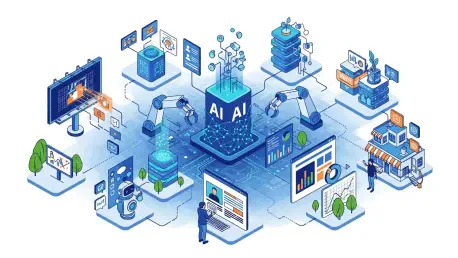

The marketing landscape has fundamentally transformed as digital automation evolves from a simple convenience into the essential infrastructure required to maintain a competitive presence in a crowded global marketplace. This shift represents a departure from the days when tools were merely used for scheduling social media posts or sending out bulk email newsletters to a period where they serve as the primary operating layer for both massive corporations and independent creators. With recent data indicating that over eighty percent of marketing firms have fully integrated these advanced technologies into their daily operational workflows, literacy in automation is no longer an optional advantage but a mandatory skill set for any professional seeking success. This evolution marks the definitive transition from disconnected digital utilities to a cohesive, intelligent system that manages the entire customer lifecycle autonomously, allowing brands to respond to consumer needs with unprecedented speed.
Evolution of Strategic Intelligence
Agentic Logic: Transitioning from Static Rules
The transition from rigid, rule-based logic to sophisticated agentic intelligence has fundamentally altered how marketing strategies are conceived and executed across various digital channels. In previous iterations of technology, automation required constant human triggers and specific commands to perform even basic sequences, often leading to bottlenecks in production and missed opportunities. Modern autonomous systems, however, are now capable of interpreting high-level business goals and executing complex, multi-step strategies without the need for continuous manual intervention at every stage. This paradigm shift redefines the traditional role of the marketer, moving them away from the tedious technical management of software and toward a senior position of creative director and overarching strategist. In this new landscape, the professional identifies the primary objectives, while the internal automation engine handles the intricate logistics of cross-channel timing and optimization.
Predictive Precision: Scaling Individual User Journeys
Beyond mere operational efficiency, these intelligent systems have finally solved the persistent scalability issues that previously hindered the delivery of true personalization for vast global audiences. By merging massive pools of real-time behavioral data with advanced predictive modeling, current marketing platforms can move far beyond broad demographic categories to track individual user journeys with microscopic precision. This capability allows brands to adjust content instantaneously based on an individual user’s specific engagement patterns and their current psychological state during the buying process. The result is a seamless and highly relevant consumer experience that feels specifically curated for the individual, which significantly increases the likelihood of long-term brand engagement and final conversion. This level of granular targeting ensures that marketing budgets are spent with maximum efficiency, as messaging is tailored specifically to the most receptive segments.
Production Efficiency and Economic Impact
Generative Capacity: Scaling Content and Creative Reach
Generative artificial intelligence has become a permanent fixture within the modern content production layer, with two-thirds of marketing professionals now utilizing these tools to assist in large-scale asset creation. The contemporary automation stack includes highly sophisticated software capable of generating brand-consistent visual assets, high-definition video content for various social platforms, and professional-grade audio narration with natural phrasing. This massive increase in production capacity allows businesses of all sizes to maintain a constant and high-quality presence across multiple digital channels at a volume that traditional human teams could never achieve through manual labor alone. This technological democratization makes it possible for mid-sized companies to compete on a global scale without the massive financial overhead and administrative burden traditionally associated with hiring large-scale creative agencies. It enables a level of creative agility that was simply impossible for smaller teams just several years ago.
Economic Returns: Maximizing Speed and Operational ROI
The widespread adoption of these automated systems is further accelerated by a compelling economic reality regarding the speed at which organizations can see a return on their initial technology investments. Most forward-thinking organizations now report recouping their initial implementation and software costs in less than six months due to the dramatic increase in operational speed and the total elimination of repetitive manual tasks. Automation allows smaller, leaner marketing teams to effectively manage global campaigns that once required extensive oversight from dozens of project managers and specialized technicians. These substantial efficiency gains result in both direct cost savings and higher overall revenue through faster content delivery and more accurately targeted advertising placements. By reducing the time between the conception of an idea and its actual deployment in the market, businesses can capitalize on emerging trends while they are still relevant to the target audience.
The Prerequisite of Human Oversight
Strategic Balance: Navigating Machine and Human Intuition
While the economic advantages of automation are undeniable, the prerequisite of human oversight remains the deciding factor in whether a campaign achieves genuine resonance or merely digital noise. Machines are excellent at optimizing data and scaling production, but they cannot independently invent a brand’s unique identity or evaluate the qualitative impact of a creative concept. Human judgment serves as the essential multiplier of technology, ensuring that all automated outputs align with the emotional voice and ethical standards of the organization. Furthermore, professionals are tasked with providing high-quality data and strategic guardrails to prevent the system from magnifying errors at scale. By focusing on the synergy between algorithmic precision and human intuition, companies build more resilient strategies that prioritize long-term brand health. This balance allows the human element to focus on storytelling, which continues to be the primary driver of consumer loyalty in an increasingly automated landscape.
Future Resilience: Implementing Agile Growth Frameworks
Successful marketing teams recognized that the rapid integration of advanced automation was not just a technical upgrade but a fundamental redesign of the organizational workflow. To ensure long-term viability, they prioritized the development of comprehensive data literacy and established strict protocols for monitoring autonomous performance. These organizations focused on building robust data architectures that allowed intelligent agents to operate with high-quality information, thereby reducing the risk of algorithmic bias or strategic drift. Leaders also invested heavily in cross-functional training to help creative staff effectively direct generative tools toward brand-consistent outcomes. By positioning automation as a strategic partner rather than a simple replacement, businesses achieved a significant advantage in speed and customer satisfaction. Moving forward, the focus shifted toward refining these hybrid models to maintain a distinct human touch within a highly efficient digital framework.