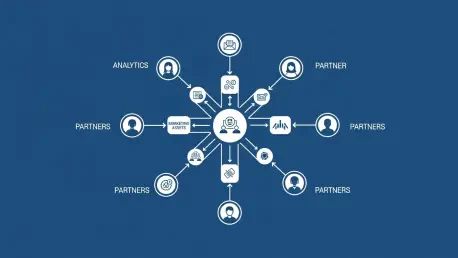

The long-held belief that direct sales and marketing are the sole engines of corporate growth is rapidly giving way to a new reality powered by intricate webs of strategic alliances. Businesses are now funneling unprecedented resources into the technologies that manage these relationships, signaling a fundamental transformation in how they approach market expansion and revenue generation. This shift is not merely a trend but a strategic imperative, as organizations recognize that scaling through an ecosystem of partners is the most viable path to sustainable success.
The Evolving Landscape of Modern Partnership Ecosystems
The move toward partner-led growth represents a significant evolution in go-to-market strategy, where companies no longer view partners as just a supplementary channel but as a core pillar of their business model. This approach leverages the influence, reach, and credibility of an entire ecosystem—from resellers and affiliates to technology integrators and strategic allies—to drive brand awareness and customer acquisition. It reframes the growth equation from a linear, company-driven effort to an exponential one powered by a network effect.
Technology, specifically Partner Marketing Automation Platforms (PMAPs), has become the central nervous system for these burgeoning ecosystems. Without a robust tech stack, managing hundreds or thousands of partners becomes an operational nightmare, plagued by inconsistency and inefficiency. These platforms provide the necessary infrastructure to automate partner onboarding, distribute marketing assets, co-manage demand generation campaigns, and measure performance at scale, turning a complex network into a cohesive and powerful revenue engine.
The partner marketing tech arena is a dynamic space populated by a diverse range of players, each catering to different facets of ecosystem management. Key segments include platforms focused on affiliate marketing, channel marketing automation, and broader ecosystem management. Major vendors are continually innovating, embedding new capabilities to address the complex needs of modern partnerships, from managing co-selling motions to streamlining market development fund (MDF) allocation.
Decoding the Surge in Partner Tech Spending
Unpacking the Trends Fueling Unprecedented PMAP Adoption
The imperative for scalable, repeatable growth initiatives is a primary driver behind the surge in PMAP adoption. As markets become more competitive, organic growth slows, forcing leaders to find more efficient ways to expand their reach. Partner ecosystems offer a solution, but only if they can be managed effectively. Technology provides the framework for creating standardized, repeatable marketing programs that any partner, regardless of size or sophistication, can execute.
Furthermore, automation is crucial for overcoming the operational bottlenecks that have historically plagued channel management. Manual processes related to content syndication, lead sharing, and performance reporting are not only time-consuming but also prone to error. PMAPs automate these tasks, freeing up partner managers to focus on strategic relationship-building rather than administrative minutiae. This efficiency gain translates directly into a more engaged and productive partner network.
The rise of Artificial Intelligence is acting as a critical value-add, transforming PMAPs from simple management tools into intelligent growth platforms. AI is being embedded across all major vendor platforms to enhance everything from partner recruitment and content personalization to predictive analytics for campaign performance. This integration acts as a “value accelerant,” delivering deeper insights and improving ease of use for both companies and their partners, thereby boosting the overall return on investment.
By the Numbers: Quantifying the Investment Boom
Recent Forrester survey data paints a clear picture of this investment boom. A staggering 75% of partner ecosystem marketing decision-makers are set to increase their overall technology spending this year. This commitment underscores the strategic importance now placed on building and nurturing tech-enabled partner programs as a primary route to market.
The growth projections are robust for both established users and new entrants. Among organizations already leveraging a PMAP, 65% plan to increase their investment, signaling satisfaction with the technology and a desire to deepen its integration. Moreover, nearly 60% of companies that do not currently use a PMAP intend to adopt one within the next twelve months, indicating that the market is far from saturated and is, in fact, entering a phase of widespread adoption.
This market data confirms a definitive and industry-wide move toward technology-enabled partnerships. The numbers reflect a broader understanding that manual, ad-hoc partner management is no longer sustainable. To compete effectively, companies must equip their ecosystems with the tools needed for scalable execution, and they are increasingly willing to make the necessary financial commitment to do so.
Overcoming the Execution Gap in Partner-Led Strategies
Despite the widespread enthusiasm for partner-led growth, many organizations struggle to translate strategy into results due to widespread resource constraints and uneven partner engagement. Internal teams are often stretched thin, unable to provide the high-touch support required to activate a diverse partner base. This leads to a scenario where a small fraction of top-tier partners drive most of the results, leaving the vast majority of the ecosystem underutilized.
This challenge is compounded by the reality of low partner marketing maturity. Research indicates that nearly 70% of partners operate at a low to medium level of marketing sophistication, lacking the expertise, resources, or time to execute complex campaigns effectively. Expecting these partners to build and run their own marketing programs from scratch is a recipe for failure, resulting in inconsistent branding and poor lead generation.
Partner Marketing Automation Platforms are specifically designed to bridge this gap between strategic ambition and scalable execution. By providing partners with a centralized portal filled with pre-built, co-brandable campaigns, ready-to-use content, and automated lead management tools, PMAPs empower even the least mature partners to become effective marketers. They simplify execution, increase adoption of marketing programs, and ensure that every partner can contribute to demand generation goals.
Navigating Governance and Compliance in a Tech-Driven Ecosystem
A primary concern in any distributed marketing model is ensuring brand consistency and messaging alignment across all partners. When partners create their own materials, the core brand message can become diluted or misrepresented, damaging brand equity. PMAPs address this by serving as a single source of truth for all marketing assets, giving companies control over branding while still allowing for partner personalization within approved templates.
Data security and privacy are also paramount, especially when multiple entities are sharing information and customer data. Shared technology platforms must adhere to stringent security protocols to protect sensitive information and comply with regulations like GDPR and CCPA. Leading PMAPs are built with robust security features, including role-based access controls and secure data-sharing mechanisms, to provide a safe and compliant environment for ecosystem collaboration.
Finally, establishing clear standards for performance and accountability is essential for measuring the ROI of a partner program. PMAPs provide comprehensive analytics and reporting dashboards that track key metrics, from partner engagement with the platform to the number of leads generated and deals closed. This data-driven approach allows organizations to identify top-performing partners, optimize underperforming campaigns, and hold the entire ecosystem accountable to shared business objectives.
The Future is Automated: What’s Next for Partner Marketing
Artificial Intelligence is fundamentally reshaping what is possible in partner enablement and demand generation. AI-powered tools are now helping to predict which partners are most likely to succeed, recommend the most relevant marketing content for a partner’s specific audience, and even automate the creation of personalized email campaigns. This level of intelligent automation helps partners work smarter, not harder, leading to better results with less effort.
As the market matures, emerging innovations are focused on boosting platform engagement and demonstrating a clear return on investment. Gamification features, simplified user interfaces, and seamless integrations with other core business systems like CRMs are becoming standard. The goal is to make the partner portal an indispensable daily tool rather than an occasional resource, fostering a more deeply engaged and loyal partner community.
Looking ahead, the next wave of disruptors in the PMAP market will likely focus on hyper-personalization and predictive ecosystem management. Future platforms may use AI to map out entire market opportunities and proactively recommend new partnerships to fill strategic gaps. The technology will evolve from a tool for managing existing partners to an intelligent engine for architecting and optimizing the entire growth ecosystem.
The Verdict: Why Technology is the Linchpin of Partner Success
The connection between technology investment and the long-term viability of a partner ecosystem is now undeniable. Organizations that equip their partners with sophisticated automation platforms are pulling away from those that rely on outdated, manual processes. The ability to scale marketing efforts, maintain brand control, and measure performance accurately is what separates a thriving ecosystem from a stagnant one.
Ultimately, the analysis has shown that partner programs fail not from a lack of belief in their potential but from an inability to execute at scale. Strategy and intention are meaningless without the operational capacity to bring them to life across a diverse and geographically dispersed network. Technology provides this capacity, turning a powerful concept into a tangible and predictable revenue stream.
For leaders seeking sustainable, partner-led growth, the message is clear: investing in a robust Partner Marketing Automation Platform is no longer optional. It is the foundational element required to overcome operational hurdles, empower partners of all maturity levels, and build a high-performing ecosystem capable of driving meaningful business results. The future of growth belongs to those who successfully merge their partnership strategy with a powerful technology stack.