
The familiar act of refueling a vehicle is quietly being transformed into a sophisticated, data-driven touchpoint for global brands, marking a significant evolution in how advertisers connect with consumers on the move. A pivotal new alliance is accelerating this shift in Germany, as supply-side platform VIOOH and media owner ISM Intelligent Signage for Media have integrated their technologies. This partnership unlocks a vast network of digital screens at Shell gas stations for programmatic advertising, signaling a new era of precision and efficiency for the digital out-of-home (DOOH) market in one of Europe’s largest economies.
The New Advertising Landscape: Germany’s Programmatic DOOH Revolution
Redefining the Forecourt: The Strategic Value of Gas Station Advertising
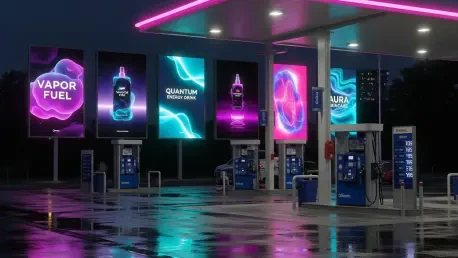
The gas station forecourt represents a uniquely valuable environment for advertisers, moving beyond the traditional model of passive roadside impressions. Unlike a fleeting glimpse of a highway billboard, the consumer experience at a refueling station is characterized by extended dwell times. The moments spent pumping gas, walking to the convenience store, and completing a transaction create a captive audience, providing a sustained window for message delivery and absorption that is rare in the out-of-home landscape. This environment is inherently commercial, capturing consumers who are already in a spending mindset.
This strategic value is amplified by the presence of multiple touchpoints within a single visit. A driver may see a screen upon entering the station, view it again during the entire refueling process, and encounter it a third time near the shop entrance. This repetition reinforces brand messaging in a natural, non-intrusive manner. The high-impact “Hi-Light” displays, with their 75-inch and 85-inch formats, ensure high visibility and command attention, making the forecourt a powerful stage for brand storytelling and promotional offers precisely at the point of potential purchase.
Key Players Driving Innovation: VIOOH, ISM, and the Broader Ecosystem
At the heart of this market evolution are specialized technology providers like VIOOH. Launched in 2018, VIOOH operates as a global supply-side platform (SSP) dedicated to making DOOH inventory available through automated, programmatic channels. With a presence in 36 markets and integrations with over 50 demand-side platforms (DSPs), VIOOH’s mission is to connect advertisers with audiences in high-frequency environments where commercial decisions are made. This strategy is evident in its recent expansions, including partnerships with Vengo in U.S. lifestyle venues and Dolphin OOH in American grocery stores, underscoring its focus on place-based media.
On the other side of the partnership is ISM Intelligent Signage for Media, the exclusive advertising marketer for Shell Germany since 2012. ISM has successfully navigated the transition from static to digital media, now managing the technical infrastructure for over 5,000 screens across the country. For ISM, integrating its premium network of 784 Shell station screens into VIOOH’s marketplace provides access to a global pool of programmatic ad spend. This move allows ISM to monetize its inventory more efficiently while offering brands the sophisticated targeting and activation tools they have come to expect from other digital channels.
The collaboration creates a symbiotic relationship that extends across the entire advertising ecosystem. For advertisers and the agencies that represent them, the alliance removes the operational friction of negotiating direct deals. It provides a single, streamlined interface to launch campaigns with national reach, spanning major cities like Berlin and Munich to smaller regional markets. This accessibility empowers brands to execute cohesive strategies that combine broad reach with the contextual relevance of place-based advertising, fundamentally changing the calculus for DOOH investment in Germany.
Fueling Growth: Key Trends and Market Momentum
From Billboards to Bidding: The Rise of Programmatic Buying and Retail Media
The shift from static billboards to dynamic, biddable screens represents a profound technological transformation in outdoor advertising. Programmatic DOOH (pDOOH) replaces the traditional, manual process of media buying with automated, data-driven transactions, offering unparalleled flexibility and control. Advertisers can now activate, pause, and optimize campaigns in near real-time, responding to changing market conditions, audience behavior, or even environmental triggers like weather patterns. This agility brings the OOH channel in line with the standards of online display and video advertising.
This partnership also taps into the explosive growth of retail media, a trend that sees retailers monetizing their physical and digital assets to create new advertising revenue streams. The Shell gas station network functions as a prime example of a retail media environment, offering access to consumers at or near the point of purchase. With retail media in Germany growing by 22.1% in 2024—a rate nearly four times that of the overall advertising market—the VIOOH-ISM alliance is perfectly positioned to capture advertiser investment flowing toward channels that can demonstrably influence consumer spending.
By the Numbers: Quantifying Germany’s pDOOH Surge
The momentum behind programmatic DOOH in Germany is not merely anecdotal; it is substantiated by clear market data. In the first quarter of 2025, clients of the demand-side platform Adform increased their spending on DOOH by a staggering 118% year-over-year, a powerful indicator of accelerating adoption and confidence in the channel. This growth is occurring within one of Europe’s most significant advertising markets. Alongside the United Kingdom and France, Germany accounts for 60% of the continent’s digital advertising expenditure, a market that exceeded the €100 billion threshold for the first time in 2024.
The VIOOH-ISM partnership contributes significant scale to this expanding market. The integration of 784 high-quality digital screens is projected to deliver over 204 million impressions each month, providing a substantial new source of premium inventory for media buyers. This infusion of supply helps meet the growing demand and further solidifies Germany’s position as a leading market for pDOOH innovation in Europe. As the technological infrastructure matures, this growth trajectory is expected to continue its upward climb.
Overcoming Legacy Hurdles: How Programmatic Solves OOH Challenges
Unlocking Efficiency: Streamlining Media Buys and Campaign Activation
For decades, one of the primary obstacles to scaling out-of-home advertising has been its operational complexity. Planning and executing a national campaign required negotiating with multiple media owners, managing disparate creative specifications, and contending with long lead times. Programmatic technology directly addresses these legacy inefficiencies by consolidating inventory into a single, automated marketplace. Through VIOOH’s platform, an advertiser can now access ISM’s entire national network at Shell stations through their preferred DSP, executing a complex buy in a fraction of the time it would have previously taken.
This streamlined process democratizes access to premium OOH inventory. It allows not only large, established brands but also smaller, digitally native companies to incorporate DOOH into their media mix with greater ease. The ability to launch campaigns quickly and without the heavy overhead of traditional buying methods lowers the barrier to entry. Moreover, it enables a more tactical and responsive approach, where brands can activate short-term campaigns to support specific promotions or events, a capability that was once impractical in the OOH space.
Proving Performance: Enhancing Measurement in High-Dwell-Time Environments
Another long-standing challenge for the OOH industry has been measurement. Proving a campaign’s effectiveness and calculating return on investment was often difficult compared to more trackable digital channels. Programmatic platforms are making significant strides in closing this gap by introducing more sophisticated analytics and reporting capabilities. By leveraging aggregated and anonymized data, these systems can provide deeper insights into audience exposure, campaign reach, and frequency, bringing a new level of accountability to outdoor advertising.
The unique characteristics of the gas station environment further enhance these measurement capabilities. The extended dwell times allow for more reliable audience verification methodologies, ensuring that impressions are delivered to an attentive audience. This high-dwell-time setting provides a cleaner data signal for attributing consumer actions, such as in-store purchases or subsequent online searches. As a result, advertisers can gain a clearer understanding of how their DOOH investment is performing, allowing them to justify budgets and optimize future campaigns with greater confidence.
Beyond Impressions: Meeting Modern Demands for Sustainability and Compliance
The Green Screen: Carbon Efficiency as a Key Differentiator
In an era of increasing corporate responsibility, the environmental impact of advertising is a growing consideration for brands. Programmatic DOOH has emerged as a surprisingly sustainable option compared to other digital channels. A 2025 report from VIOOH revealed that its platform generates just 0.041 grams of CO2 equivalent (CO2e) per impression. This figure is substantially lower than that of programmatic display (0.84g CO2e) and video (1.24g CO2e), which rely on one-to-one data transmissions for every ad served.
The efficiency of DOOH stems from its one-to-many broadcast model. A single ad play on a digital screen is viewed by numerous people simultaneously, distributing the energy consumption across a wide audience. This inherent structure makes it a more carbon-efficient means of reaching consumers at scale. As brands become more discerning about the carbon footprint of their media supply chains, the superior sustainability profile of pDOOH is becoming a significant competitive advantage and a key factor in media planning decisions.
Adhering to New Standards: The Shift Toward Responsible Media
The advertising industry is navigating a period of significant change, driven by new regulations around data privacy and a broader call for greater transparency and responsibility. Programmatic DOOH is well-positioned to thrive in this new landscape. Unlike channels that rely heavily on third-party cookies and individual user tracking, OOH advertising is fundamentally a one-to-many medium that reaches audiences in public spaces without collecting personal identifiable information.
This privacy-compliant approach makes pDOOH a durable and future-proof channel for brands looking to build trust with consumers. The data used for targeting and measurement is typically aggregated and anonymized, aligning with evolving global privacy standards. By investing in channels that respect consumer privacy, brands can mitigate regulatory risk while still benefiting from the data-driven precision of programmatic buying. This commitment to responsible media practices further enhances the appeal of the VIOOH-ISM offering in the German market.
The Road Ahead: Charting the Future of Place-Based Advertising
The Next Wave of Innovation: Programmatic Guaranteed and Dynamic Creative
As the programmatic DOOH market matures, its capabilities continue to evolve beyond standard real-time bidding. A key innovation gaining traction is Programmatic Guaranteed, which allows buyers to reserve premium inventory in advance through an automated platform. This model combines the efficiency of programmatic execution with the certainty of a direct buy, ensuring brands can secure high-demand placements like the ISM network during peak periods. Developments such as Place Exchange’s launch of this feature within Google’s Display & Video 360 in late 2025 indicate that such sophisticated transaction types are becoming mainstream.
Simultaneously, the potential of dynamic creative optimization (DCO) is transforming campaign relevance. DCO enables ad content to change automatically based on real-time data triggers, such as the time of day, local weather conditions, or traffic patterns. An advertiser at a Shell station could, for example, promote hot coffee on a cold morning and switch to iced beverages in the afternoon sun. This level of contextual personalization makes advertising more helpful and engaging for the consumer, dramatically increasing its effectiveness and impact.
Expanding Horizons: Targeting New High-Value Consumer Environments
The success of the gas station forecourt model serves as a blueprint for the future expansion of place-based media networks. The core principles—identifying locations with high dwell times, a captive audience, and clear commercial context—can be applied to a variety of other environments. Airports, grocery stores, fitness centers, and office building lobbies are all emerging as new frontiers for programmatic DOOH, each offering a unique audience and mindset that advertisers can tap into.
Looking forward, the industry will likely see a proliferation of specialized screen networks tailored to these specific consumer journeys. The continued integration of these networks into programmatic platforms like VIOOH will create a more interconnected and addressable DOOH ecosystem. For brands, this means an expanding portfolio of opportunities to reach precise audience segments in moments that matter, further blurring the lines between physical and digital advertising and cementing DOOH’s role as a critical component of the modern media plan.
A Strategic Partnership: Synthesizing the Impact of the VIOOH-ISM Alliance
A Win-Win-Win: Benefits for Advertisers, Media Owners, and Consumers
The collaboration between VIOOH and ISM creates a virtuous cycle that benefits all key stakeholders in the advertising value chain. For advertisers, it provides simplified, flexible, and scalable access to a premium audience in a high-intent environment. The ability to leverage data for targeting and measurement brings a new level of sophistication to OOH campaigns, enabling brands to optimize their spend and achieve better outcomes. This newfound efficiency and accountability make a compelling case for allocating more budget to the DOOH channel.
For media owners like ISM, the partnership unlocks access to a global stream of programmatic advertising revenue, maximizing the yield from their digital assets. By connecting to VIOOH’s platform, ISM can automate sales processes and appeal to a broader base of digital-first buyers who might not have previously considered traditional OOH. This enhances inventory monetization and solidifies ISM’s position as a forward-thinking player in the German media landscape. Ultimately, consumers also benefit from more relevant and timely advertising that can enhance their experience rather than detract from it.
Final Takeaways: Why This Alliance Signaled a Market Shift
The VIOOH-ISM partnership was more than a simple inventory deal; it represented an inflection point for the German advertising market. It validated the strategic importance of place-based media and demonstrated how programmatic technology could effectively bridge the gap between digital and physical advertising worlds. The alliance combined premium, high-impact inventory with the efficiency and global reach of an automated marketplace, directly addressing the growing demand from advertisers for data-driven access to consumers at critical moments of commercial activity.
This collaboration underscored the irreversible momentum toward programmatic adoption within the OOH sector. It highlighted the industry’s successful pivot to solve legacy challenges related to measurement, efficiency, and scale, while also meeting modern demands for sustainability and privacy compliance. By bringing a significant national network of screens into the programmatic ecosystem, VIOOH and ISM not only enhanced their own market positions but also provided a powerful catalyst for the continued growth and maturation of Germany’s entire digital out-of-home industry.