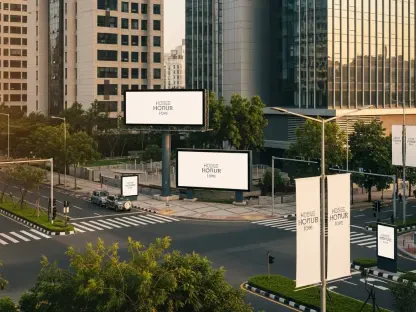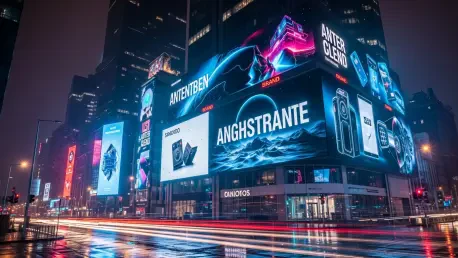

The massive digital screens that once simply flashed advertisements at passing crowds are now becoming intelligent storytellers, actively transforming city streets into dynamic, responsive canvases for brand narratives. This evolution marks a fundamental shift in the Out-of-Home (OOH) advertising industry, moving beyond the traditional goal of passive visibility toward creating immersive, data-driven urban experiences. In technologically advanced urban centers, public spaces are no longer mere backdrops for commerce; they have become the medium itself, offering a platform for interactive engagement and personalized messaging on a metropolitan scale.
From Static Displays to City-Scale Storytelling
The modern OOH landscape is defined by the rapid expansion of its digital counterpart, Digital Out-of-Home (DOOH). Unlike its static predecessors, DOOH is not just a collection of screens but an interconnected network capable of delivering dynamic content in real time. This technological leap has redefined the possibilities for public advertising, allowing for campaigns that are flexible, timely, and contextually aware. The transition reflects a broader trend where physical and digital advertising realms are converging, creating a more integrated and powerful communication ecosystem.
This transformation is particularly evident in major urban hubs like Dubai, where futuristic infrastructure and a massive influx of global visitors provide an ideal environment for innovative OOH. The city’s public spaces serve as a premier stage for brands aiming to make a significant impact. Key market players in this region are leading the charge, pioneering technologies that facilitate a shift from one-way broadcasting to active, two-way engagement. Consequently, the role of a billboard has evolved from a simple signpost to a sophisticated platform for brand storytelling.
The Data-Driven Pulse of Modern Advertising
The Rise of Intelligent Responsive Campaigns
The integration of smart technology is at the heart of this advertising renaissance, enabling the rise of intelligent, responsive campaigns. Billboards are now equipped to react to their immediate environment, leveraging real-time data feeds to tailor their content. For instance, a campaign can automatically adjust its creative based on current weather conditions, live traffic patterns, or the time of day. This capability allows advertisers to deliver messages that are not only seen but are also highly relevant to the audience’s immediate context, significantly boosting their resonance.
This technological shift is reshaping consumer behavior and expectations. As people become more accustomed to personalized digital experiences on their personal devices, they increasingly anticipate a similar level of relevance in public messaging. Generic, one-size-fits-all advertisements feel increasingly outdated. The modern consumer expects public communications to be context-aware and meaningful, turning contextual relevance from a competitive advantage into a fundamental standard for effective OOH advertising.
Charting Growth and Gauging Impact
The financial data underscores the magnitude of this industry-wide transformation. The Gulf Cooperation Council (GCC) OOH market, currently valued at $1.7 billion, is projected to grow by 14% annually. Within this flourishing market, the UAE stands out, with DOOH already comprising approximately a third of all OOH spending. This significant allocation of resources signals a clear and decisive industry pivot toward more dynamic and data-led advertising methodologies.
Beyond market valuation, the effectiveness of these new strategies is demonstrated by clear performance indicators. Campaigns that synergize OOH with mobile retargeting have shown remarkable results, with some studies indicating boosts in footfall by as much as 300% and an increase in mobile brand engagement by 17%. These metrics provide tangible evidence that data-driven OOH not only captures attention but also drives consumer action, offering a measurable return on investment that was previously difficult to ascertain in the OOH space.
Navigating the Crossroads of Creativity and Automation
The primary challenge now facing the industry is balancing the efficiency of data-driven automation with the imaginative spark of human-centric creativity. While algorithms can optimize ad delivery with unparalleled precision, there is a risk of creating campaigns that are technically perfect but emotionally sterile. The most successful strategies will be those that use data not to replace creativity, but to inform and inspire it, ensuring that technology serves as a tool for crafting more compelling and relatable human stories.
Simultaneously, the growing prominence of DOOH has brought increased demands for greater accountability and sustainability. As digital screens become a more integral part of the urban landscape, questions surrounding energy consumption and environmental impact are becoming more pressing. The industry is therefore under pressure to adopt greener technologies and demonstrate a commitment to social responsibility, ensuring that its growth is both economically and ecologically sustainable.
Establishing Trust and Standards in the Public Square
The increasing sophistication of audience mapping and targeting technologies has brought data privacy to the forefront of industry discussions. As a result, an emerging regulatory landscape is taking shape to govern the ethical use of anonymized audience data. These new frameworks aim to protect individual privacy while still enabling the delivery of relevant advertising, striking a crucial balance between commercial interests and public trust.
To support this evolution, the establishment of clear industry standards is paramount. For the DOOH ecosystem to mature responsibly, there must be a consensus on transparency in areas like programmatic ad buying, standardized metrics for campaign measurement, and universal benchmarks for environmental impact. Developing and adhering to these standards will be essential for building a trustworthy and sustainable future for OOH, ensuring its practices are both effective and ethical.
The Future Canvas Interactive and Integrated Urban Narratives
The next wave of OOH innovation is already on the horizon, promising even deeper levels of integration and interaction. Programmatic buying is set to become the standard for ad procurement, while AI-driven audience mapping will enable predictive targeting with remarkable accuracy. Furthermore, the technology for fully interactive experiences—where displays respond to gestures, mobile device integration, or even ambient sound—will transform passive viewing into active participation.
In this future, brands will increasingly treat the city not as a backdrop for their ads, but as a living, breathing component of their story. This approach fosters a shared conversation between the brand and the public, allowing advertising to become an organic part of daily urban life rather than an interruption. By weaving their narratives into the fabric of the metropolis, brands can achieve a level of authenticity and connection that was previously unimaginable.
Beyond Visibility Crafting Memorable Moments in the Metropolis
The evolution of OOH from a simple broadcast medium to a sophisticated experiential platform was marked by a profound strategic shift. This report detailed how the industry moved beyond a singular focus on visibility, embracing technology and data to forge genuine, context-aware connections with audiences in the public square.
Ultimately, the core principle that defined success in this new era was the capacity for meaningful human connection. The most impactful campaigns were those that harnessed technological precision not just to target demographics, but to understand and resonate with people on an emotional level, proving that visibility meant little without humanity.
The enduring lesson for brands was to leverage OOH not merely to occupy space, but to become a memorable part of a place. By contributing positively to the urban experience—whether through beauty, utility, or entertainment—advertising achieved its highest potential, transforming a momentary glance into a lasting impression.