
Anastasia Braitsik is a global leader in SEO, content marketing, and data analytics with a deep understanding of how physical environments dictate digital consumer behavior. As London’s Oxford Street undergoes a historic transformation into a pedestrian-first sanctuary, she provides an expert lens on the multi-billion dollar implications for the advertising industry. With the removal of traditional transit and the introduction of lush public spaces, Anastasia explores how the shift from “passing through” to “staying in” is redefining the value of every pixel and poster frame in the district.
With the removal of buses, taxis, and even bicycles along the nearly one-kilometer stretch between Selfridges and IKEA, how do you evaluate the trade-off between losing vehicular reach and gaining a purely pedestrian audience?
This is a fundamental pivot from a high-frequency, low-attention model to one defined by deep engagement and dwell time. While some might worry about losing the “moving billboard” effect of buses and taxis, we are focusing on the half a million visitors who flood this district every single day. This isn’t just a crowd; it’s a £3.1 billion annual spending engine that is now moving at a walking pace rather than a driving one. By removing the noise and danger of vehicles, we are essentially creating a captured audience that has the mental bandwidth to actually look up and absorb the brand stories around them. We are moving away from the “glance” and toward the “gaze,” which is a much more valuable currency in today’s distracted economy.
The shift toward a traffic-free zone has forced JCDecaux to transition from bus shelter-integrated screens to freestanding digital units. What does this “cleaner” visual landscape mean for the effectiveness of OOH formats like the D6?
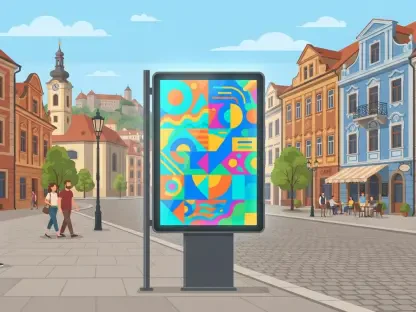
When you strip away the literal and figurative clutter of buses and the heavy scaffolding of shelters, you are left with a minimalist, high-impact environment where digital screens can truly shine. These freestanding units now benefit from vastly improved sightlines, as there are no double-decker buses obstructing the view from across the street or idling in front of the creative. This “OOH gold,” as some call it, means that a 6-sheet display is suddenly visible from fifty paces rather than five. The removal of competing visual noise allows the brand’s message to stand out with a clarity that was impossible when the street was a congested transit corridor. It’s a total reimagining of the visual hierarchy where the advertisement becomes a primary feature of the architecture rather than a secondary distraction.
You have highlighted that a staggering 70% of mobile commerce occurs when people are away from home. How can brands leverage the new “outdoor mall” layout of Oxford Street to bridge the gap between physical discovery and digital sales?
The pedestrianization of Oxford Street effectively turns the sidewalk into the world’s largest showroom, creating a powerful “halo effect” for online sales. As shoppers move through this space in a more relaxed mindset, their receptivity to discovery peaks, making it the perfect moment to deploy dynamic calls to action or interactive QR codes. We are seeing a trend where a physical ad on the street triggers an immediate search or purchase on a smartphone, essentially turning the pavement into a point-of-sale terminal. Brands should capitalize on this by using bolder, high-contrast creative that encourages users to “Connect” or engage with 3D content right there on the sidewalk. With the Elizabeth Line funneling in massive new demographics since 2022, the potential for these digital-physical handoffs is at an all-time high.
With the Mayor’s Office aiming to install 50 new trees, two public squares, and over 100 new seats by the end of 2027, how does this “lifestyle” infrastructure change the way we approach experiential advertising?
This shift toward “experiential” retail is no longer just a buzzword; it is a multimillion-pound investment strategy being led by giants like John Lewis and Under Armour. The addition of 100 new seats and public squares transforms the street from a thoroughfare into a destination where people are encouraged to linger, sit, and socialize. This increased dwell time is a gift for advertisers who want to move beyond the static screen and into brand experiences, such as pop-up sport, fashion, or cultural events. When a consumer is sitting on a bench surrounded by 50 new trees, they are in a much more receptive, positive psychological state than when they were dodging pedicabs and scooters. We are moving toward a model where the street itself is a stage, and the OOH inventory serves as the backdrop for community and brand storytelling.
Since the “transitional scheme” was implemented just ahead of the busy Christmas period, what specific metrics should the industry be tracking to understand the true impact of these changes?
The industry needs to move beyond simple footfall counts and start looking at “boots on the ground” qualitative data and attention-based research. While we expect the numbers to naturally surge during the holidays, the “cleaner” picture will emerge in the new year when we can analyze how the Elizabeth Line traffic and local shoppers are navigating the new layout. We should be looking at “Route” data alongside retailer reports to see if the easier-flowing audience translates into longer shopping sessions and higher conversion rates. It’s about understanding the “relaxed mindset”—are people spending fifteen minutes on a block they used to rush through in five? If the answer is yes, the value of every second of attention on those digital screens has just increased exponentially.
Because moving vehicles are no longer a distraction or a safety hazard on this stretch, what technical creative limitations can now be discarded for digital OOH?
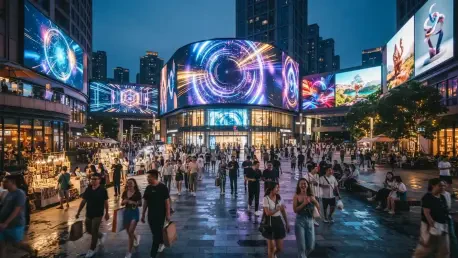
The most significant change is the liberation of full-motion creative, which was previously restricted on many screens to ensure drivers weren’t dangerously distracted. Now that the street is a pedestrian-only zone, we can finally embrace the full cinematic potential of these high-resolution displays with fluid animation and complex 3D visuals. We can experiment with personalization and more dynamic, real-time messaging that reacts to the time of day or even the weather, without the constraints of vehicular safety regulations. This allows for a much richer interactive experience where the screen can communicate with the passerby in a way that feels organic and immersive. It’s a transition from “static-plus” to “full-cinema” on the street level, providing a level of creative freedom that was simply off-limits two years ago.
What is your forecast for the evolution of high-street OOH over the next few years?
By 2028, I expect Oxford Street to be the global blueprint for the “Smart Pedestrian Zone,” where OOH advertising is fully integrated into the city’s digital infrastructure. We will see the data from the 500,000 daily visitors being used to serve hyper-local, relevant content that changes in real-time based on the flow of the crowd from the Elizabeth Line and the Underground. The value of these sites will continue to climb as they move from being simple awareness tools to essential drivers of mobile commerce and brand experience. Ultimately, the street will become a seamless blend of nature—thanks to those 50 new trees—and cutting-edge technology, making it the most valuable advertising real estate in the world because it finally prioritizes the human experience over vehicular transit.