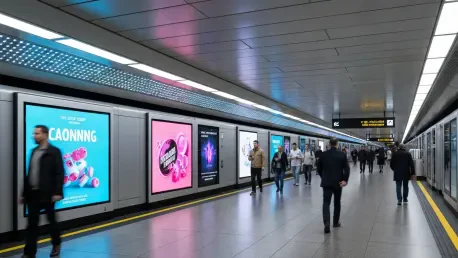

In an industry perpetually adapting to the digital tide, the out-of-home advertising sector is undergoing a profound transformation, moving far beyond static billboards to embrace dynamic, data-driven communication. The recent landmark agreement between JCDecaux and the Helsinki and Espoo transport authorities, announced on December 2, 2025, serves as a powerful case study for this evolution. The renewal and extensive modernization of the Helsinki metro advertising contract is not merely a business transaction; it is a clear indicator of the strategic direction for transit media globally, where technological innovation, sustainability, and integrated campaign capabilities are becoming the new cornerstones of market leadership. This deal, securing JCDecaux’s exclusive advertising rights until at least 2034, highlights a pivotal moment where legacy infrastructure is being reimagined to meet the demands of a programmatic, digitally native advertising ecosystem.
Navigating the Transit Media Landscape: The OOH Advertising Arena
The world of out-of-home (OOH) advertising has always been defined by its unique ability to intersect with consumers during their daily journeys. From bustling city squares to suburban bus shelters, its power lies in its unskippable physical presence. Within this broad category, transit media occupies a particularly valuable niche, capturing the attention of millions of commuters who form a predictable and highly engaged audience. This environment, characterized by consistent traffic and significant dwell times, has made transit networks like the Helsinki metro a coveted asset for advertisers seeking to build brand awareness and drive consumer action. The competition for these long-term contracts is intense, as they represent stable, high-revenue streams for media operators and offer unparalleled reach for brands.
However, the value proposition of transit media is no longer measured by passenger numbers alone. The renewal of the Helsinki metro contract demonstrates that transport authorities are increasingly looking for partners who can do more than just sell ad space. They seek collaborators capable of enhancing the commuter experience, investing in modern infrastructure, and aligning with municipal goals around sustainability and technological advancement. JCDecaux’s successful bid, which defended its incumbency since 2009, was built on a forward-looking proposal that promised a complete digital overhaul. This strategic pivot from traditional to digital media underscores a fundamental shift in how public-private partnerships are structured, where the value-add of the media operator is as important as the revenue it generates.
The Digital Revolution on the Rails: Market Dynamics and Growth Trajectories
The ongoing digital revolution is reshaping every facet of the media industry, and the OOH sector is at the forefront of this change. The Helsinki metro contract is emblematic of a wider trend where static advertising assets are being systematically replaced with sophisticated digital screens. This transition is driven by the demand for greater flexibility, accountability, and creativity in advertising campaigns. The ability to deploy dynamic content, update messaging in real-time, and leverage data for precise targeting is transforming transit environments from passive ad spaces into interactive communication platforms. This shift is not merely cosmetic; it represents a fundamental change in the operational and financial models of OOH companies.
From Static Posters to Programmatic Power: The DOOH Transformation
The core of the Helsinki contract’s modernization effort is the deployment of a new digital out-of-home (DOOH) network featuring state-of-the-art LED screen technology. These screens are not just brighter and more energy-efficient; they are nodes in an intelligent, connected ecosystem. This digital infrastructure unlocks capabilities such as dayparting, where ad content is tailored to specific times of the day to reach different audience segments, from morning business commuters to evening leisure travelers. Furthermore, advertisers can deploy contextually relevant messaging triggered by external data feeds, such as weather, local events, or even real-time transit information, creating a more engaging and useful experience for passengers.
The most significant leap forward, however, is the integration of this new inventory into programmatic advertising platforms. JCDecaux is leveraging its proprietary supply-side platform (SSP), VIOOH, to connect the Helsinki metro network to a global marketplace of automated ad buyers. This programmatic capability allows media agencies to purchase DOOH inventory with the same efficiency and data-driven precision they are accustomed to in online advertising. For JCDecaux, the growth in this segment is a key strategic driver; the company’s programmatic DOOH revenue soared by 45.6% in 2024, reaching €145.9 million. By digitizing high-traffic environments like the Helsinki metro, JCDecaux is feeding a rapidly growing ecosystem that demands premium, measurable, and scalable DOOH inventory.
Quantifying the Opportunity: Market Growth and Strategic Consolidation
The strategic importance of securing long-term, high-value transit contracts cannot be overstated. These agreements, often spanning eight to fifteen years, provide a bedrock of predictable revenue that allows operators to make significant capital investments in digital infrastructure. JCDecaux’s success in Helsinki, which includes a guaranteed eight-year term with a two-year extension option, is a testament to its operational prowess and its ability to present a compelling long-term vision. This victory is part of a broader pattern of market consolidation, where established global players are solidifying their dominance by winning and renewing key contracts in major metropolitan areas.
This trend is evident across Europe. JCDecaux’s Helsinki win follows closely on the heels of securing a seven-year contract in Stockholm in September 2024, which covers over 1,500 bus shelters and 14 major subway stations. Similarly, the company renewed its Madrid Metro concession for ten years in 2023 and secured a multi-modal transit contract in Brussels through 2038. Each of these agreements was contingent on a significant digital upgrade, illustrating that technological investment is now a prerequisite for success. By securing these critical assets, JCDecaux not only locks in future revenue but also strengthens its network effect, offering advertisers a pan-European solution that few competitors can match.
Overcoming Urban Hurdles: Challenges in Modern Transit Advertising
Advertising within a subterranean metro environment presents a unique set of challenges. Unlike street-level advertising, which benefits from natural light, underground stations rely entirely on artificial lighting, which can wash out traditional displays. Furthermore, the architectural complexities of stations, with their pillars, tunnels, and varied sightlines, require a carefully considered approach to ad placement to ensure visibility. The new LED screens specified in the Helsinki contract are engineered to directly address these issues. Their exceptional brightness and high-contrast ratios are designed to cut through the ambient light and capture attention, ensuring that creative content is rendered with clarity and impact from multiple viewing angles.
Beyond the physical environment, advertisers in any medium must contend with the challenge of audience attention. In an age of information overload, simply being present is not enough. This is where transit media offers a distinct advantage. Metro commuters represent a captive audience with significant dwell time, typically spending an average of three to eight minutes on platforms or in concourses. This period provides a prolonged window for brands to communicate their message, a luxury rarely afforded by the fleeting glance-based nature of roadside billboards or the skippable format of online ads. The deployment of a digital screen network further leverages this opportunity, enabling advertisers to engage in sequential storytelling across multiple screens, building a narrative that unfolds as a passenger moves through the station.
Beyond the Bid: The Growing Influence of Regulation and Sustainability
In today’s competitive landscape for public contracts, price and technical capability are no longer the sole determinants of success. Municipalities and transport authorities are placing an increasingly heavy emphasis on environmental, social, and governance (ESG) criteria. A vendor’s commitment to sustainability is now a critical factor in the evaluation process, and JCDecaux’s corporate strategy reflects a deep understanding of this reality. The company has woven environmental responsibility into the fabric of its operations, a commitment that undoubtedly strengthened its proposal for the Helsinki metro.
The technological upgrade at the heart of the new contract is a prime example of this alignment. The transition to modern LED screens from older, likely fluorescent-based, systems will result in a substantial reduction in energy consumption. This not only lowers operational costs but also contributes directly to the city’s carbon reduction goals. This initiative is part of a much broader corporate sustainability program. JCDecaux has made impressive strides, reducing its greenhouse gas emissions by nearly 30% in 2024 against a 2019 baseline and committing to sourcing 100% of its electricity from renewable sources as part of the RE100 initiative. With its emissions reduction targets officially validated by the Science Based Targets initiative (SBTi) in July 2024, JCDecaux can present its operations as a model of environmental stewardship, providing a powerful competitive advantage in tenders where sustainability is a key performance indicator.
The Future is Integrated: Projecting the Next Era of OOH Advertising
The next era of OOH advertising will be defined by integration. The most effective campaigns will no longer be confined to a single format or environment but will instead follow the consumer seamlessly throughout their day. The renewed Helsinki contract is a masterclass in this integrated approach. By combining the exclusive advertising rights for the entire 30-station metro network with its existing, extensive street furniture contracts across 59 Finnish cities and municipalities, JCDecaux has created a uniquely powerful advertising ecosystem. This allows brands to craft holistic campaigns that engage consumers at multiple touchpoints, from the moment they leave their home and walk past a bus shelter to the time they spend waiting on a metro platform.
This strategic synergy amplifies the value of each individual asset. A campaign can begin on a digital city panel on the street, continue with dynamic video content on a platform screen, and conclude with a final message inside the metro car. This ability to deliver a consistent and reinforcing brand story across different environments provides what Jean-François Decaux, Chairman of the Executive Board and Co-CEO, describes as “exceptionally strong audiences.” This integrated portfolio offers a compelling proposition for both national brands seeking mass reach and local businesses targeting specific communities. It transforms JCDecaux from a seller of ad space into a strategic partner capable of delivering comprehensive, journey-based marketing solutions, setting a new standard for the industry.
A Landmark Deal: Synthesizing the Impact and Future Prospects
The renewal of the Helsinki metro advertising contract between JCDecaux and the Finnish transport authorities represented far more than the continuation of a business partnership. It was a strategic maneuver that effectively set the blueprint for the future of transit media in the Nordic region and beyond. The agreement’s emphasis on a comprehensive digital transformation, powered by advanced LED technology and integrated into a global programmatic marketplace, signaled the final departure from the era of static advertising. This deal was not merely about replacing old posters with new screens; it was about fundamentally re-architecting the advertising infrastructure of Finland’s most critical transport artery to meet the demands of a modern, data-centric marketing landscape.
In retrospect, the contract solidified JCDecaux’s market leadership, creating a powerful synergy with its existing street furniture network that provided an unparalleled integrated offering for advertisers. For brands and agencies, it unlocked a new suite of sophisticated tools for delivering dynamic, context-aware campaigns to a large and diverse audience. For the cities of Helsinki and Espoo, the partnership delivered an enhanced commuter experience and a more energy-efficient, environmentally sustainable advertising ecosystem. Ultimately, the successful negotiation and its forward-looking terms served as a powerful testament to the evolving priorities of the out-of-home industry, where technological innovation, programmatic capability, and corporate sustainability have become the essential pillars of long-term success.