
High-definition displays stretching across urban canyons and transit terminals have fundamentally altered how brands capture the collective attention of an increasingly mobile and distracted population. As linear television viewership continues to erode due to the proliferation of ad-free streaming tiers and fragmented social feeds, the physical environment has emerged as the last bastion of mass-market reach. Advertisers who once relied on the communal experience of prime-time broadcasts are now turning to massive 8K LED installations in major hubs like the Oculus in New York to achieve cultural saturation. These digital canvases provide a sensory impact that mobile screens cannot replicate, offering a scale and permanence that commands authority. The shift represents a migration of the big screen experience to the public square, turning daily commutes into curated media opportunities that are impossible to skip or mute with traditional ad-blocking software.
Digital Integration: Programmatic Efficiency and Targeting
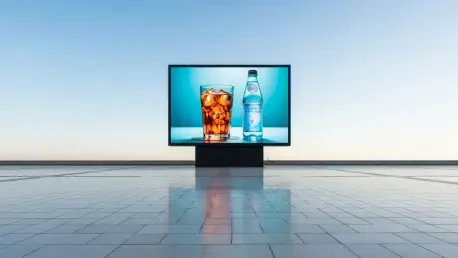
The migration toward digital out-of-home platforms was largely driven by the sophisticated integration of programmatic buying technologies that mirrored the efficiency of online advertising. Modern supply-side platforms allow media buyers to bid on billboard inventory in real-time, utilizing data triggers such as local weather patterns or current traffic density to display hyper-relevant messaging. For example, a beverage brand might automatically increase its bid for screen time on pedestrian walkways when local temperatures exceed eighty-five degrees, ensuring that its ice-cold product imagery appears exactly when the consumer need is highest. This level of agility was previously reserved for search and social media, but its application to the physical world has bridged the gap between digital precision and physical presence. By removing the manual labor of static posters, programmatic systems have made the streets as dynamic as a web browser.
Beyond the backend logistics, the creative potential of these digital surfaces has evolved to provide immersive experiences that rival the production value of cinematic commercials. Anamorphic 3D technology has become a standard for flagship installations, creating illusions where products appear to float or burst out of the building facade toward the audience. These visual spectacles serve a dual purpose; they capture the immediate attention of passersby while generating secondary reach as viewers record and share the content on social platforms. When a luxury fashion house launches a new collection using a three-dimensional display in a high-traffic district, the physical installation acts as the primary broadcast node, while the resulting viral clips function as the distribution network. This synergy between the physical and the digital creates a feedback loop that effectively turns every major street corner into a potential studio for global content.
Strategic Evolution: Practical Outcomes and Future Standards
As the industry matured, the realization that physical screens could serve as the primary anchor for national campaigns prompted a significant shift in resource allocation and creative strategy. Leading corporations pioneered this transition by phasing out traditional television spots in favor of persistent, high-impact presence in the top metropolitan markets. They recognized that the communal nature of the public square offered a sense of shared reality that was missing from the siloed experiences of algorithmic feeds. This move validated the idea that out-of-home media was no longer a secondary support channel but rather a foundational element of the marketing mix. Collaborative efforts between tech providers and creative agencies resulted in standardized formats that allowed for seamless cross-city deployments, significantly reducing the friction that had previously hindered growth. These developments set the stage for an era where urban architecture became a vital medium for storytelling.
The most successful organizations eventually shifted toward a model where full synchronization of outdoor media with personal technologies like augmented reality became the industry standard. These entities focused on developing layered content that provided a visual impact to the naked eye while offering interactive depths for those using wearable devices or mobile scanning. It became clear that investing in sustainable infrastructure, such as low-energy electronic paper and solar-powered kiosks, was the only way to navigate stringent environmental regulations regarding urban light and energy use. Furthermore, brands maintained a strict adherence to privacy-by-design principles, ensuring that data collection served to improve the consumer experience rather than creating public friction. This period proved that success belonged to those who viewed these screens as portals that successfully bridged the gap between digital life and the physical human experience.