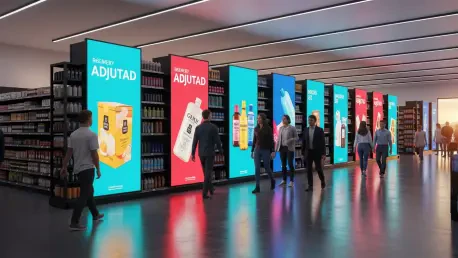

Static signage is rapidly disappearing as physical storefronts transform into high-definition, interactive environments that mirror the data-rich sophistication of digital e-commerce platforms. This evolution represents a fundamental pivot in how brands communicate with their audiences at the point of sale. For decades, retail environments relied on static posters and cardboard cutouts, which offered no interactivity and provided zero data on consumer engagement. Today, the integration of high-resolution displays and sophisticated software is bridging the gap between the tactile nature of physical shopping and the hyper-personalized convenience of the internet. The primary objective for modern brick-and-mortar operators is no longer just selling products, but rather transforming their physical square footage into a measurable, high-margin media channel that delivers real-time value.
The shift toward intelligent visual communication is driven by a necessity to compete with the sheer efficiency of online marketplaces. By implementing data-driven digital displays, retailers can provide consumers with the same level of information—such as peer reviews, inventory levels, and personalized discounts—that they have come to expect while browsing on a mobile device. This convergence of hardware and artificial intelligence allows stores to react to the presence of a customer instantly, changing the content of a screen based on demographics or previous purchase history. Consequently, the physical store is evolving into a “Smart Store,” where every pixel on a display serves a dual purpose: enhancing the customer experience and collecting vital back-end analytics.
Ultimately, the challenge for retailers lies in the seamlessness of this integration. Successful brands are moving beyond the novelty of “screens for the sake of screens” and are instead focusing on how these tools can solve specific pain points, such as long checkout lines or the difficulty of finding specific items in a massive warehouse environment. The goal is to create a frictionless journey where the digital layer complements the physical world, making the in-person shopping trip more informative, efficient, and engaging than ever before.
The Shift Toward Intelligent Visual Communication in Physical Commerce
The transition from traditional static signage to dynamic digital displays is being fueled by a move toward what experts call “intelligent visual communication.” Unlike their predecessors, modern digital displays are not merely passive recipients of content; they are active participants in the store ecosystem. These systems utilize sensors and computer vision to analyze foot traffic patterns, allowing retailers to adjust their messaging in real-time. For instance, if a store detects a high concentration of families during a weekend afternoon, the displays can automatically pivot to promote children’s apparel or family-oriented meal deals. This level of agility was impossible in the era of printed advertisements, where a single campaign could take weeks to design, print, and distribute across multiple locations.
Furthermore, the integration of high-tech hardware like transparent OLED panels and ultra-thin LED walls is changing the architectural possibilities of the store. These technologies allow digital content to be overlaid on top of physical products, creating an augmented reality experience without the need for a headset. This approach bridges the gap between the convenience of online browsing and the tactile satisfaction of physical brand experiences. Shoppers can see a jacket on a mannequin while simultaneously viewing a digital overlay that shows different color options, fabric details, and real-time stock levels. This synergy between the digital and physical realms creates a more immersive and persuasive sales environment, encouraging consumers to spend more time in-store.
The core challenge in this transformation is the monetization of physical floor space. Retailers are increasingly viewing their aisles not just as places to stock inventory, but as prime real estate for a high-margin media channel. By treating in-store screens as digital billboards that can be sold to third-party brands, retailers are unlocking entirely new revenue streams. This shift requires a sophisticated understanding of data and a robust technological infrastructure, but the potential rewards are significant. As physical retail becomes more expensive to maintain, the ability to generate advertising revenue directly from the store environment provides a necessary economic buffer for modern businesses.
The Context and Rising Importance of Retail Media Networks
Tracing the background of digital signage reveals a journey from basic LCD screens used for simple information to complex ecosystems that include interactive kiosks and electronic shelf labels. In the early stages, digital signage was often an afterthought—a single monitor mounted near a cash register playing a looped video. However, as the cost of hardware has plummeted and the capabilities of software have expanded, these systems have become centralized. Modern content management systems now allow a global brand to update thousands of screens across various continents with a single click. This scalability has turned digital signage into a cornerstone of omnichannel marketing, ensuring that the brand voice remains consistent across all touchpoints.
The economic context of this market is equally compelling, with projections showing a steady climb from a 2026 valuation of $4.90 billion to nearly $7.7 billion by 2030. This growth is underpinned by a compound annual growth rate of approximately 11.8%, reflecting a massive influx of capital into retail media infrastructure. Retail Media Networks (RMNs) have emerged as the primary driver of this financial surge. These networks allow retailers to act as media companies, offering advertisers targeted access to consumers at the exact moment they are making a purchasing decision. Because the store environment is the “last mile” of the consumer journey, the advertising space within it is incredibly valuable, often commanding higher rates than traditional online banners.
The broader relevance of omnichannel strategies cannot be overstated in an era where the lines between digital and physical shopping have blurred. Consumers no longer view “online” and “in-person” as separate experiences; they expect a seamless transition between the two. A customer might research a product on a mobile app while commuting, receive a location-based notification when they walk past a store, and then find the product using an interactive kiosk once inside. Digital signage acts as the visual glue for this journey. By providing a consistent and interactive interface, retailers can keep the customer engaged throughout the entire process, reducing the likelihood that they will abandon their purchase for a competitor.
Research Methodology, Findings, and Implications
Methodology
The study of the global display market employed a multi-faceted approach to capture the complexity of this rapidly evolving sector. Analysts examined the Compound Annual Growth Rates across several key geographic regions, including North America, Europe, and the Asia-Pacific, to identify where the most significant capital investments were occurring. This involved a granular review of public financial filings from major hardware manufacturers and software providers, alongside interviews with retail technology leaders. By synthesizing this data, the research team was able to build a comprehensive model of the market’s trajectory through 2030, accounting for both hardware sales and recurring software subscription revenue.
In addition to financial modeling, the methodology included a detailed evaluation of technological adoption across specific sectors, most notably Quick-Service Restaurants and big-box retail. The research focused on how these industries utilized different types of hardware, such as digital menu boards and self-service kiosks, to improve operational efficiency. Supply chain movements and strategic corporate acquisitions, such as the major move by STRATACACHE to acquire MasterPoint, were also analyzed to understand how the industry is consolidating. This helped clarify the balance between the production of raw hardware components and the increasingly important role of localized system integration and maintenance services.
Findings
The primary finding of the research was a significant shift toward AI-powered personalization and programmatic advertising within the store environment. It was determined that screens are no longer static; they are becoming increasingly intelligent, using algorithms to decide which content to show based on real-time triggers. The data showed that the Asia-Pacific market is currently the fastest-growing region, driven by rapid urbanization and a new wave of “smart” shopping mall construction. While North America still holds the largest total market share due to its established infrastructure, the rate of modernization in Eastern markets is quickly closing the gap.
Another critical trend identified was the rising importance of sustainability in retail technology. With energy costs and environmental regulations becoming more stringent, there is a clear move toward low-power solutions. The study highlighted the January 2026 launch of advanced color e-paper displays as a landmark moment for the industry. These displays offer the high visibility of traditional LCDs but consume a fraction of the power, making them ideal for electronic shelf labels and other high-frequency update scenarios. This shift toward “green” technology is becoming a major selling point for hardware providers looking to secure long-term contracts with socially responsible retailers.
Implications
The implications for retailers are profound, as they are increasingly forced to evolve into media owners to remain profitable. By selling screen time to third-party brands, retailers can create a high-margin revenue stream that offsets the rising costs of physical labor and rent. This creates a new power dynamic between retailers and consumer goods companies, where the store becomes a data-generating asset rather than just a storage facility. Furthermore, the ability to optimize content in real-time based on local weather, inventory levels, and foot traffic means that promotions can be far more effective than traditional, long-term advertising campaigns.
This move toward the “Smart Store” concept also turns every digital touchpoint into a data collection tool. When a customer interacts with a touch-screen kiosk or looks at a digital end-cap, the system can track that interaction and feed the data back into inventory and marketing systems. This creates a feedback loop where the store learns what customers want in real-time, allowing for more precise stocking and more relevant advertising. The implication is a much more efficient retail model where waste is minimized and sales are maximized through the precise application of data and visual communication.
Reflection and Future Directions
Reflection
Reflecting on the current state of the market, it is clear that while the technology is advancing rapidly, high capital expenditure remains a significant hurdle for smaller players. Large-box retailers and international fast-food chains have the budget to roll out thousands of screens, but independent shops often struggle with the initial costs of hardware and installation. Moreover, the volatility of the global electronics supply chain has occasionally hindered the speed of deployment. Despite these challenges, the successful integration of interactive hardware has already proven its worth in high-traffic environments, where digital kiosks have significantly improved operational throughput and customer satisfaction.
The balance between high-resolution hardware and the “intelligence” of the software management systems is another area of ongoing discussion. While 8K and OLED displays provide a “wow” factor, the true value of a digital signage network often lies in the backend analytics. A screen is only as effective as the content it displays and the data it captures. Consequently, industry leaders are shifting their focus from just selling hardware to providing holistic “Managed Service” models. This approach ensures that the technology remains operational and relevant throughout its lifecycle, rather than becoming an expensive but ignored ornament on a store wall.
Future Directions
Looking ahead, there is a critical need for further research into the long-term consumer psychological effects of personalized, programmatic in-store ads. As screens become more pervasive and advertisements more targeted, there is a risk of consumer “ad fatigue” or privacy concerns regarding tracking technologies. Exploring how to maintain the balance between helpful personalization and intrusive monitoring will be essential for the continued acceptance of these technologies. Additionally, the potential of 5G and edge computing to reduce latency for real-time engagement remains an untapped frontier that could enable even more complex and responsive interactive experiences.
Another priority for future development is the creation of standardized metrics to measure the “Return on Ad Spend” for physical digital displays. Unlike online advertising, where clicks and conversions are easily tracked, measuring the impact of a physical screen requires more complex methodologies. Standardizing how “impressions” and “conversions” are calculated in a physical space will allow retailers to better prove the value of their screen networks to third-party advertisers. This will be a necessary step in solidifying the role of retail media as a permanent and respected component of the global advertising landscape.
The Strategic Necessity of Digital Integration in Modern Retail
The research and current market trends indicated that the synergy between sophisticated hardware and AI-driven software was no longer a secondary consideration for brick-and-mortar success. The study demonstrated that retailers who successfully integrated digital media into their physical environments saw measurable improvements in both customer engagement and operational efficiency. By the time the market approached its $7.69 billion valuation, the industry recognized that the store was the ultimate “last mile” of the consumer journey, where the right message at the right moment could lead to immediate sales growth.
The evidence suggested that the shift toward Retail Media Networks provided a vital new revenue stream that changed the financial outlook for physical commerce. Retailers discovered that their physical space was an asset that could be monetized in ways that went far beyond selling products. The introduction of energy-efficient technologies, such as color e-paper, further addressed the need for sustainable operations, ensuring that the digital transformation did not come at a prohibitive environmental cost. These advancements confirmed that the digital layer was essential for maintaining relevance in a competitive, digital-first shopping world.
In the final analysis, the strategic integration of digital displays was established as a cornerstone of modern retail. The transition from static, unmeasurable signage to dynamic, data-driven ecosystems allowed stores to regain a competitive edge over purely online competitors. By merging the sensory experience of physical shopping with the analytical power of digital advertising, retailers created a more resilient and profitable business model. This evolution proved that while the technology would continue to change, the fundamental need for intelligent, high-impact visual communication in the retail environment was a permanent fixture of the industry.