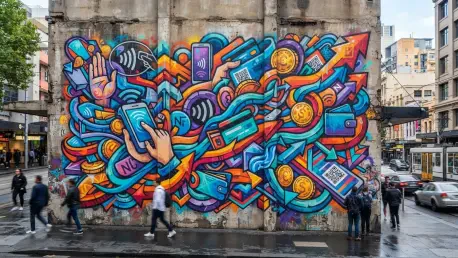

Checkout.com is moving beyond traditional digital channels to establish a physical presence in urban landscapes through massive wallscapes and hand-painted murals. This tactical pivot marks a significant departure from the standard operating procedures of financial technology firms, which typically allocate marketing budgets toward white papers and programmatic digital ads. By claiming prominent real estate in major metropolitan centers, the company is bridging the gap between invisible backend architecture and public recognition. The campaign operates on the premise that infrastructure does not have to be anonymous to be effective. For a payment processor that facilitates transactions for some of the world’s most recognizable consumer platforms, this move is a bid for cultural relevance and institutional authority. Instead of hiding behind a technical API, Checkout.com is asserting its role as a fundamental pillar of global commerce, using the tangible nature of street-level art to ground its digital-first identity.
Strategic Visibility: Bridging the Gap Between Complexity and Recognition
The primary challenge facing enterprise-level service providers is the inherent abstraction of their offerings. While a consumer product like a smartphone or a beverage is easily understood, payment infrastructure involves layers of encryption, settlement cycles, and fraud prevention protocols that are largely hidden from view. Checkout.com addresses this by positioning itself as the invisible engine that powers the modern economy. This strategic shift uses physical scale to demand a level of authority that standard digital advertisements simply cannot achieve in a crowded online ecosystem. By stepping out of the shadows of the server room, the company transforms a complex backend service into a visible and trustworthy entity. This visibility is not just about vanity; it is about establishing a sense of permanence in a fast-moving market. In an era where digital brands can appear and disappear overnight, a massive hand-painted mural on an urban wall communicates longevity and stability.
Moreover, the campaign seeks to redefine how people perceive the plumbing of global finance. Most consumers interact with dozens of payment gateways every week without ever considering the technology facilitating those transfers. By making its presence known through large-format media, Checkout.com creates a psychological anchor for the brand. This strategy effectively turns the lack of direct consumer interaction into a marketing asset, suggesting that the most reliable systems are those that work perfectly without being noticed. However, by choosing to be noticed now, the company is signaling that it has reached a stage of maturity where it can no longer remain anonymous. The objective is to ensure that when a decision-maker at a major corporation considers a new payment partner, the Checkout.com brand already carries the weight of a household name. This blend of high-stakes corporate utility and low-barrier public awareness represents a new frontier in B2B strategy for the year 2026 and beyond.
Messaging Strategy: Mastering the Art of Simplifying B2B Communication
Communicating value in the B2B sector often results in a flurry of technical jargon that fails to resonate with a broader audience. Checkout.com bypasses these hurdles by focusing entirely on outcomes rather than features. Instead of explaining the nuances of their API or their global acquiring network, they highlight the specific brands they empower. This approach uses social proof as its primary engine, suggesting that if the most trusted and successful companies in the world rely on Checkout.com, then their superiority is a settled matter. By leaning on the existing brand equity of their clients, such as Uber or TikTok, they create an immediate and powerful frame of reference. This tactical choice simplifies a highly complex product into a clear narrative of success and reliability. It demonstrates a deep understanding of human psychology, knowing that most people are more likely to trust a service that is validated by their peers than one that leads with specifications.
The messaging is further sharpened by the provocative slogan, Trusted by billions, Known by no one. This line is a masterclass in reframing a perceived weakness as a core institutional strength. In the high-stakes world of financial transactions, invisibility is often synonymous with seamlessness. If a user never hears about a payment processor, it is because the transaction occurred without friction or failure. By embracing this insider status, the campaign creates a sense of exclusivity and quiet power. It suggests that while the general public might be unaware of the company’s existence, the world’s most sophisticated tech leaders consider them indispensable. This narrative positions the brand as a vital but humble contributor to the global economy. By acknowledging its background role so publicly, Checkout.com builds a unique rapport with the audience, inviting them to recognize the hidden forces that make digital lives possible. This transparency builds a foundation of trust for future growth.
Physical Impact: Integrating Architectural Presence and Psychological Scale
The decision to utilize hand-painted murals and massive building wraps is a calculated move to tap into the psychology of scale. Unlike a fleeting digital banner that can be closed or ignored, a mural becomes a semi-permanent part of a city’s architectural landscape. This physical presence provides a sense of gravity and stability that digital-only marketing cannot replicate. For a company that handles billions of dollars in volume, appearing on the side of a prominent urban building conveys a message of immense financial confidence and staying power. It grounds the abstract nature of financial technology in the real, physical world, making the digital platform feel like a tangible entity. This perception is critical for B2B brands that need to demonstrate they have the resources and the longevity to support large-scale enterprise clients over many years. The use of high-contrast colors and oversized typography further ensures that the message is digestible for people who are constantly on the move.
Furthermore, these physical installations serve as powerful landmarks for a brand’s corporate identity. In the competitive landscape of 2026, where talent acquisition and market differentiation are more difficult than ever, having a visible presence in major cities like London or New York is invaluable. These murals act as more than just advertisements; they are statements of intent. They signal to competitors and partners alike that Checkout.com is not just a participant in the market but a dominant force. The aesthetic choice of hand-painted art over printed vinyl also adds a layer of craftsmanship and authenticity, aligning the brand with a sense of quality and precision. This attention to detail reflects the company’s commitment to excellence in its core product offerings. By taking up space in the physical world, the company effectively bridges the gap between the virtual nature of their service and the very real impact they have on global trade and the digital economy.
Industry Evolution: Establishing a Blueprint for Modern Enterprise Branding
The visual layout of the murals relies heavily on strategic brand association to build immediate credibility. By placing the Checkout.com name alongside globally recognized logos like Coinbase and Carolina Herrera, the campaign creates a powerful halo effect. Viewers naturally transfer the trust and prestige they feel for these household names to the payment provider supporting them. This technique is an efficient way for B2B brands to gain instant authority in new or local markets without needing a decade of consumer-facing history. It is a strategic acknowledgment that in the modern economy, your reputation is often defined by the company you keep. For other infrastructure and enterprise companies, this serves as a blueprint for how to elevate a brand from a technical utility to a strategic partner. By focusing on the who rather than the how, technical companies can make their essential services feel omnipresent and necessary to the continued success of the world’s most innovative firms.
In the final analysis, Checkout.com demonstrated that out-of-home media provided a viable solution for the persistent problem of B2B invisibility. By stripping away technical complexity and focusing on high-impact visuals, the company turned its behind-the-scenes status into a badge of professional honor. This campaign proved that even in an increasingly virtual economy, there was no substitute for the authority provided by large-format physical media. Moving forward, B2B leaders should have considered diversifying their marketing mix to include channels that promoted brand gravity through physical presence. The success of this strategy suggested that future branding efforts needed to prioritize clear, outcome-oriented messaging over technical specifications. Companies that embraced their role as essential infrastructure while seeking a public identity gained a significant advantage in trust and market positioning. Claiming space in the real world ensured the brand was seen as the foundation of commerce.