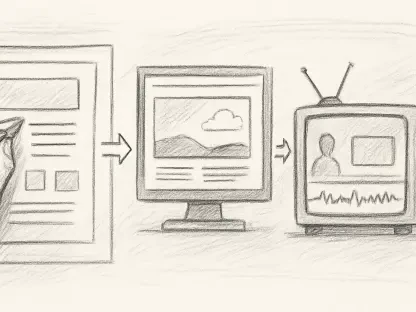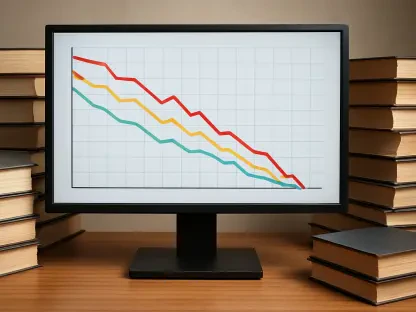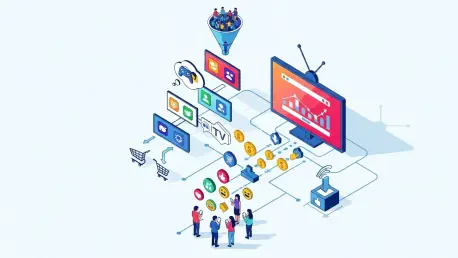

The rapid saturation of traditional social media advertising has forced mobile app developers to look beyond the tiny screens in our pockets toward the expansive canvases of modern living rooms. For years, the divide between brand-building and direct-response marketing seemed insurmountable, yet today’s technological integration has effectively dissolved those boundaries. Marketers are finding that the “big screen” provides more than just aesthetic appeal; it acts as a primary catalyst for user acquisition and long-term retention. As digital acquisition costs continue to climb, television offers a scalable alternative that bridges the gap between passive viewing and active app installation.
This guide serves as a comprehensive roadmap for navigating the complexities of modern television advertising, spanning both linear broadcast and Connected TV (CTV). It provides actionable strategies for moving beyond digital-only silos to leverage the unique ability of TV to drive measurable installs, re-engagement, and long-term brand equity. By shifting from “black box” metrics to data-driven performance, app developers can scale efficiently and secure a competitive advantage in a crowded marketplace. The goal is to transform television into a high-performance tool that fuels growth at every stage of the user journey.
The Evolution of Television from Brand Awareness to Performance Engine
Historically, television was viewed as a luxury reserved for the most established consumer brands with bottomless budgets and a tolerance for vague results. This perception stemmed from a lack of granular tracking, leaving mobile-first companies to rely almost exclusively on the deterministic nature of search and social platforms. However, the landscape shifted significantly when digital tracking faced massive hurdles, such as the restriction of device identifiers and increasing privacy regulations. These changes pushed developers to rediscover television as a sophisticated data-rich ecosystem that provides the same level of accountability as any digital channel.
Modern television advertising now matches the rigor of digital marketing, offering advanced attribution models that isolate the specific impact of every airing. This transformation has turned the traditional living room experience into a high-performance environment where success is measured by downloads and return on ad spend rather than just reach. Consequently, the “big screen” is no longer just for visibility; it is a direct driver of incremental growth that complements and enhances existing digital efforts.
Strategic Steps to Implementing a Performance-Driven TV Campaign
1: Harnessing the Halo Effect to Optimize Digital Spend
The true power of a television advertisement is rarely confined to the immediate moment of the broadcast; it creates a compounding influence that improves the efficiency of all other marketing channels. This phenomenon, known as the halo effect, suggests that a television presence elevates the brand in the minds of consumers, making them more receptive to subsequent marketing touches.
Identifying the “Mental Availability” Advantage
A well-executed television spot primes the audience by building familiarity and trust, which results in “mental availability” when the user later encounters a digital ad. This psychological priming means that when a person sees a search or social media advertisement for the same app, they are significantly more likely to engage with it. As a result, television effectively lowers the cost-per-click (CPC) and cost-per-acquisition (CPA) across digital platforms, as the audience has already been pre-conditioned to view the brand as a credible and desirable solution.
Analyzing Cumulative Down-Funnel Conversion Increases
Marketers can quantify this advantage by closely monitoring baseline conversion rates across their entire digital ecosystem during and after a television campaign. Data often reveals a sustained lift in organic search volume and improved click-through rates on retargeting ads that correlate directly with television airings. By viewing television as a rising tide that lifts all boats, developers can justify the investment not just as a standalone channel, but as a strategic tool for enhancing the overall profitability of the marketing mix.
2: Driving Direct Acquisition and Immediate User Response
Modern television buying enables precise timing and placement that triggers immediate actions, turning passive viewers into active app users within seconds of seeing a spot. The ability to sync creative content with specific high-intent moments allows brands to capture the fleeting attention of consumers and convert it into tangible growth.
Capturing Real-Time Installs During Peak Moments
Aligning television spots with live events, specific time slots, or popular programming can result in massive spikes in downloads, particularly when the content is contextually relevant. For instance, a food delivery app might see a surge in installs when airing commercials during dinner-time news or major sporting events. By analyzing the immediate response within a tight window following an ad, developers can see thousands of installs occurring in real-time, providing immediate proof of the medium’s direct-response capabilities.
Utilizing Creative Call-to-Actions for Performance
To facilitate a seamless user journey from the television screen to the mobile device, dynamic creative elements such as QR codes or clear verbal prompts are essential. These tools bridge the physical gap between a non-interactive medium and an interactive app, making it as easy as possible for a viewer to take action. A clear, compelling call-to-action ensures that the momentum generated by the visual storytelling is not lost, but instead channeled directly into the app store.
3: Reactivating Dormant Users Through Strategic Storytelling
Television is not merely a tool for finding new users; it serves as a potent mechanism for re-engaging “zombie” users who have already downloaded the app but lack a current reason to open it. Re-engagement is often more cost-effective than acquisition, and television provides a premium environment to remind these users of the app’s ongoing value.
Leveraging Mass-Market Recall Over Intrusive Retargeting
Unlike digital retargeting, which often relies on intrusive tracking that many users find annoying or have blocked, television uses high-impact storytelling to reach audiences in a non-intrusive way. Appearing on a large screen in a relaxed setting creates a positive brand association that digital banners simply cannot match. This high-impact environment helps users recall why they downloaded the app in the first place, prompting them to return to the platform voluntarily without the need for personalized device tracking.
Syncing Ads with Contextual User Needs
Strategic ad placement during live sports or seasonal events targets users exactly when they are most likely to need a specific service, such as ticket booking or travel planning. By matching the message to the user’s current environment and needs, television triggers an organic re-entry into the app. This contextual relevance ensures that the app stays top-of-mind during critical decision-making moments, effectively reducing churn and increasing the lifetime value of the existing user base.
4: Balancing Linear and CTV for Maximum Audience Reach
A frequent mistake in modern marketing is focusing exclusively on streaming platforms while ignoring the scale provided by traditional broadcast. True growth requires a “convergent” approach that integrates both Linear TV and Connected TV to capture a broad and non-overlapping audience.
Avoiding the Limitations of a Streaming-Only Strategy
Relying solely on CTV limits a brand’s reach to a specific demographic and often misses high-value audiences who prioritize live news and major televised events on traditional networks. While streaming is growing, linear television still commands a significant portion of total viewing time and offers a unique sense of legitimacy and scale. A diverse media mix ensures that the brand message reaches all segments of the target market, regardless of how or where they consume video content.
Integrating Programmatic Ease with Direct-Buy Scale
Marketers should utilize programmatic CTV for initial testing and agility, as it allows for rapid adjustments and data-driven targeting. However, to achieve true scale and secure the most premium inventory, direct relationships with linear networks are often necessary. Combining the precision of programmatic buying with the massive reach of direct linear buys provides the most cost-effective path to building a dominant presence on the big screen.
Core Pillars of a Successful Mobile-TV Integration
Successful mobile-TV integration is built on four core pillars that ensure every dollar spent contributes to measurable growth. First, the multiplier effect recognizes that television acts as a catalyst, making all other marketing efforts more efficient and reducing overall customer acquisition costs. Second, a convergent media strategy is required to blend the precision of digital streaming with the massive reach of traditional broadcast, ensuring that no potential audience segment is left untapped.
Furthermore, measurement must be based on incrementality rather than vanity metrics. By isolating the specific lift generated by television, marketers can gain a clear understanding of the channel’s true impact on the bottom line. Finally, a performance mindset is essential; television must be treated as an iterative channel that requires constant creative testing, frequency management, and data optimization. This proactive approach ensures that campaigns remain fresh and effective over the long term.
Future Trends in Measurement and Media Convergence
The landscape of screen-based marketing is moving toward total integration, where the distinction between linear and digital video continues to disappear. As measurement technology evolves, we are seeing a shift toward sophisticated incrementality modeling that accounts for cross-device behavior without relying on personal identifiers. This transition allows marketers to track the user journey with high precision while respecting consumer privacy, providing a clearer picture of how television influences digital actions.
Challenges such as ad fatigue and the fragmentation of streaming services will require marketers to become even more creative and strategic with their placements. However, the rise of “Convergent TV” will provide mobile apps with an unprecedented ability to follow a user through every stage of the funnel on a single, high-impact medium. Those who master this integrated environment will be well-positioned to navigate the complexities of the modern media landscape and drive sustainable growth.
Elevating Your App Growth Playbook
The investigation into the impact of television on mobile growth showed that developers who moved beyond a digital-only mindset unlocked substantial new levels of scale. The data suggested that the integration of Linear and CTV provided a unique advantage that social media channels alone could not replicate. It became clear that the brands which achieved the most success were those that prioritized incrementality-based measurement and viewed television as a performance engine rather than a mere awareness tool.
Moving forward, the focus shifted toward building holistic strategies that leveraged the storytelling power of the big screen to drive the metrics that mattered most, such as sustainable growth and long-term user retention. The transition from last-click attribution to more sophisticated models allowed for a deeper understanding of the user journey, ensuring that marketing budgets were allocated more effectively across the entire funnel. Ultimately, those who embraced the convergent nature of modern television secured a significant competitive edge in an increasingly crowded and expensive digital marketplace.