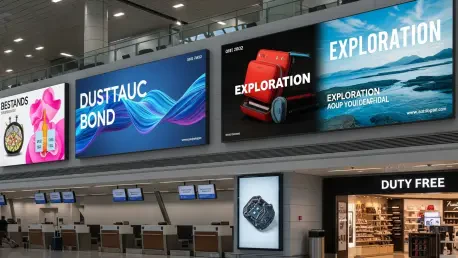

The towering digital billboards of Times Square and the quiet screens in office elevators have long operated in a world apart from the data-driven precision of online advertising, until now. The out-of-home (OOH) advertising sector, a bastion of traditional media buying, is undergoing a profound technological transformation. This evolution is not merely about replacing static posters with digital screens; it is about fundamentally rewiring the operational infrastructure that underpins how this powerful medium is planned, purchased, and measured. At the heart of this revolution is the integration of programmatic capabilities into the digital out-of-home (DOOH) landscape, a move designed to dismantle decades-old barriers and align outdoor advertising with the expectations of the modern digital marketer.
A landmark development announced on December 9, 2025, signals a critical inflection point in this journey. The general availability of Place Exchange’s Programmatic Guaranteed (PG) solution within Google’s Display & Video 360 (DV360) platform represents more than just a new feature; it is a foundational piece of infrastructure poised to redefine the market. This collaboration between Place Exchange, a leading supply-side platform (SSP) now part of Broadsign, and Google, the dominant force in demand-side technology, aims to make procuring premium outdoor advertising as seamless and efficient as buying a display or video ad online. It addresses long-standing industry friction, promising a future where DOOH is no longer a siloed channel but a fully integrated component of holistic, cross-channel advertising strategies.
The Old Guard: Navigating the Fragmented Landscape of Traditional OOH
For decades, the process of securing out-of-home advertising inventory has been notoriously cumbersome and fragmented. Advertisers and their agencies were required to engage in a series of protracted, manual negotiations with a multitude of individual outdoor media companies. This transactional model relied heavily on direct communication, involving countless emails and phone calls to identify available screen locations, haggle over pricing, and finalize the specific terms of an agreement. Each deal was a bespoke project, demanding significant time and human resources to execute, often for just a handful of placements. This friction-filled system created a high barrier to entry, particularly for brands without specialized OOH buying teams.
The consequences of this traditional approach extended far beyond inefficiency. It fostered a deeply fragmented ecosystem where workflows, reporting, and financial reconciliation were siloed by vendor. Buyers had to manage separate integrations and reporting systems for each media owner, making it nearly impossible to gain a holistic view of a campaign’s performance or to compare its impact against other digital channels. The reliance on manual insertion orders for every transaction added another layer of administrative burden. Consequently, outdoor advertising remained trapped in an operational bubble, disconnected from the automated, data-rich workflows that define modern digital marketing, which in turn limited its adoption and scalability for many digital-first advertisers.
The Tides of Change: Programmatic’s Surge in the DOOH Market
The shift toward a more streamlined, programmatic model for DOOH did not occur in a vacuum. It is the culmination of several powerful, converging industry trends that have been reshaping the broader advertising technology landscape. These movements reflect a collective push from all sides of the ecosystem—advertisers, agencies, and technology providers—toward greater efficiency, consolidation, and data-driven accountability. The integration between Place Exchange and Google is a direct response to these market forces, arriving at a moment when the industry is not only ready for but actively demanding such a solution.
The Convergence of Channels: Unpacking Key Industry Trends
A primary driver of this evolution is the industry-wide pursuit of platform consolidation. Modern advertisers and agencies are increasingly seeking to break down the silos between different media channels to manage their investments more holistically. The complexity of navigating disparate platforms for display, video, audio, connected TV, and outdoor advertising creates significant operational drag and hinders strategic, cross-channel planning. The inclusion of DOOH within DV360 directly addresses this pain point, allowing marketing teams to manage outdoor campaigns alongside their other digital initiatives from a single, unified interface. This trend is mirrored across the industry, with moves like Amazon DSP and Disney integrating their ad exchanges and Microsoft streamlining its operations through Amazon’s supply program, all pointing toward a future of reduced fragmentation.
Simultaneously, the DOOH sector itself has been experiencing a flurry of infrastructure development throughout 2025, indicating a collective maturation of the marketplace. This period has seen a series of strategic partnerships and expansions aimed at making DOOH inventory more accessible and automated. Broadsign’s collaboration with StackAdapt enabled advanced DOOH bookings, while VIOOH expanded its network in key markets like the U.S. and Brazil through new partnerships. Vistar Media also launched its own programmatic network in Brazil, and JCDecaux made its valuable global airport inventory programmatically available. These concurrent developments demonstrate a robust and coordinated effort across the ecosystem to build the technological foundation necessary to support programmatic DOOH at scale, creating a fertile ground for large-scale platform integrations to succeed.
By the Numbers: Gauging Market Adoption and the Demand for Certainty
The push toward programmatic DOOH is strongly supported by clear evidence of growing market adoption and specific advertiser preferences. According to VIOOH’s 2025 “State of the Nation” report, the global uptake of programmatic DOOH is accelerating significantly, with markets like mainland China reaching a 30% adoption rate. This data illustrates that programmatic is no longer a niche or experimental buying method for outdoor advertising; it is rapidly becoming a mainstream component of media plans in major global markets. This growth trajectory signals a maturing marketplace where advertisers are increasingly comfortable transacting DOOH inventory through automated platforms, paving the way for more sophisticated solutions.
Moreover, as the market matures, a clear preference has emerged for transaction models that mitigate risk and guarantee delivery. The same research indicates that a commanding majority of media buyers—67% in China, for example—favor guaranteed programmatic approaches over non-guaranteed methods like open auctions. This demand for certainty is particularly acute for high-stakes, time-sensitive campaigns, such as those tied to major cultural events, new product launches, or seasonal retail promotions. Advertisers need the assurance that their investment will secure premium placements at specific times and locations. The market’s consensus viewpoint underscores a demand for hybrid solutions that combine the predictability of traditional direct deals with the efficiency and data capabilities of programmatic technology.
From Friction to Flow: Google’s Answer to Long-Standing Operational Hurdles
The integration of Place Exchange’s Programmatic Guaranteed solution into Google’s DV360 platform is a direct and comprehensive answer to the operational friction that has long plagued the OOH industry. It introduces a hybrid model that elegantly synthesizes the best attributes of both direct-deal and programmatic buying. On one side, it provides the inventory certainty that advertisers have always valued in direct buys. Marketers can now secure premium DOOH placements with guaranteed pricing and delivery, completely eliminating the unpredictability and risk associated with open auction environments. This is a critical advantage for executing high-impact campaigns where precision is non-negotiable.
This new capability is already proving its value in real-world applications. For instance, Lindsay Richardson, VP of Programmatic at Razorfish, highlighted the solution’s impact on a summer activation for a film premiere. The campaign required a guaranteed presence in specific cinema venues on precise dates to align with the release schedule. By using the PG solution within DV360, the team was able to lock in the desired inventory, dates, and impression volumes with confidence, achieving a level of precision and control that would have been far more complex and resource-intensive to secure through traditional, manual negotiations. This example illustrates how the integration empowers advertisers to execute sophisticated, time-sensitive strategies with newfound ease and assurance.
On the other side of the equation, this solution embeds these guaranteed transactions within the powerful and efficient framework of programmatic advertising. The entire campaign lifecycle—from initial planning and buying to creative management, measurement, and final billing—is now automated and centralized within the familiar DV360 platform. This programmatic layer unlocks a suite of advanced capabilities previously inaccessible in traditional OOH buying, including sophisticated audience targeting, streamlined trafficking of creatives, unified cross-channel reporting, and simplified, automated financial reconciliation. By marrying the predictability of direct deals with the operational efficiency of programmatic execution, the integration effectively lowers the barrier to entry for DOOH and encourages its adoption at a much larger scale.
Building a Trusted Ecosystem: New Standards for Quality, Measurement, and Sustainability
A critical component of this new programmatic landscape is the establishment of a trusted ecosystem built on clear standards for inventory quality, transparent measurement, and environmental sustainability. To ensure that advertisers have access to high-impact, brand-safe environments, all participating publishers on the Place Exchange platform must adhere to the Place Exchange Clear certification program. This rigorous vetting process provides a seal of quality, giving buyers confidence in the inventory they are purchasing. The network includes a vast array of premium media owners, such as Branded Cities, Captivate, OUTFRONT, and Simon Malls, offering access to 1.8 million screens across diverse venues like highways, airports, shopping malls, and transit systems.
In parallel with quality assurance, the industry is making significant strides in verification and measurement to build advertiser trust and provide accountability. This initiative is supported by guidance from industry bodies like IAB Australia, which are working to establish consistent standards for the DOOH channel. Place Exchange contributes directly to this effort by providing advertisers with access to log-level impression data for granular analysis. Furthermore, its proprietary PerView solution offers advanced reach and frequency measurement, allowing marketers to understand campaign performance with a level of transparency that mirrors other digital channels. These tools are essential for proving the value of DOOH and enabling data-driven optimization.
Beyond performance metrics, the programmatic DOOH ecosystem is also being positioned as a more environmentally conscious advertising choice. Recent data from VIOOH suggests that programmatic DOOH can be over 20 times more carbon-efficient than programmatic display advertising. This superior sustainability profile is attributed to several factors inherent to the medium. The one-to-many broadcast nature of a single digital screen is inherently more efficient than serving millions of individual one-to-one ad impressions online. Additionally, the programmatic supply chain for DOOH is more streamlined, and a growing number of digital screens are being powered by renewable energy sources. This positions programmatic DOOH as a compelling option for brands seeking to align their media investments with corporate sustainability goals.
The Integrated Horizon: What’s Next for Programmatic Outdoor Advertising
The operational implications of integrating DOOH into a major DSP like DV360 are profound, heralding a new horizon for how marketing teams plan and execute their campaigns. Campaign managers can now incorporate outdoor advertising into their media plans using the same workflows and tools they already employ for their other digital channels. This eliminates the need to learn specialized platforms or forge direct relationships with dozens of individual media owners, drastically reducing the learning curve and operational overhead. Importantly, it allows them to leverage existing data assets, including first-party audience segments and Google audiences, to inform their DOOH targeting, bringing a new level of data-driven precision to the channel.
The feature set enabled by this integration is designed to meet the sophisticated needs of modern advertisers. The platform offers advanced planning and targeting capabilities, allowing for campaign execution based on specific audience segments, geographic parameters, proximity to points of interest, venue types, and even keyword matching. Creative management is also greatly simplified, with approval and trafficking processes handled directly within DV360, a stark contrast to the often cumbersome and manual creative submission processes of traditional OOH. This streamlined workflow allows for greater agility and faster campaign activation, enabling brands to be more responsive to market dynamics.
Finally, the integration of DOOH into DV360 provides a complete end-to-end solution that covers campaign management and financial reconciliation. Integrated controls for budgeting and pacing give advertisers full command over their campaign delivery in real-time. Perhaps most importantly, unified reporting dashboards provide a holistic view of performance across all digital channels, facilitating powerful cross-channel analysis and optimization. The financial aspect is also radically simplified; low transaction fees and automated, consolidated billing replace the painstaking, manual process of managing multiple insertion orders and individual invoices, freeing up marketing teams to focus on strategy rather than administration.
The Final Verdict: A New Era of Efficiency and Accessibility for Outdoor Ads
The launch of Programmatic Guaranteed for digital out-of-home within Google’s Display & Video 360 platform was a landmark event that formally solidified the channel’s place within the mainstream programmatic ecosystem. This development was not merely an incremental feature update; it represented a fundamental structural shift that successfully bridged the long-standing operational divide between the physical world of outdoor media and the data-driven precision of digital advertising. It systematically dismantled the historical inefficiencies and complexities that had previously relegated OOH to a siloed and often inaccessible part of the media plan for many modern brands.
At its core, the integration solved a central paradox for advertisers by delivering a solution that combined the inventory certainty of direct deals with the automation, advanced targeting, and unified measurement of programmatic advertising. This hybrid model provided the best of both worlds, offering the confidence needed for high-stakes campaigns while simultaneously unlocking the operational efficiencies of a centralized, automated platform. This pivotal advancement democratized access to a vast and powerful inventory network, transforming digital out-of-home from a specialized, complex purchase into a fully integrated and essential component of sophisticated, data-driven marketing strategies.