
As a foundational figure in Dubai’s urban landscape, our expert brings over 22 years of hands-on experience in transforming how brands communicate within the public sphere. Overseeing a vast network of premium assets, they have been instrumental in the evolution of the city’s visual identity, moving from traditional billboards to sophisticated, tech-driven environments. This interview explores the strategic partnership aimed at revolutionizing the out-of-home sector through a massive digital overhaul, aligning with global standards and the city’s long-term master planning. We delve into the complexities of upgrading massive infrastructure, the shift toward data-driven advertising, and the delicate balance between high-impact visibility and urban aesthetics.
Managing specific media assets for over two decades provides a unique perspective on urban growth. How does the current focus on organizing and managing this sector change your operational approach, and what specific phases are involved in modernizing such a long-established network of assets?
After 22 years of continuous operation, our perspective has shifted from merely securing prime real estate to curating an intelligent, integrated media ecosystem. The operational approach now prioritizes a balanced, well-studied transition that moves beyond traditional scale toward a future-ready infrastructure. Modernizing a network of this size involves a gradual transformation, starting with the identification of 94 premium static locations that are ripe for a technological leap. The phases include rigorous site assessments, aligning with new regulatory frameworks, and implementing world-class execution capabilities to ensure every upgrade adds real value. It is a meticulous process of weaving advanced digital technologies into the existing fabric of the city without disrupting the flow of the busiest corridors.
A planned investment of Dh1 billion is set to transform 94 static locations into digital environments. What technical hurdles must be overcome to convert 20 flagship bridge assets into high-tech platforms, and how will this digital shift allow brands to move from simple visibility to real-time, data-driven communication?
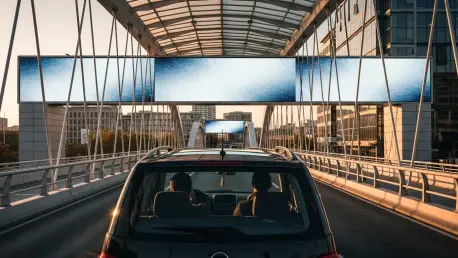
The Dh1 billion investment represents a bold commitment to overcoming the massive engineering and logistical challenges inherent in upgrading 20 flagship bridge assets. These structures require the seamless integration of state-of-the-art display technologies that can withstand the intense local climate while maintaining high-definition clarity for commuters. Beyond the physical hardware, we are building a digital backbone that supports real-time content updates, allowing brands to pivot their messaging based on live data or specific times of day. This shift transforms a static image into a dynamic conversation, where advertisers can measure engagement and performance with a level of precision that was previously impossible. It moves the needle from passive observation to an active, high-impact brand experience that resonates with a modern, mobile audience.
High-traffic corridors like Sheikh Zayed Road and Al Khail Road offer immense visibility for global brands. How do you ensure that these massive digital installations enhance the city’s visual identity rather than cluttering it, and what creative possibilities do these dynamic platforms offer that traditional billboards cannot match?
Ensuring that our installations on Sheikh Zayed Road, Sheikh Mohammed bin Zayed Road, and Al Khail Road enhance urban aesthetics requires a deep respect for the city’s visual identity. We adopt a strategy that emphasizes quality over quantity, using sleek designs and smart brightness controls to harmonize with the surrounding architecture. These dynamic platforms unlock creative possibilities like 3D anamorphic content and interactive storytelling that static boards simply cannot replicate. By offering advertisers more flexibility and creativity, we can display vibrant, high-quality visuals that capture the imagination of passersby while maintaining the elegance of the emirate’s skyline. The goal is to create a sensory experience that feels like a natural extension of a world-class city rather than a mere advertisement.
With the regional outdoor advertising market growing at 14% annually and digital formats claiming a third of the spend, competition for attention is increasing. What specific strategies are required to manage this growth sustainably, and how do these new interactive platforms provide more measurable performance results for advertisers?
Managing a sector that is growing at 14% annually requires a sustainable strategy focused on innovation and long-term value rather than short-term saturation. With digital formats already claiming one-third of the UAE’s outdoor advertising spend, we must focus on high-quality, premium environments that stand out in a crowded market. Our interactive platforms use advanced audience engagement technologies to provide advertisers with concrete data on reach and impact, ensuring every dirham spent is accountable. By offering more flexible booking models and dynamic content delivery, we allow brands to optimize their campaigns in real-time, which leads to better business results and higher efficiency. This data-driven approach ensures that as the market expands, the quality of engagement remains the top priority.
Integrating smart infrastructure into the urban landscape is a major component of long-term master planning. How does the move toward intelligent media environments reflect the broader vision for a future-ready city, and what role will audience engagement technologies play in the next generation of outdoor advertising?
Our move toward intelligent media environments is a direct contribution to the Dubai 2040 Urban Master Plan, which envisions a city that is both technologically advanced and aesthetically pleasing. By converting traditional assets into smart infrastructure, we are helping build a scalable OOH ecosystem that integrates seamlessly with the city’s digital transformation. Audience engagement technologies—such as sensors and interactive displays—will act as the bridge between the physical and digital worlds, allowing for personalized and hyper-local communication. This next generation of outdoor advertising will not just be about broadcasting a message; it will be about creating a responsive environment that understands and reacts to the needs of the urban population. We are setting a global benchmark for how media can enhance the livability and forward-looking spirit of a modern metropolis.
What is your forecast for the digital out-of-home advertising sector in Dubai?
I foresee the digital out-of-home sector in Dubai becoming the primary engine for urban brand engagement, eventually accounting for the vast majority of all outdoor media spend. As our Dh1 billion investment comes to fruition, the distinction between “advertising” and “utility” will blur, with screens providing real-time information and immersive experiences that are essential to the city’s heartbeat. We will see a shift toward even more sophisticated programmatic buying, where the 94 locations in our network act as a unified, intelligent grid that responds to live traffic and weather patterns. Ultimately, Dubai will solidify its position as the global leader in DOOH, where the integration of urban aesthetics and high-tech communication sets the standard for every other major city in the world. The future is not just digital; it is interactive, measurable, and deeply embedded in the everyday lives of everyone who moves through our city.