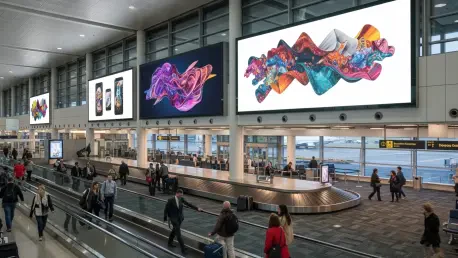

A space teeming with thousands of captive consumers might seem like an advertiser’s dream, yet for Chicilon Digital Media, the bustling corridors of airports have become a strategic dead end, prompting a decisive pivot toward a more intelligent and measurable advertising future. This move signals a profound industry-wide recognition that sheer audience volume is no longer the ultimate prize; instead, the focus has shifted to the quality of engagement and the ability to prove return on investment through verifiable data. Chicilon’s reallocation of resources away from transient airport environments and toward high-frequency, data-rich locations like offices and retail stores reflects a broader transformation in how brands connect with consumers in the physical world.
The Evolving Landscape of Digital Out-of-Home Advertising
The advertising industry in Vietnam is witnessing a significant metamorphosis, as traditional out-of-home (OOH) billboards and posters give way to dynamic digital out-of-home (DOOH) networks. This transition is not merely about replacing static images with video but represents a fundamental change in strategy, driven by technology’s ability to deliver targeted, timely, and interactive content. In this evolving market, companies like Chicilon Digital Media are carving out a strategic position by leveraging technology to create more effective and accountable advertising channels.
At the heart of this evolution is the demand for measurable results. Advertisers are no longer satisfied with estimated impression counts; they require concrete data analytics that demonstrate a clear return on investment (ROI). Technology provides the toolkit for this new era, enabling everything from real-time content updates to sophisticated audience monitoring. This shift reshapes consumer engagement, moving from passive viewing to active interaction and creating a far more dynamic relationship between brands and their audiences.
Charting the New Course Industry Trends and Projections
From Eyeballs to Engagement The Rise of Interactive DOOH
The industry is undergoing a comprehensive transformation toward digitalization, connectivity, and intelligence. This is more than a trend; it is a strategic imperative driven by the need to capture consumer attention in an increasingly crowded media landscape. The simple act of displaying an ad is no longer sufficient. Consequently, there is a growing demand for interactive technologies that can turn a passive glance into a meaningful brand interaction.
Technologies such as Dynamic NFC, which allows for seamless data exchange with a simple tap of a smartphone, and AI-based monitoring systems are becoming central to modern DOOH strategies. These tools not only capture attention but also gather valuable data on consumer behavior. This aligns perfectly with evolving consumer preferences, which favor personalized and engaging experiences over generic, one-way messaging. Chicilon’s strategic adoption of data-driven models is a direct response to this demand, aiming to enhance ad effectiveness by making every impression count.
Quantifying the Shift Measuring ROI Beyond Traditional Metrics
Market data increasingly validates the strategic move toward high-frequency environments. When comparing the performance of advertising in locations like office buildings and retail centers with transient hubs like airports, the difference in engagement is stark. The repeated, close-contact exposure in daily-life settings fosters significantly higher ad recall and influence than the fleeting, distracted glances typical of a travel environment. Projections for the DOOH sector reflect this, with significant growth anticipated in retail and corporate settings from 2025 to 2027.
The key performance indicators are also evolving. Instead of focusing solely on reach, the industry is embracing metrics that highlight the value of high-engagement platforms. The ultimate goal is to drive conversion-oriented campaigns that have a direct and measurable financial impact for advertisers. This forward-looking analysis prioritizes platforms that can influence consumer decisions at or near the point of purchase, offering a clear link between ad spend and sales revenue.
Why Airports Are No Longer Taking Off for Advertisers
The core inefficiency of airport advertising lies in the nature of the audience’s experience. Passengers are typically rushed, navigating check-in lines, security screenings, and gate changes under a cloud of travel-related stress. This hurried mindset creates an environment where ad exposure is fragmented and brief, making it exceedingly difficult for messages to penetrate the noise and achieve meaningful recall.
This lack of deep engagement directly impacts the return on investment. While airport terminals boast high foot traffic, the quality of these impressions is low. The fleeting nature of the exposure makes it nearly impossible for brands to build a connection or deliver a complex message. Compared to more targeted DOOH platforms where audiences are more receptive, the diminished ROI from airport media led to the strategic conclusion that it fails to provide the long-term, verifiable value that modern clients demand.
Navigating the Red Tape Regulatory Hurdles in Airport Media
Beyond audience inefficiency, airport environments present formidable regulatory and operational challenges that stifle technological innovation. Strict aviation security regulations place significant limitations on the implementation of advanced advertising hardware and software. Features that are central to Chicilon’s modern strategy—such as 4G connectivity for real-time updates, interactive NFC for data collection, and AI-powered monitoring—often conflict with stringent airport operational protocols.
Furthermore, the mandatory content approval process required by airport authorities is notoriously slow and cumbersome. This administrative bottleneck directly undermines the agility of a data-driven advertising model, which thrives on the ability to deploy and adjust campaigns in real time based on performance analytics. These regulatory constraints ultimately prevented Chicilon from delivering its high-tech, high-performance media strategy, making the continued investment in airport channels untenable.
The Future is Hyper-Targeted Chicilons Vision for In-Store Intelligence
In leaving airports behind, Chicilon has intensified its strategic focus on its expanding network within office buildings and, crucially, at the point of sale in retail locations. This pivot is about moving ad exposure closer to the moment of decision, where it can have the most impact. The environments of work and shopping offer a receptive and captive audience, allowing for repeated and meaningful brand interactions throughout the day and along the consumer journey.
Central to this new vision is the introduction of the Retail BotMedia solution, an intelligent platform designed to capture consumer attention at critical moments. Deployed in supermarkets and retail outlets, this technology serves dynamic, relevant content that can directly influence purchasing decisions. By engaging consumers while they are actively considering a purchase, this form of DOOH bridges the gap between advertising and conversion, offering clients clear, measurable results that prove the value of their investment.
A Calculated Pivot Key Takeaways from Chicilons Strategic Leap
Chicilon’s departure from airport media represented a calculated move toward a data-centric and performance-driven DOOH model. The decision was not merely a change in location but a fundamental shift in philosophy, prioritizing intelligent engagement over indiscriminate reach. This strategic leap underscored a critical lesson for the industry: advertising strategies must be adapted to environments that foster high engagement and offer clear measurability.
The future of DOOH now hinges on its ability to deliver interactive, personalized experiences and verifiable performance. Chicilon’s pivot illuminated the rising value of data-driven audience targeting and set a precedent for focusing resources on channels that can prove their worth. For the broader advertising industry, this move signaled that the era of passive impressions is over, replaced by a new standard where every ad must be smart, accountable, and effective.